Baidu AI Reaches Half the Business
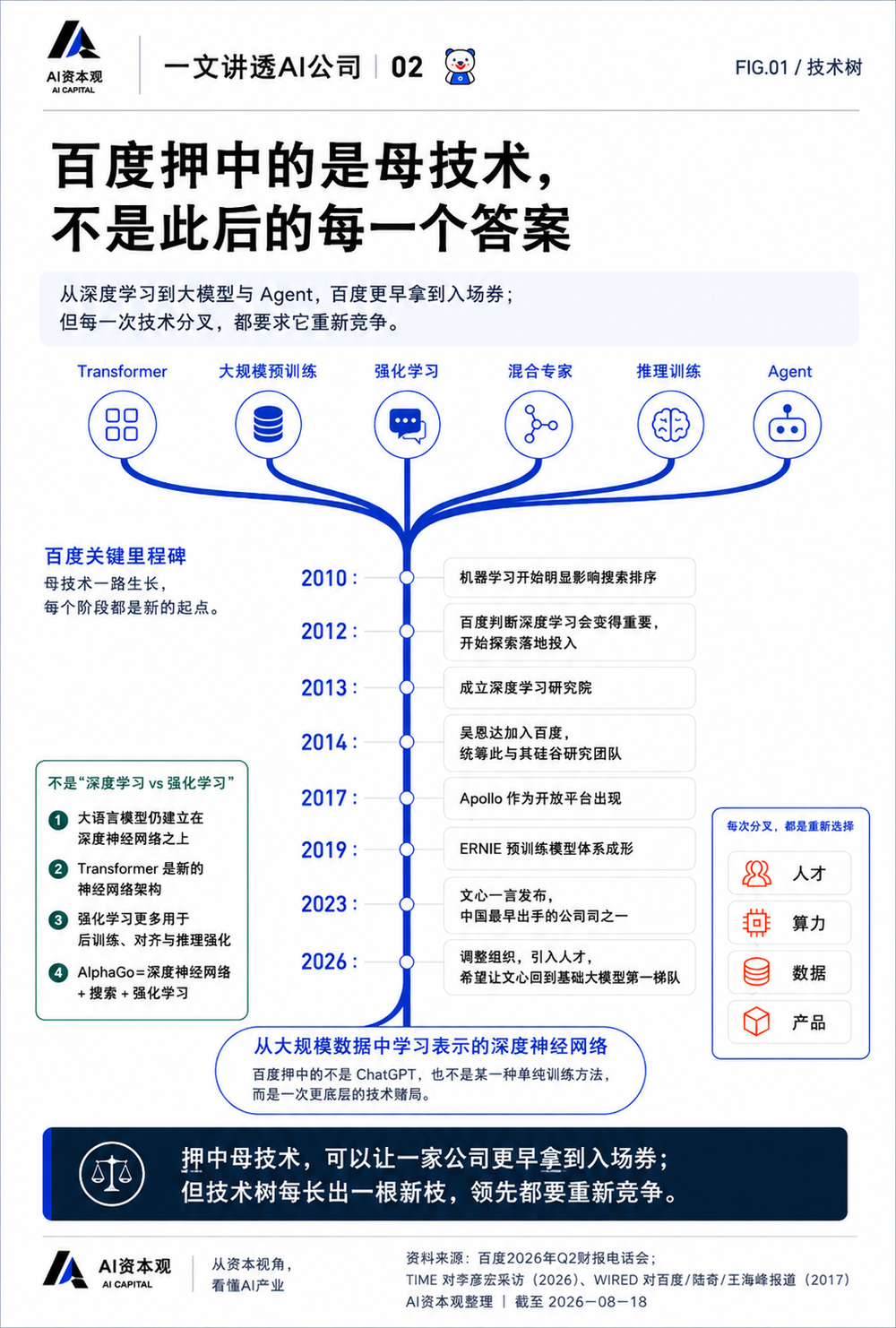
💡Baidu’s AI now drives half its revenue—but cloud decline and model rivalry reveal the harder second act.
⚡ 30-Second TL;DR
What Changed
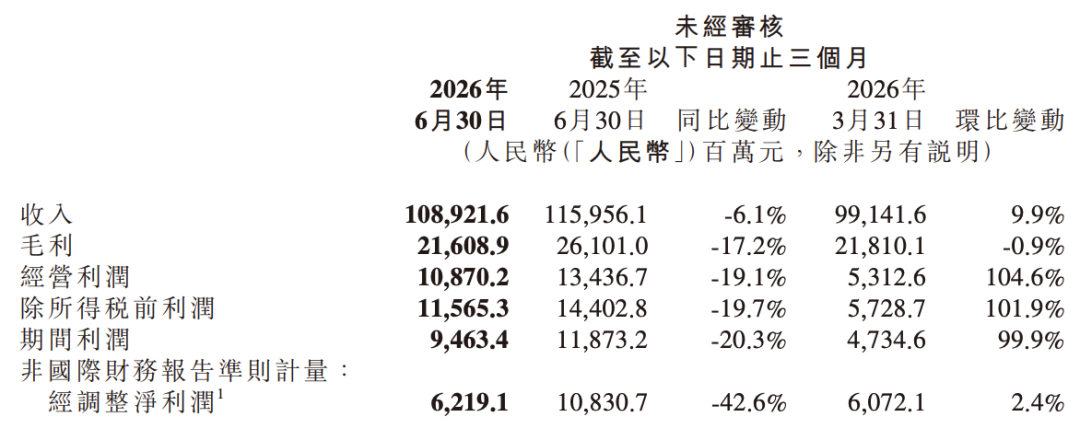
AI revenue reached 136 billion yuan and 52% of general business revenue in the first quarter, then declined to 125 billion yuan and 50% in the second quarter.
Why It Matters
Baidu demonstrates that a large AI revenue share does not automatically translate into stronger growth, cash flow, or valuation. For AI companies, the key lesson is that infrastructure revenue, model leadership, product adoption, and durable monetization must progress together.
What To Do Next
Evaluate Wenxin through Baidu AI Cloud with a fixed production workload, comparing latency, cost, and task accuracy against your current model before migrating.
Key Points
- •AI revenue reached 136 billion yuan and 52% of general business revenue in the first quarter, then declined to 125 billion yuan and 50% in the second quarter.
- •Second-quarter AI cloud infrastructure revenue fell from 88 billion yuan to 73 billion yuan, while AI applications stayed near 25 billion yuan.
- •Baidu acknowledged that Wenxin has made mistakes and reorganized its model team to return to the leading tier of foundation-model providers.
- •Apollo and Kunlunxin are moving toward external commercialization, while search is being reshaped by AI and traditional advertising pressure.
🧠 Deep Insight
AI-generated analysis for this event.
🔑 Enhanced Key Takeaways
- •Baidu's recent financial performance reflects a broader trend of 'AI fatigue' in the Chinese tech sector, where high capital expenditure on GPU clusters is struggling to translate into immediate high-margin software revenue.
- •The reorganization of the Wenxin (Ernie) model team involves a strategic shift toward 'Agentic AI' frameworks, prioritizing autonomous task execution over simple conversational chat interfaces to improve enterprise stickiness.
- •Kunlunxin's commercialization efforts are facing significant headwinds due to US export controls on high-end semiconductor manufacturing equipment, limiting the production capacity of their latest R-series chips.
- •Apollo's autonomous driving unit has shifted its business model from heavy R&D investment in robotaxis to a 'Light Map' (Lite) solution, aiming to lower the cost of deployment for mass-market passenger vehicles.
- •Baidu's search advertising revenue is experiencing cannibalization from its own AI-generated search summaries, which reduce click-through rates on traditional paid search links.
📊 Competitor Analysis▸ Show
| Feature | Baidu (Wenxin/Apollo) | Alibaba (Qwen/Cloud) | Tencent (Hunyuan) |
|---|---|---|---|
| Model Focus | Enterprise/Search/Auto | Cloud/Open Source | Social/Gaming/Enterprise |
| Pricing | Tiered API/Cloud Bundles | Aggressive Price Cuts | Integrated Ecosystem |
| Benchmarks | Strong in Chinese NLP | Leading in Open Source | Strong in Multimodal |
| Auto Strategy | Full Stack (Apollo) | Partner-led (AutoNavi) | Software/Infotainment |
🛠️ Technical Deep Dive
- Wenxin 4.0 utilizes a Mixture-of-Experts (MoE) architecture to optimize inference costs while maintaining high parameter counts for complex reasoning tasks.
- The Apollo Lite system employs a transformer-based perception stack that reduces reliance on high-definition (HD) maps, enabling deployment in cities without pre-mapped infrastructure.
- Kunlunxin R3 chips are designed using a 7nm process node, featuring a proprietary XPU architecture optimized for FP16 and INT8 matrix multiplication common in LLM workloads.
- Baidu's AI Cloud infrastructure integrates 'Model-as-a-Service' (MaaS) layers that allow enterprise clients to fine-tune base models using private data via a secure, isolated VPC environment.
🔮 Future ImplicationsAI analysis grounded in cited sources
⏳ Timeline
Weekly AI Recap
Read this week's curated digest of top AI events →
👉Related Updates

AI-curated news aggregator. All content rights belong to original publishers.
Original source: 虎嗅 ↗