London AI Datacentre Faces Major Carbon Concerns
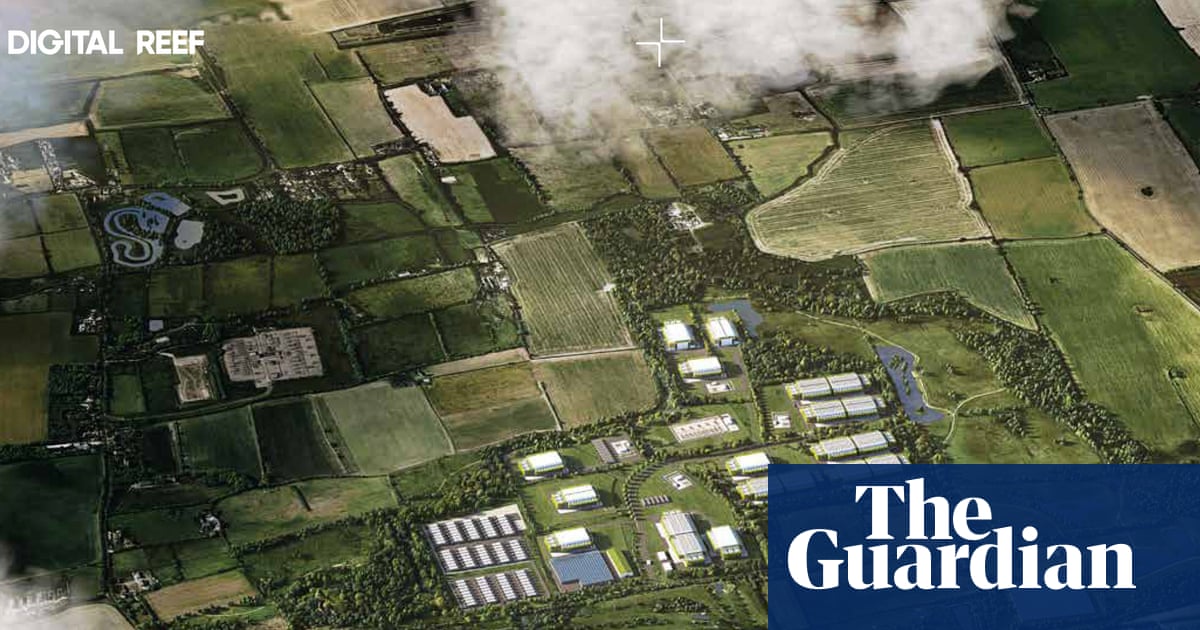
💡See how one proposed AI datacentre could reshape carbon accounting, energy planning, and infrastructure approvals.
⚡ 30-Second TL;DR
What Changed
The proposed datacentre could generate over 1 million tonnes of CO2 emissions each year.
Why It Matters
Large AI datacentres can create substantial emissions and land-use risks even as they expand model capacity and cloud availability. The proposal could increase scrutiny of AI infrastructure permitting, energy sourcing, and lifecycle carbon accounting in the UK.
What To Do Next
Before committing to new AI capacity, model regional grid emissions with the UK Carbon Intensity API and set a maximum grams-CO2-per-inference budget.
Key Points
- •The proposed datacentre could generate over 1 million tonnes of CO2 emissions each year.
- •Its annual footprint is compared with 27,000 flights from London to New York.
- •The project would occupy 218 hectares of green belt land near north Ockendon.
- •Digital Reef describes the campus as a future-oriented sustainable datacentre, while planning documents raise net-zero concerns.
🧠 Deep Insight
Background and context from public sources — not the original article. 6 sources cited.
🔑 Enhanced Key Takeaways
- •The project is estimated to generate 72 million tonnes of CO2e over its 60-year operational lifespan.
- •Digital Reef's own planning application admits the £14.7bn project is incompatible with a 1.5C science-based climate trajectory.
- •At 50% load, the facility would consume 2.65 billion kWh of electricity annually, matching the demand of over 1 million UK households.
- •Advocacy groups including Foxglove and Global Action Plan have identified a systemic lack of national oversight regarding the cumulative environmental impact of UK datacentre expansion.
- •The EHDCC is part of a global surge in AI infrastructure investment, with total industry capital expenditure projected to surpass $3 trillion by 2030.
🛠️ Technical Deep Dive
- Power consumption: 2.65 billion kWh/year at 50% load capacity.
- Cooling infrastructure: Mandated use of closed-loop cooling systems to mitigate water usage.
- Operational lifespan: Designed for a 60-year lifecycle.
- Compute density: High-density AI-optimized architecture requiring significant grid-scale power integration.
🔮 Future ImplicationsAI analysis grounded in cited sources
⏳ Timeline
📎 Sources (6)
Factual claims are grounded in the sources below. Forward-looking analysis is AI-generated interpretation.
Weekly AI Recap
Read this week's curated digest of top AI events →
👉Related Updates



AI-curated news aggregator. All content rights belong to original publishers.
Original source: The Guardian Technology ↗
This is a summary, not the original. Read the source, or get the weekly briefing.
Weekly AI briefing
One email a week. Unsubscribe anytime.