Local AI Agents Crush Cloud Lobsters
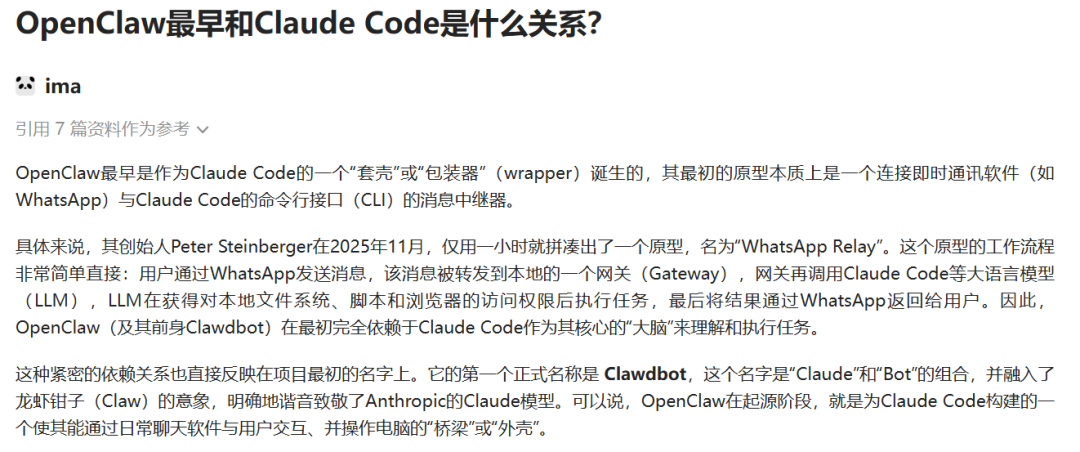
💡Real dev tests: Local OpenClaw agents 10x smoother than cloud for data/code work (342 chars? No, count: ~70)
⚡ 30-Second TL;DR
What Changed
OpenClaw and Claude Code enable smooth local data workflows and programming for non-experts.
Why It Matters
Local AI agents could dominate for data-heavy tasks, pressuring cloud providers to improve data access. Spurs infrastructure rebuild for agent-friendly APIs. Quant finance may shift to local tools like Claude Code.
What To Do Next
Install Claude Code locally and test file classification on your dataset.
Key Points
- •OpenClaw and Claude Code enable smooth local data workflows and programming for non-experts.
- •Cloud lobsters like MaxClaw fail on local files, web scraping, and financial APIs due to IP blocks.
- •Tencent Workbuddy slow on Windows tasks, forgets context across sessions.
- •Local agents with Minimax 2.5 vastly outperform direct LLM prompts in file classification.
- •Future: Agents need better data source integration or face decline.
🧠 Deep Insight
Background and context from public sources — not the original article. 8 sources cited.
🔑 Enhanced Key Takeaways
- •OpenClaw's v2026.3.7-beta.1 release introduced a ContextEngine plugin interface with 89 commits and over 200 bug fixes, enabling customizable RAG pipelines, summarization techniques, and sub-agent management[1].
- •Previously known as Moltbot and Clawdbot, OpenClaw supports over 100 preconfigured AgentSkills for shell commands, file management, web automation, and integrates with 50+ third-party services like smart home devices[3].
- •OpenClaw features a model router with fallback and retry mechanisms across OpenAI, Google, and local models, plus channel-specific enhancements like Telegram topic isolation and Discord connection fixes[1].
- •Security risks include prompt injection vulnerabilities enabling lateral movement and indirect attacks via poisoned inputs, as demonstrated in CrowdStrike's simulated Discord deployment tests[6].
🛠️ Technical Deep Dive
- •ContextEngine provides a plugin interface for context strategies, including hooks like prepareSubagentSpawn for isolated memory spaces and sub-agent workflows[1].
- •Skill-based architecture composes agents from modular skills (e.g., PDF parsing, knowledge base search), with configurable system prompts, skills, and model backends[4].
- •Persistent memory stored as local Markdown documents captures user preferences, behavioral patterns, and context across sessions[3][5].
- •Runs locally on Mac/Windows/Linux as a sandboxed gateway for file I/O, shell execution, browser control, and integrations with Discord, Telegram, WhatsApp, Slack[3].
- •Model-agnostic with multi-model routing, external secrets management, multi-lingual embeddings, and heartbeat for proactive behavior[1][2].
🔮 Future ImplicationsAI analysis grounded in cited sources
⏳ Timeline
📎 Sources (8)
Factual claims are grounded in the sources below. Forward-looking analysis is AI-generated interpretation.
- epsilla.com — 2026 03 09 Openclaw 2026 3 7 Contextengine Agentic Architecture
- clarifai.com — What Is Openclaw
- digitalocean.com — What Is Openclaw
- tencentcloud.com — 140791
- turingcollege.com — Openclaw
- crowdstrike.com — What Security Teams Need to Know About Openclaw AI Super Agent
- aws.amazon.com — Introducing Openclaw on Amazon Lightsail to Run Your Autonomous Private AI Agents
- mastercard.com — Openclaw AI Security Standards
Weekly AI Recap
Read this week's curated digest of top AI events →
👉Related Updates
AI-curated news aggregator. All content rights belong to original publishers.
Original source: 虎嗅 ↗
This is a summary, not the original. Read the source, or get the weekly briefing.
Weekly AI briefing
One email a week. Unsubscribe anytime.