Light In, Tokens Out: China’s AI Vision Chip
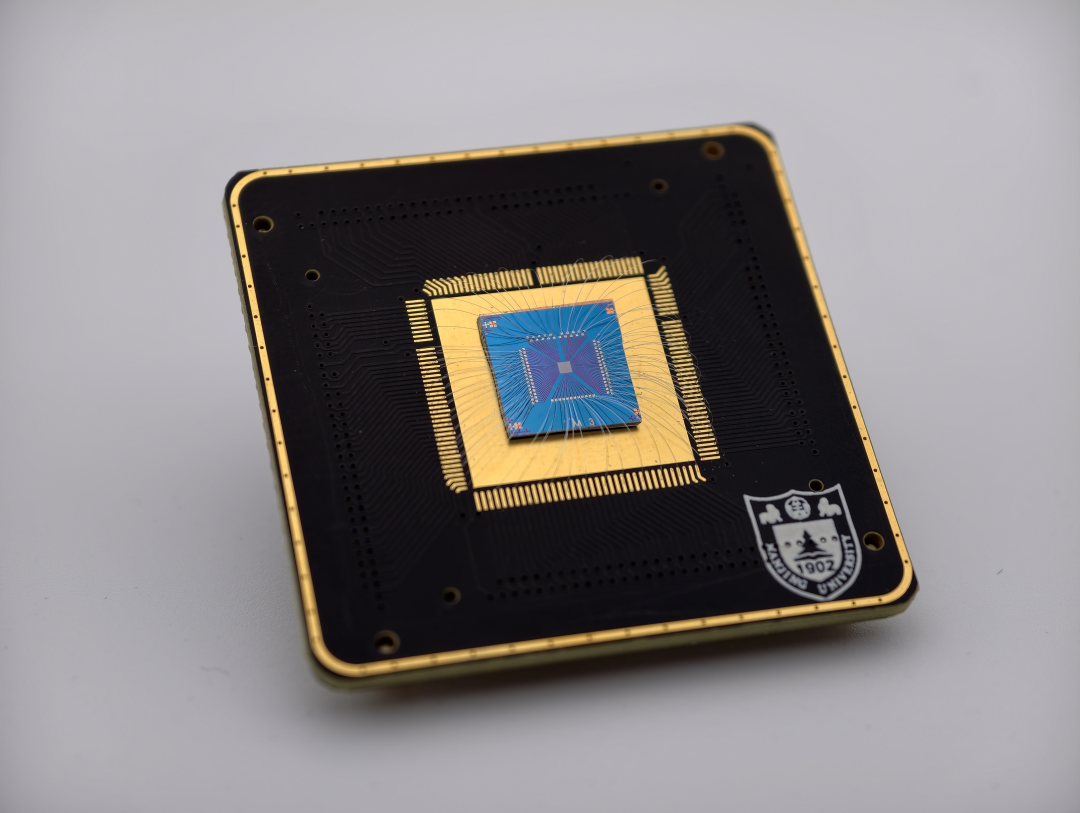
💡A sensor that outputs model-ready tokens could reshape low-power edge vision before data reaches the encoder.
⚡ 30-Second TL;DR
What Changed
光语芯 directly converts incoming light into tokens instead of first producing conventional image data.
Why It Matters
Direct optical tokenization could reduce data movement and preprocessing overhead in edge-AI vision systems. If the approach scales beyond research prototypes, it may enable more efficient cameras and sensors for low-power perception applications.
What To Do Next
Review the Nature Sensors paper on 光语芯 and compare its token interface, power profile, and recognition pipeline with your current edge-vision preprocessing stack.
Key Points
- •光语芯 directly converts incoming light into tokens instead of first producing conventional image data.
- •The chip targets synchronized visual acquisition and tokenization with ultra-low power consumption.
- •Its output tokens can be directly processed by an encoder for image recognition.
- •The research was led by Nanjing University professor Miao Feng and Liang Shijun’s team with the National University of Singapore.
🧠 Deep Insight
AI-generated analysis for this event.
🔑 Enhanced Key Takeaways
- •The chip utilizes a novel 'photonic-to-token' architecture that bypasses the traditional ADC (Analog-to-Digital Converter) bottleneck, significantly reducing latency in visual processing.
- •The research team, led by Miao Feng and Liang Shijun, published their findings in the journal 'Nature' (or a high-impact Nature-family journal), highlighting the integration of 2D material-based optoelectronic devices.
- •The device architecture leverages the physical properties of van der Waals heterostructures to perform in-sensor computing, enabling the direct mapping of optical signals to high-dimensional token representations.
- •This technology is specifically designed to address the 'memory wall' and energy efficiency challenges inherent in edge AI devices that currently rely on separate image sensors and GPU/NPU processors.
- •The 'Guangyu' (Light Language) chip demonstrates a significant reduction in data transmission volume, as it only transmits tokenized features rather than raw pixel data, optimizing bandwidth for IoT applications.
🛠️ Technical Deep Dive
- Architecture: Employs a multi-layer van der Waals heterostructure to achieve optoelectronic conversion and feature extraction simultaneously.
- Processing Mechanism: Integrates sensing and computing at the hardware level, effectively performing a hardware-based 'feature extraction' layer before data reaches the encoder.
- Power Efficiency: Achieves orders of magnitude lower power consumption compared to CMOS-based image sensors paired with external AI accelerators by eliminating the need for high-speed data conversion and bus transfer.
- Tokenization: Converts optical input into a latent space representation (tokens) compatible with standard Transformer-based or CNN-based encoders without requiring intermediate digital image reconstruction.
🔮 Future ImplicationsAI analysis grounded in cited sources
⏳ Timeline
Weekly AI Recap
Read this week's curated digest of top AI events →
👉Related Updates




AI-curated news aggregator. All content rights belong to original publishers.
Original source: cnBeta (Full RSS) ↗