AI-Powered Personalized mRNA Cancer Vaccines Advance
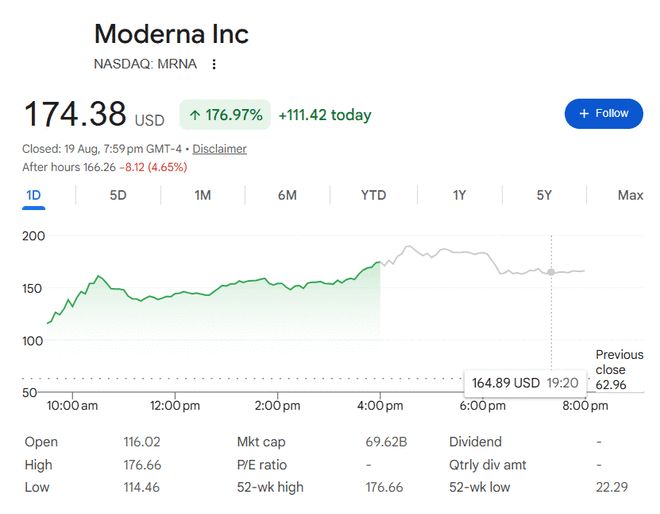
💡See how AI turns each patient's tumor mutations into a custom mRNA cancer treatment.
⚡ 30-Second TL;DR
What Changed
The combination of intismeran and Keytruda met two important survival-related endpoints.
Why It Matters
If confirmed in later analyses and clinical development, this model could make AI-guided treatment personalization more practical in oncology. It also creates demand for reliable mutation interpretation, antigen-ranking, manufacturing, and clinical-validation pipelines.
What To Do Next
Prototype an auditable neoantigen-ranking pipeline using tumor-sequencing data, and benchmark its candidate selection against the published intismeran trial methodology.
Key Points
- •The combination of intismeran and Keytruda met two important survival-related endpoints.
- •AI analyzes each patient's tumor mutations to identify likely immunogenic neoantigens.
- •Each treatment can be individually manufactured using an mRNA design targeting up to 34 neoantigens.
- •The announcement represents progress toward personalized, data-driven cancer treatment.
🧠 Deep Insight
AI-generated analysis for this event.
🔑 Enhanced Key Takeaways
- •The therapy, formally known as mRNA-4157 (V940), is being investigated primarily for high-risk melanoma and non-small cell lung cancer (NSCLC) patients.
- •The AI platform utilizes proprietary algorithms to rank neoantigens based on predicted binding affinity to the patient's specific Human Leukocyte Antigen (HLA) alleles.
- •Manufacturing involves a rapid, just-in-time production process where mRNA sequences are synthesized and encapsulated into lipid nanoparticles (LNPs) within weeks of biopsy analysis.
- •Clinical trials have demonstrated that the combination therapy triggers a robust T-cell response, specifically expanding neoantigen-specific CD8+ T-cell populations in peripheral blood.
- •Regulatory bodies have granted Breakthrough Therapy Designation to this combination, acknowledging its potential to address significant unmet needs in adjuvant cancer treatment.
📊 Competitor Analysis▸ Show
| Feature | Moderna/Merck (mRNA-4157) | BioNTech/Genentech (BNT122) | Gritstone Bio (GRT-C901/902) |
|---|---|---|---|
| Technology | mRNA-LNP | mRNA-LNP | Self-amplifying mRNA (samRNA) |
| Targeting | Up to 34 neoantigens | Individualized neoantigens | Neoantigens + conserved viral antigens |
| Primary Focus | Melanoma/NSCLC | Colorectal/Pancreatic | Solid tumors |
| Benchmarks | Phase 2/3 recurrence reduction | Phase 2 recurrence reduction | Phase 1/2 immunogenicity data |
🛠️ Technical Deep Dive
- The mRNA-4157 construct encodes for multiple neoantigen peptides linked together, allowing for the simultaneous presentation of diverse tumor-specific epitopes.
- The AI pipeline integrates whole-exome sequencing (WES) and RNA sequencing (RNA-seq) data from patient tumor samples to filter out non-immunogenic mutations.
- Lipid nanoparticle (LNP) delivery systems are optimized for intramuscular injection, ensuring efficient uptake by dendritic cells in the lymph nodes.
- The manufacturing workflow utilizes a modular, automated platform designed to handle the high variability of personalized sequences while maintaining GMP compliance.
🔮 Future ImplicationsAI analysis grounded in cited sources
⏳ Timeline
Weekly AI Recap
Read this week's curated digest of top AI events →
👉Related Updates


AI-curated news aggregator. All content rights belong to original publishers.
Original source: cnBeta (Full RSS) ↗