LibTV Turns Seedance 2.5 Into a Production Workflow
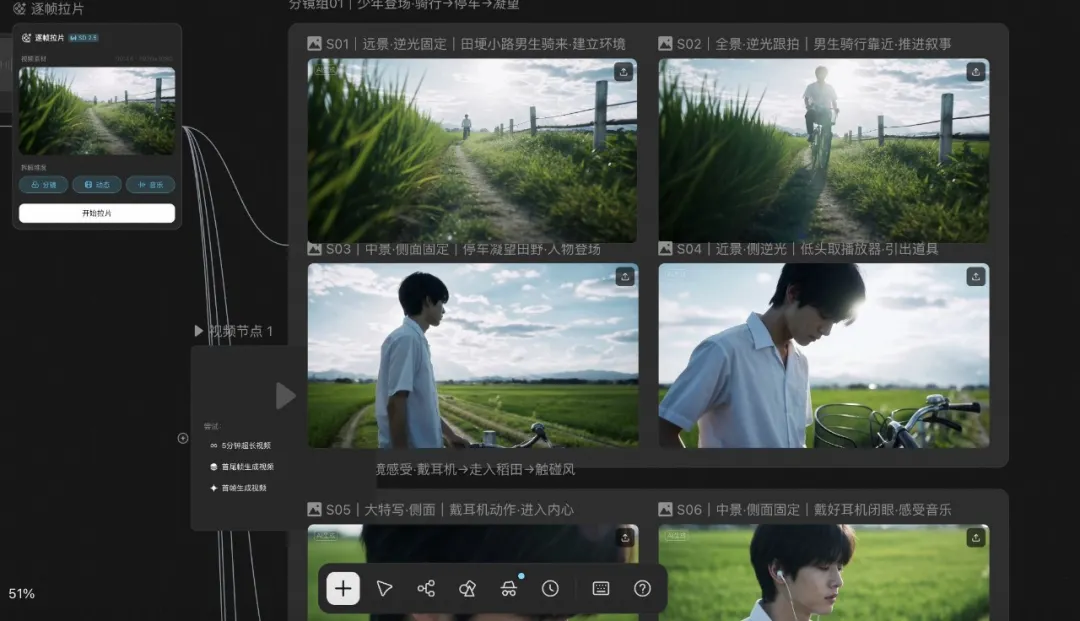
The update shows how AI video creation is moving from impressive generation to editable, production-ready workflows.
30-Second TL;DR
What Changed
Smart Shot Breakdown separates reference films into shot, camera-motion, and music analysis modules at zero compute-credit cost.
Why It Matters
LibTV reflects a broader shift in AI video tools from model-centric generation to workflow-centric production. Fine-grained editing and reusable references could make longer AI-generated films more practical for professional creators, reducing the cost of unwanted changes and repeated generations.
What To Do Next
Build a short project in LibTV using AutoLink and Clip Retake, then compare prompt-setup time and successful-edit rates with full-video regeneration in Seedance 2.5.
Key Points
- •Smart Shot Breakdown separates reference films into shot, camera-motion, and music analysis modules at zero compute-credit cost.
- •AutoLink interprets scripts and places matching character, scene, prop, style, and other references into prompts.
- •Long Video Direct extends generated video length from Seedance 2.5’s 30-second limit to five minutes.
- •Long-form projects preserve shot nodes so creators can inspect, edit, and rework individual segments.
- •Clip Retake enables timestamp-specific changes, such as altering only a two-second error instead of regenerating the entire video.
Deep Insight
AI-generated analysis for this event — not the original article.
Enhanced Key Takeaways
- •LibTV has integrated a proprietary 'Temporal Consistency Engine' that specifically addresses the flickering issues common in long-form AI video generation by anchoring latent vectors across the five-minute timeline.
- •The platform utilizes a multi-agent orchestration layer where separate AI agents manage continuity for character consistency, lighting, and spatial geometry independently before final rendering.
- •Seedance 2.5 architecture incorporates a new 'Motion-Aware Latent Diffusion' (MALD) technique that allows for higher-fidelity camera movements compared to previous versions.
- •The workflow includes a 'Style Transfer Bridge' that allows users to import custom LoRA models directly into the LibTV interface to ensure brand-specific visual identity across long-form content.
- •LibTV has introduced a collaborative 'Version Control System' for video projects, allowing multiple editors to work on different shot nodes simultaneously without overwriting the master project file.
Competitor Analysis
- LibTV (Seedance 2.5)
- 5 Minutes
- Runway Gen-3 Alpha
- 10 Seconds
- Luma Dream Machine
- 2 Minutes
- LibTV (Seedance 2.5)
- Automated/Node-based
- Runway Gen-3 Alpha
- Manual/Prompt-based
- Luma Dream Machine
- Manual/Prompt-based
- LibTV (Seedance 2.5)
- Timestamp-specific
- Runway Gen-3 Alpha
- Full Regeneration
- Luma Dream Machine
- Full Regeneration
- LibTV (Seedance 2.5)
- Credit-based/Enterprise
- Runway Gen-3 Alpha
- Subscription/Credit
- Luma Dream Machine
- Subscription/Credit
| Feature | LibTV (Seedance 2.5) | Runway Gen-3 Alpha | Luma Dream Machine |
|---|---|---|---|
| Max Continuous Clip | 5 Minutes | 10 Seconds | 2 Minutes |
| Shot Breakdown | Automated/Node-based | Manual/Prompt-based | Manual/Prompt-based |
| Retake Capability | Timestamp-specific | Full Regeneration | Full Regeneration |
| Pricing Model | Credit-based/Enterprise | Subscription/Credit | Subscription/Credit |
Technical Deep Dive
- Architecture: Utilizes a hierarchical diffusion model where a high-level 'Director Agent' plans the sequence and low-level 'Worker Agents' generate individual frames.
- Memory Management: Implements a sliding-window attention mechanism to maintain context for up to 300 seconds of video without exceeding VRAM limits.
- Data Processing: The Smart Shot Breakdown module uses a lightweight CLIP-based encoder to map visual features to temporal metadata at the edge, minimizing server-side compute costs.
- Retake Mechanism: Employs a 'Latent Inpainting' approach that preserves the surrounding frame context while re-diffusing only the specific timestamped segment.
Future ImplicationsAI analysis grounded in cited sources
Timeline
- 2025-03LibTV launches initial AI video platform focused on short-form content.
- 2025-11Seedance 2.0 released, introducing improved character consistency.
- 2026-06Seedance 2.5 model architecture update deployed with enhanced motion control.
- 2026-08LibTV releases the production workflow update, enabling 5-minute video generation.
Weekly AI Recap
Read this week's curated digest of top AI events →
Related Updates


AI-curated news aggregator. All content rights belong to original publishers.
Original source: 极客公园 ↗
This is a summary, not the original. Read the source, or get the weekly briefing.
The weekly digest
One email a week. Unsubscribe anytime.