Amazon Blocks Meta Muse Shopping Agents
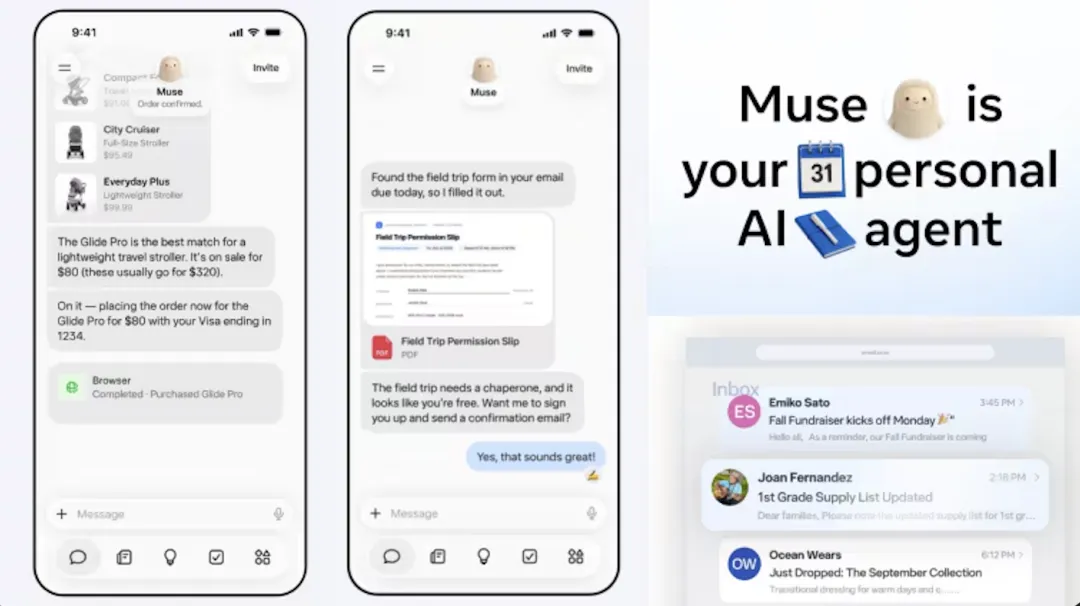
Amazon’s response to Muse exposes the legal, technical, and commercial limits facing shopping agents.
30-Second TL;DR
What Changed
Amazon told users that unauthorized AI-agent access could violate its terms of service.
Why It Matters
The conflict could establish important norms for agent permissions, identity disclosure, credential handling, and website access. Developers building browser-use agents may need explicit merchant integrations rather than relying on user-authorized automation alone.
What To Do Next
Add explicit merchant permission checks, visible AI-agent identification, and short-lived credential handling before deploying any browser-based shopping agent.
Key Points
- •Amazon told users that unauthorized AI-agent access could violate its terms of service.
- •Amazon alleged that Muse did not disclose its access, identify itself as an AI, and may capture login credentials.
- •The dispute reflects how shopping agents can bypass sponsored listings and recommendation-driven discovery.
- •Amazon has also used robots.txt changes and service terms while its legal dispute with Perplexity continues.
Deep Insight
Background and context from public sources — not the original article. 10 sources cited.
Enhanced Key Takeaways
- •Meta Muse launched on September 8, 2026, amassing over 2.5 million downloads in 13 days and topping the U.S. iOS Free App Store chart above ChatGPT and Gemini.
- •Prior to technical bot mitigation, Amazon formally asked Meta to voluntarily exclude Amazon's marketplace from Muse's automated workflow, which Meta refused.
- •The 9th Circuit Court of Appeals overturned Amazon's CFAA preliminary injunction against Perplexity's Comet agent in August 2026, ruling that user-authorized agents do not constitute unauthorized hacking.
- •Because the Perplexity legal precedent curtailed CFAA claims, Amazon shifted to using client-side pop-up enforcement, updated Conditions of Use, and bot-mitigation techniques against Muse.
- •The infrastructure load of running millions of dedicated agentic browsing virtual machines drove an immediate rally in chipmakers Intel, AMD, and Arm on September 21, 2026.
Technical Deep Dive
- Cloud VM Isolation: Meta Muse tasks execute within dedicated, isolated virtual machines hosted inside Meta's cloud infrastructure.
- Supervisory Architecture ('Sentinel'): An internal monitoring subsystem titled 'Sentinel' governs browsing execution, telemetry, and automated interaction parameters.
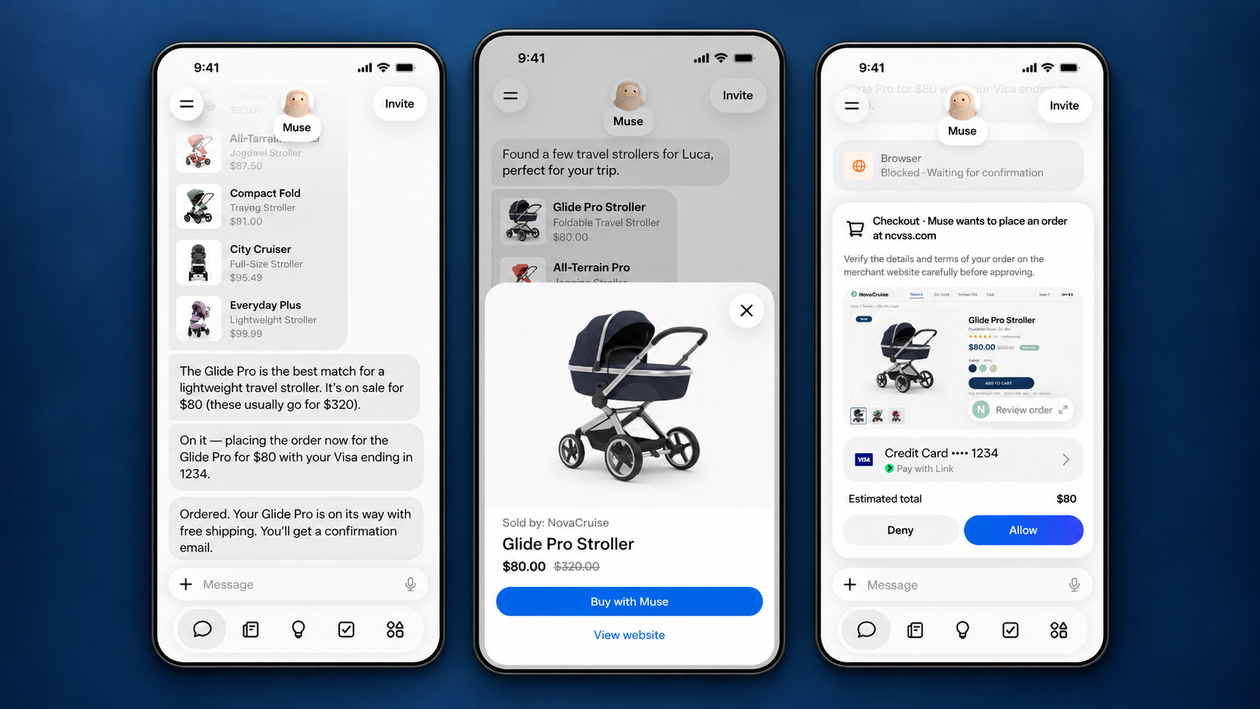
- Authentication & Credential Isolation: Muse uses temporary proxy credentials rather than caching raw user passwords, preventing credential retention on targeted retail domains.
- Payment Tokenization: Transactions rely on single-use virtual cards provisioned via Link by Stripe, obfuscating primary user card data from the browsing agent environment.
- Detection Mechanics: Amazon flags Muse instances through autonomous agent traffic heuristics, undocumented scraping of internal account pages, and missing autonomous user-agent disclosures.
Future ImplicationsAI analysis grounded in cited sources
Timeline
- 2025-11Amazon sues Perplexity over Comet browser agent's automated shopping access
- 2026-089th Circuit Court of Appeals overturns Amazon's CFAA preliminary injunction against Perplexity
- 2026-09Meta launches Muse shopping and task execution agent
- 2026-09Amazon deploys pop-up blocks against Meta Muse, enforcing Terms of Use against unauthorized agent access
Sources (10)
Factual claims are grounded in the sources below. Forward-looking analysis is AI-generated interpretation.
Weekly AI Recap
Read this week's curated digest of top AI events →
Related Updates



AI-curated news aggregator. All content rights belong to original publishers.
Original source: 极客公园 ↗
This is a summary, not the original. Read the source, or get the weekly briefing.
The weekly digest
One email a week. Unsubscribe anytime.