Li Auto Pins Hopes on Robots as Lifesaver
💡EV giant Li Auto bets robots to survive—watch for AI robotics shifts
⚡ 30-Second TL;DR
What Changed
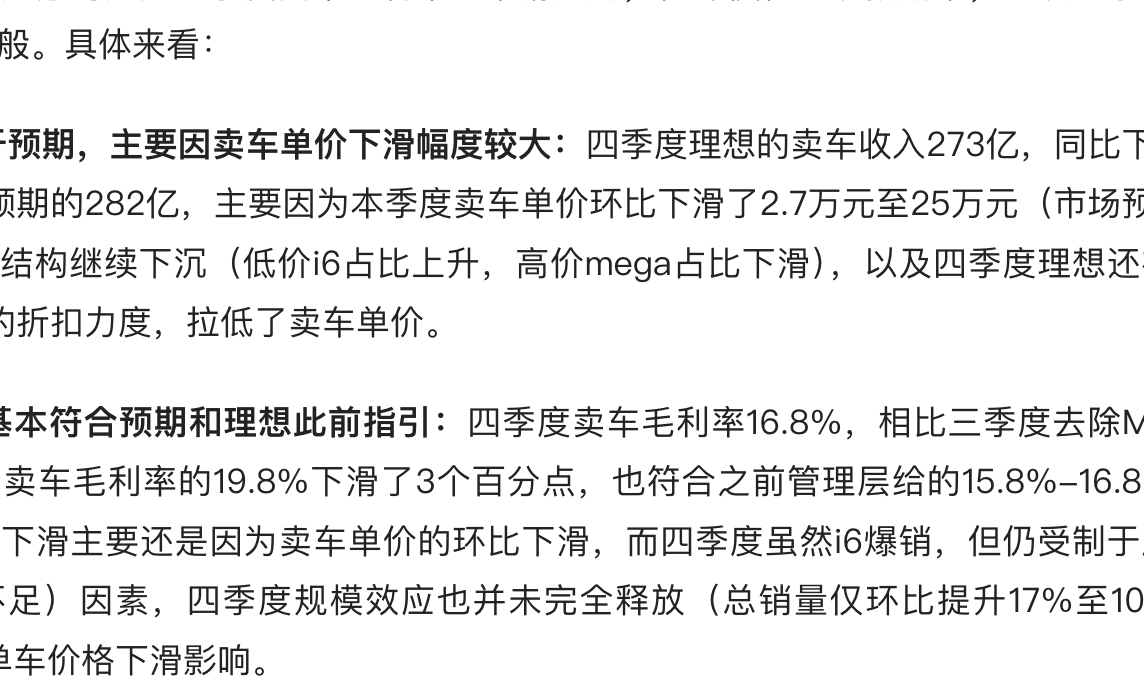
Q4 results average despite low expectations
Why It Matters
Signals EV makers pivoting to robotics amid slowing car sales, boosting embodied AI demand.
What To Do Next
Monitor Li Auto's robot prototypes for embodied AI partnership opportunities.
Key Points
- •Q4 results average despite low expectations
- •Robots positioned as key 'lifesaver' strategy
- •Reflects broader EV industry pressures
🧠 Deep Insight
Background and context from public sources — not the original article. 8 sources cited.
🔑 Enhanced Key Takeaways
- •Li Auto's robotics project 'Nexus,' led by hardware specialist He Junpei (formerly of NineRay and XPeng's AgiBot), was formally initiated in 2025 after CEO Li Xiang reversed his 2023 decision to shelve robotics due to immature technology conditions[1][3].
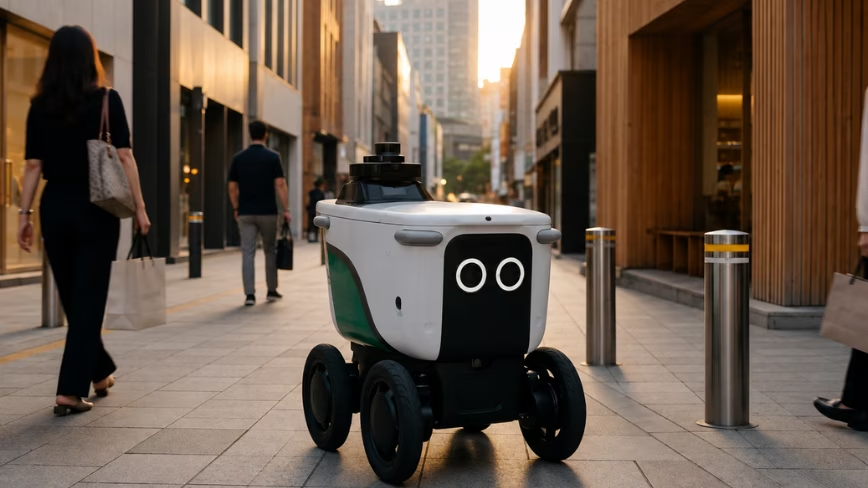
- •The two-wheeled robot is expected to launch mid-2026 for factory manufacturing, with a bipedal humanoid robot planned as a second product line, following Tesla's strategy of iterating in controlled environments before consumer applications[1][3].
- •Li Xiang declared 2026 the 'final window' for companies to establish themselves as leading AI players, predicting fewer than three companies globally will succeed across foundation models, chips, operating systems, and embodied intelligence[4][6].
- •Li Auto's pivot to embodied AI reflects severe automotive performance challenges: the company delivered 406,343 vehicles in 2025, falling 37% short of its revised 640,000-unit target, with 2026 guidance set at approximately 550,000 units[4].
- •The company's robotics strategy prioritizes embodied hardware development over algorithm layers, based on the belief that 'brain' and 'cerebellum' technologies in robotics may eventually move toward open-source development[1].
🛠️ Technical Deep Dive
Robotics Hardware
- •Two-wheeled robot design chosen for superior stability compared to bipedal humanoids and ability to sustain long working hours in factory environments[3]
- •Bipedal humanoid robot planned as secondary product line under the same robotics division[1][3]
- •Project codenamed 'Nexus' led by He Junpei, who brings expertise from NineRay robotics startup and XPeng's AgiBot team[1][3]
Ai Computing Infrastructure
- •Self-developed 'Mach 100 (M100)' chip using 5nm process nearing mass production[2]
- •Dual-chip configuration per vehicle delivers 2560 TOPS effective computing power[2]
- •M100 chip planned for first installation in new-generation flagship L9 Livis model, with full-series VLA large model standardization targeted for 2026[2]
- •VLA (Vision Language Action) solution rolled out to all vehicles in September 2025, updated to version 8.2 in early March 2026[4]
Development Approach
🔮 Future ImplicationsAI analysis grounded in cited sources
⏳ Timeline
📎 Sources (8)
Factual claims are grounded in the sources below. Forward-looking analysis is AI-generated interpretation.
- chinaevhome.com — Li Auto Reportedly Plans Debut of Two Wheeled Robot in 2026 Inspired by Tesla
- eu.36kr.com — 3719980980075140
- cnevpost.com — Li Auto Pivots to Robotics with Secret Nexus Project
- eletric-vehicles.com — Li Auto Sets Up Humanoid Robot Division As CEO Pushes AI Strategy Report
- simplywall.st — What Li Auto Lis Delivery Stabilization and AI Robot Push Me
- autonews.gasgoo.com — Another Carmaker Shifts Gears Are Humanoid Robots Still a Viable Business 2021147693072523265
- autonews.gasgoo.com — Gasgoo Daily Li Auto Expands in Europe Minieye Targets Autonomous Logistics Spirit AI Lands Major Funding 2026233076466585600
- technode.com — Li Auto Said to Plan Two Wheel Robot Launch This Year
Weekly AI Recap
Read this week's curated digest of top AI events →
👉Related Updates
AI-curated news aggregator. All content rights belong to original publishers.
Original source: 钛媒体 ↗
This is a summary, not the original. Read the source, or get the weekly briefing.
Weekly AI briefing
One email a week. Unsubscribe anytime.