World ID Adds Human Verification to Robots
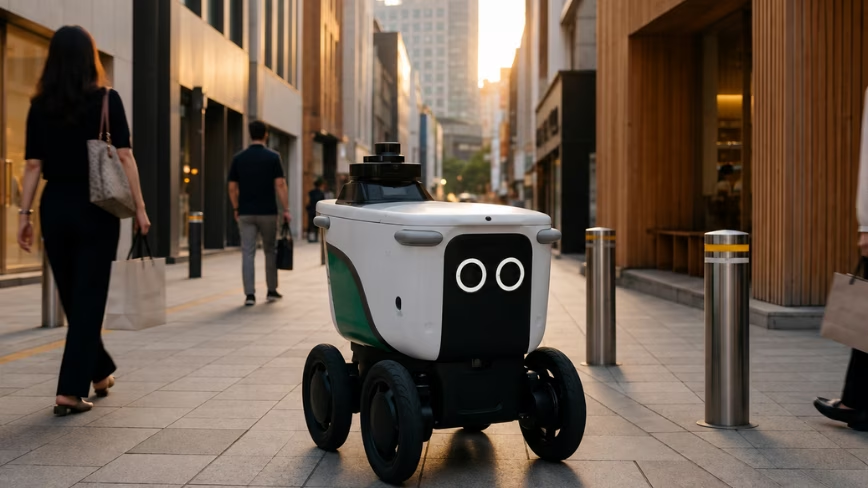
💡See how robots can verify human users while keeping their identities private.
⚡ 30-Second TL;DR
What Changed
World ID is now integrated into peaqOS for robots and autonomous machines.
Why It Matters
Privacy-preserving human verification could help autonomous systems distinguish people from bots without collecting unnecessary identity data. For robotics developers, it introduces a potential trust and access-control layer for machine-to-human interactions.
What To Do Next
Prototype a peaqOS robot workflow through robotic.sh and test World ID verification for access control without storing user identity data.
Key Points
- •World ID is now integrated into peaqOS for robots and autonomous machines.
- •Machines can verify that an interaction is with a real human.
- •The verification is designed to preserve the person's identity privacy.
- •The integration is available through robotic.sh.
🧠 Deep Insight
Background and context from public sources — not the original article. 11 sources cited.
🔑 Enhanced Key Takeaways
- •The integration utilizes zero-knowledge proofs to provide cryptographic confirmation of human status, ensuring no biometric or personal identity data is transmitted to the robot.
- •The robotic.sh platform enables native verification for machines running peaqOS without the need for API keys or per-verification transaction fees.
- •The protocol supports 'human continuity,' a feature that allows a robot to verify that the same individual who initiated a request is the same person present at the point of fulfillment.
- •This development is part of a strategic pivot by Tools for Humanity toward enterprise-grade security, specifically targeting deepfake defense and AI agent verification.
- •World ID has achieved significant scale, with approximately 18 million users across 160 countries verified via the Orb as of April 2026.
📊 Competitor Analysis▸ Show
| Feature | World ID (peaqOS) | Traditional KYC/Identity Providers | Biometric Hardware Vendors |
|---|---|---|---|
| Privacy | Zero-Knowledge Proofs (Anonymous) | PII-heavy (Centralized) | Variable (Often Centralized) |
| Pricing | No per-verification fees | Subscription/Per-check fees | Hardware/License costs |
| Use Case | Autonomous/AI Agent verification | Financial/Legal compliance | Physical access control |
🛠️ Technical Deep Dive
- Uses zero-knowledge proofs (ZKPs) to validate human status without revealing underlying identity data.
- Implements a hardware-backed root of trust to mitigate deepfake impersonation in autonomous interactions.
- Supports multi-stage verification to maintain human continuity throughout complex robotic workflows.
- Integrates natively with peaqOS architecture to allow decentralized identity verification for autonomous machines.
🔮 Future ImplicationsAI analysis grounded in cited sources
⏳ Timeline
📎 Sources (11)
Factual claims are grounded in the sources below. Forward-looking analysis is AI-generated interpretation.
Weekly AI Recap
Read this week's curated digest of top AI events →
👉Related Updates

AI-curated news aggregator. All content rights belong to original publishers.
Original source: The Next Web (TNW) ↗
This is a summary, not the original. Read the source, or get the weekly briefing.
Weekly AI briefing
One email a week. Unsubscribe anytime.