Leju’s Humanoid Robot Ecosystem Bet
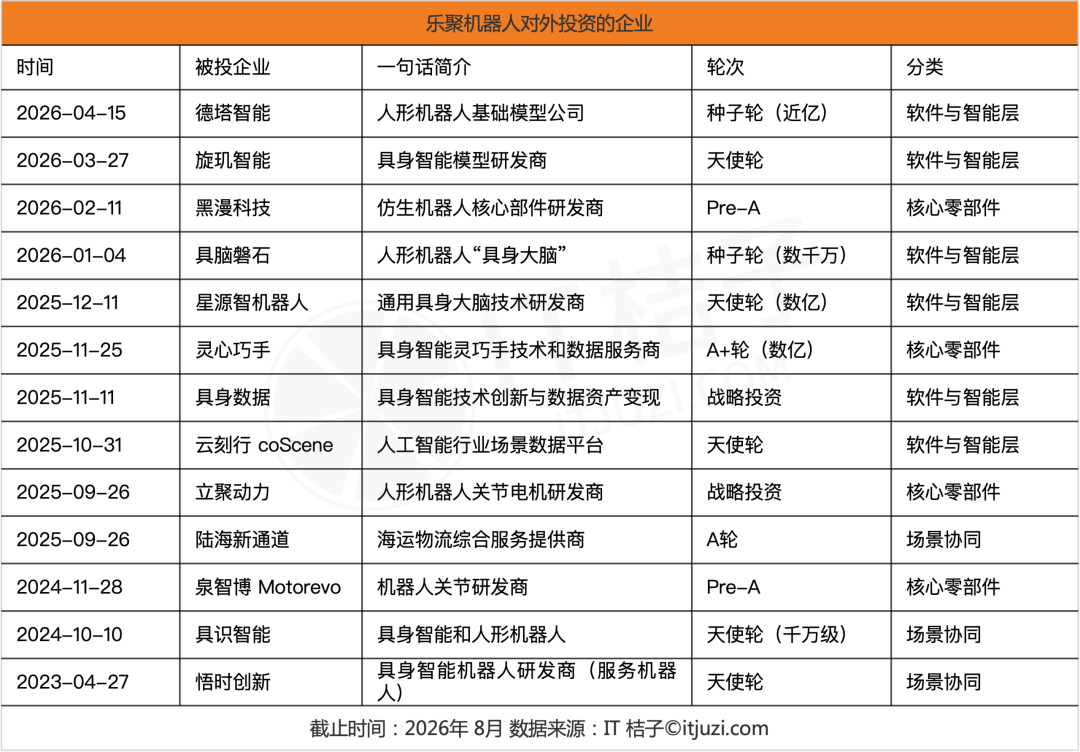
💡Leju’s 13 investments reveal how humanoid-robot builders are assembling hardware, models, data, and deployment channels.
⚡ 30-Second TL;DR
What Changed
Kuavo sales reached 577 units in 2025, generating approximately RMB 178 million and accounting for nearly 70% of Leju’s revenue.
Why It Matters
Leju’s approach illustrates how humanoid-robot companies are building defensibility through ecosystem ownership rather than relying only on proprietary hardware. If successful, the strategy could accelerate cost reduction and deployment, but early-stage investments may increase cash pressure before producing measurable revenue synergies.
What To Do Next
For a humanoid-robot project, benchmark Leju’s Kuavo stack against your own actuator, dexterous-hand, vision, and embodied-data costs before deciding which capabilities to build or acquire.
Key Points
- •Kuavo sales reached 577 units in 2025, generating approximately RMB 178 million and accounting for nearly 70% of Leju’s revenue.
- •Leju’s revenue grew from RMB 54 million in 2023 to RMB 258 million in 2025, while cumulative three-year losses exceeded RMB 170 million and gross margin fell to 40.78%.
- •The 13 investments cover four component suppliers, six software and intelligence companies, and three scenario or industrial partners.
- •Component investments target dexterous hands, joint modules, joint motors, and bionic parts to support localization and cost reduction.
- •Software investments span embodied foundation models, robot brains, multimodal vision, and high-quality training data, complementing Kuavo’s motion-control strengths.
🧠 Deep Insight
Background and context from public sources — not the original article. 11 sources cited.
🔑 Enhanced Key Takeaways
- •Leju Robotics achieved a top-five global ranking in humanoid robot shipments during H1 2026, capturing a 2.9% market share with 650 units delivered.
- •In March 2026, the company established an automated production line in Foshan with Dongfang Precision, enabling a production rate of one robot every 30 minutes and an annual capacity of 10,000 units.
- •Leju utilizes the KaihongOS operating system for its Kuavo series, leveraging a strategic partnership with Huawei to integrate embodied AI capabilities.
- •The company has expanded its portfolio beyond the Kuavo series to include the Roban (medium-sized) and Aelos (small-sized) lines, targeting a tiered market ranging from research to industrial applications.
- •Leju is actively bridging the 'data-model-chip' gap through a partnership with Huaxi Intelligence, focusing on high-computing main control platforms to support an open-source developer ecosystem.
📊 Competitor Analysis▸ Show
| Feature | Leju (Kuavo) | Unitree (H1/G1) | Fourier (GR-1) |
|---|---|---|---|
| Primary OS | KaihongOS | Proprietary/Linux | Linux/ROS |
| Market Focus | Industrial/Research | Consumer/Industrial | Healthcare/Research |
| Production | Automated (10k/yr) | High-volume/Agile | Batch/Customized |
| Key Strength | Ecosystem/Huawei Link | Cost/Agility | Medical/Rehab focus |
🛠️ Technical Deep Dive
- Motion Control: Features advanced real-time balance control and stability algorithms capable of maintaining posture under external physical disturbances.
- Architecture: Utilizes a high-computing main control platform developed in collaboration with Huaxi Intelligence.
- Software Stack: Built on KaihongOS, facilitating integration with Huawei's embodied AI ecosystem.
- Manufacturing: Implements automated assembly lines capable of 30-minute cycle times per unit.
🔮 Future ImplicationsAI analysis grounded in cited sources
⏳ Timeline
📎 Sources (11)
Factual claims are grounded in the sources below. Forward-looking analysis is AI-generated interpretation.
Weekly AI Recap
Read this week's curated digest of top AI events →
👉Related Updates



AI-curated news aggregator. All content rights belong to original publishers.
Original source: 虎嗅 ↗
This is a summary, not the original. Read the source, or get the weekly briefing.
Weekly AI briefing
One email a week. Unsubscribe anytime.