Leili Motors Become Humanoid Robots’ Power Heart
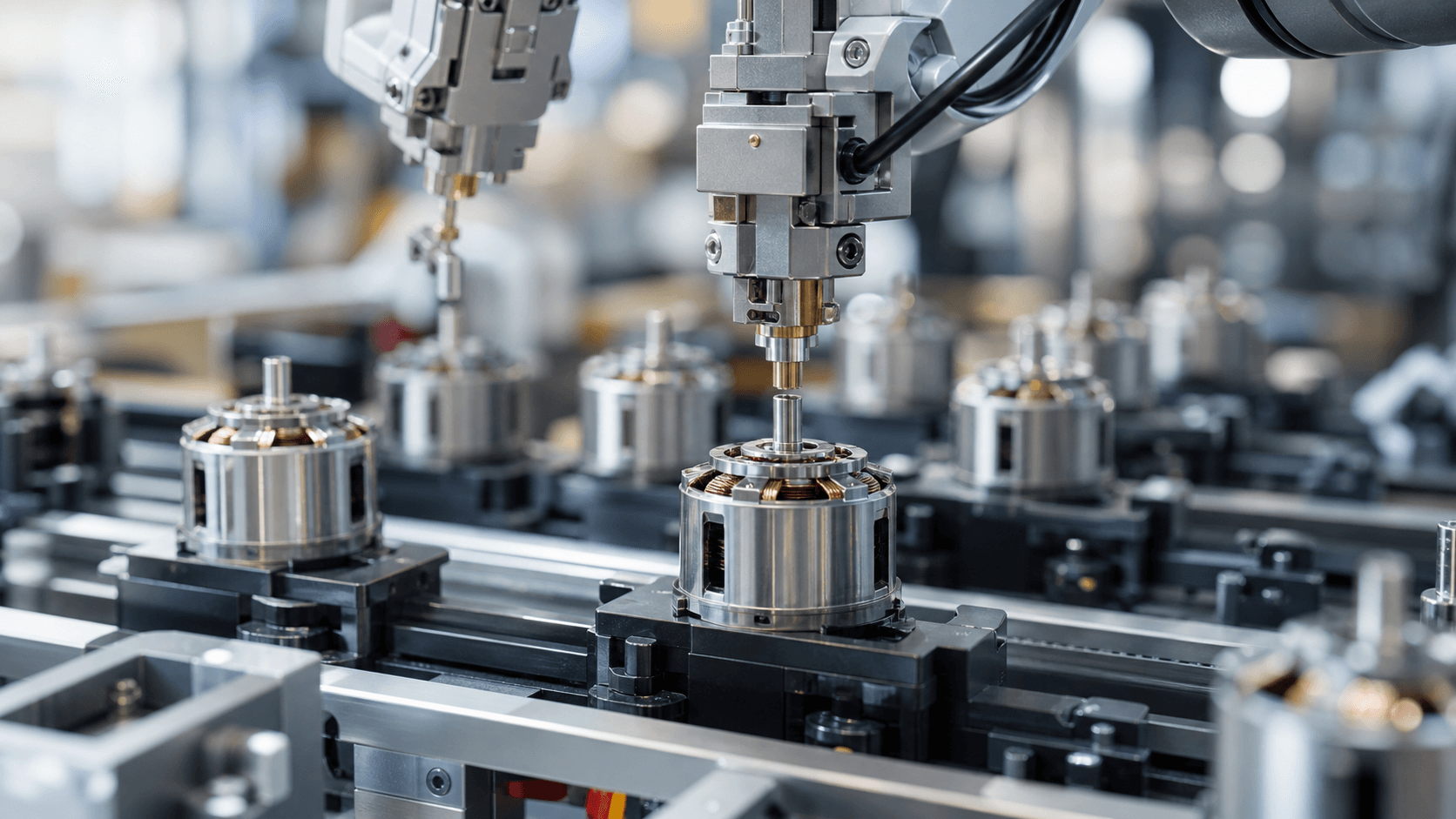
💡Humanoid AI depends on physical actuation; Leili shows how an appliance supplier is moving into robot hardware.
⚡ 30-Second TL;DR
What Changed
Jiangsu Leili Motor began as a Changzhou township workshop in 1993.
Why It Matters
Leili’s transition highlights the importance of compact actuation and dexterous-hand components in scaling embodied AI hardware. For robotics startups, specialized motor suppliers could become strategically important as humanoid production moves beyond prototypes.
What To Do Next
Request Leili’s hollow-cup motor and dexterous-hand datasheets, then compare torque, speed, power density, and control interfaces against your robot’s actuator requirements.
Key Points
- •Jiangsu Leili Motor began as a Changzhou township workshop in 1993.
- •The company reached 4 billion yuan in revenue in 2025.
- •Home appliances accounted for 55% of sales as automotive, industrial control, and medical businesses expanded.
- •Its hollow-cup motors and dexterous hands are being used in humanoid robots.
- •Overseas sales approached half of total sales in 2025.
🧠 Deep Insight
AI-generated analysis for this event.
🔑 Enhanced Key Takeaways
- •Leili Motor has strategically invested in the 'micro-motor' sector, specifically targeting the high-precision requirements of humanoid robot joints through its subsidiary and R&D focus on coreless (hollow-cup) motor technology.
- •The company's transition is supported by its 'Global Strategy' initiative, which has seen it establish manufacturing and R&D footprints in regions like Vietnam to mitigate geopolitical trade risks and serve international robotics clients.
- •Leili has integrated its motor technology into the 'dexterous hand' sub-assembly, a critical component where they compete directly with specialized actuator manufacturers by offering integrated motor-gearbox solutions.
- •The company's shift away from traditional home appliances is driven by a deliberate 'diversification strategy' aimed at increasing gross margins, as industrial and medical motors command higher price points than consumer appliance components.
- •Leili Motor has been actively participating in the Chinese humanoid robot supply chain ecosystem, collaborating with domestic robotics integrators to localize components that were previously dominated by Japanese and European suppliers.
📊 Competitor Analysis▸ Show
| Competitor | Core Technology | Market Focus | Key Advantage |
|---|---|---|---|
| Maxon Group | High-end Coreless Motors | Medical/Aerospace | Precision & Reliability |
| Faulhaber | Micro-drive Systems | Industrial Automation | Power Density |
| Inovance Technology | Servo Systems/Actuators | Industrial Robotics | Domestic Market Share |
| Leili Motor | Coreless Motors/Actuators | Humanoid/Appliances | Cost-Efficiency/Scale |
🛠️ Technical Deep Dive
- Coreless Motor Architecture: Utilizes a self-supporting coil design without an iron core, significantly reducing inertia and enabling high acceleration/deceleration rates essential for humanoid dexterity.
- Power Density: Leili's motors are optimized for high torque-to-weight ratios, allowing for compact integration into robot fingers and wrist joints.
- Integrated Actuation: Development of 'all-in-one' joint modules that combine the motor, encoder, and planetary gearbox to reduce the footprint in humanoid limbs.
- Efficiency: High energy conversion efficiency (often exceeding 80-90%) to extend battery life in mobile humanoid platforms.
🔮 Future ImplicationsAI analysis grounded in cited sources
⏳ Timeline
Weekly AI Recap
Read this week's curated digest of top AI events →
👉Related Updates


AI-curated news aggregator. All content rights belong to original publishers.
Original source: Pandaily ↗