Tesla’s Robot Advantage Isn’t Its Driving AI
💡Tesla’s factory scale is real, but transferring driving AI to general-purpose robots is far harder than it sounds.
⚡ 30-Second TL;DR
What Changed
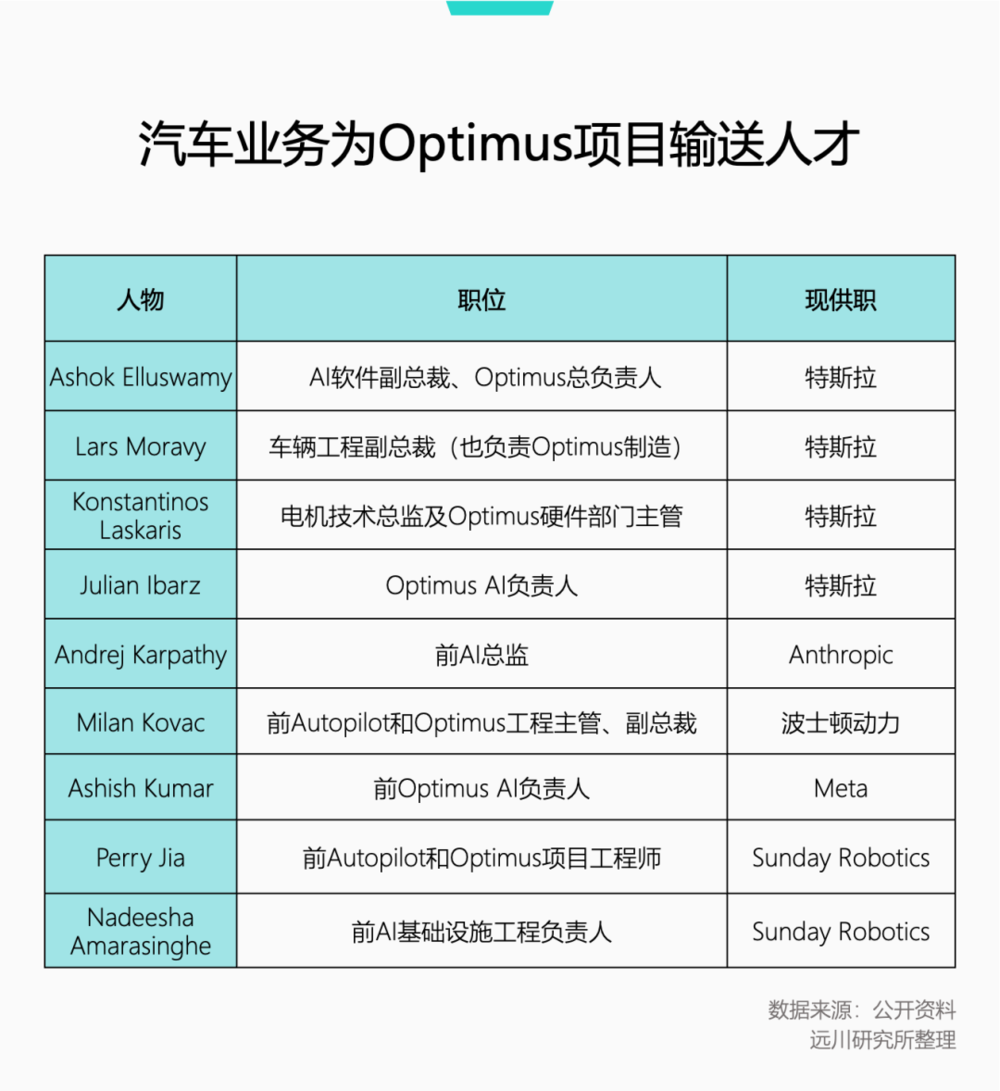
Tesla is converting a retired Model S/X production line into an Optimus production line.
Why It Matters
The analysis cautions founders and investors against assuming that automotive scale automatically produces general-purpose robotics leadership. Manufacturing scale may lower costs, but embodied AI performance will depend on manipulation data, tactile feedback, world models, and robust sim-to-real learning.
What To Do Next
Prototype a manipulation benchmark for your robot using tactile or force-feedback data, and compare real-world teleoperation results against FSD-style vision-only policies.
Key Points
- •Tesla is converting a retired Model S/X production line into an Optimus production line.
- •Early Optimus prototypes reportedly reused automotive computers, cameras, and vehicle algorithms.
- •Automotive and robotics supply chains overlap in motors, reducers, screws, sensors, and batteries.
- •FSD’s point-to-point driving objectives do not directly provide the manipulation skills needed to handle objects such as eggs.
- •Humanoid robots face a harder data problem because useful training data often requires real-machine teleoperation and force feedback.
🧠 Deep Insight
AI-generated analysis for this event.
🔑 Enhanced Key Takeaways
- •Tesla has integrated custom-designed actuators across the Optimus body, moving beyond off-the-shelf components to achieve higher torque density and cost efficiency compared to traditional industrial robots.
- •The company is leveraging its 'Dojo' supercomputing cluster to accelerate the training of end-to-end neural networks specifically for tactile sensing and fine motor control, which are distinct from FSD visual processing.
- •Tesla's 'Humanoid Data Engine' utilizes a fleet of teleoperated robots in its own factories to generate high-quality, diverse demonstration data, bypassing the limitations of synthetic or simulation-only training.
- •Recent iterations of Optimus have transitioned to a centralized 'Tesla Brain' architecture that utilizes a custom-silicon SoC, optimized for low-latency inference required for real-time physical interaction.
- •Tesla is actively developing a proprietary 'skin' sensor technology that provides distributed tactile feedback, a critical requirement for manipulation tasks that FSD-based vision systems cannot solve alone.
📊 Competitor Analysis▸ Show
| Feature | Tesla Optimus | Figure AI (Figure 02) | Boston Dynamics (Atlas) |
|---|---|---|---|
| Primary Focus | Mass manufacturing/Scale | General purpose/Commercial | R&D/Logistics/Mobility |
| Hardware Strategy | In-house vertical integration | Partnership (BMW/OpenAI) | Proprietary/High-performance |
| Control Paradigm | End-to-end neural nets | Foundation models (VLM) | Hybrid (Model-based/AI) |
| Pricing | Targeted <$20k (long-term) | Undisclosed (Commercial) | N/A (R&D/Lease) |
🛠️ Technical Deep Dive
- Actuation: Custom-designed electromechanical actuators with integrated motor, gearbox, and controller for high power-to-weight ratio.
- Sensing: Multi-modal perception system combining vision (FSD-derived cameras) with distributed tactile skin sensors for object manipulation.
- Compute: Centralized SoC architecture utilizing Tesla-designed silicon to handle high-bandwidth sensor fusion and real-time control loops.
- Training: End-to-end imitation learning framework trained on teleoperation data, supplemented by reinforcement learning for edge-case recovery.
- Power: 2.3kWh battery pack integrated into the torso, designed for approximately 4-8 hours of operational capacity depending on task intensity.
🔮 Future ImplicationsAI analysis grounded in cited sources
⏳ Timeline
Weekly AI Recap
Read this week's curated digest of top AI events →
👉Related Updates
AI-curated news aggregator. All content rights belong to original publishers.
Original source: 虎嗅 ↗