KiWear Bets on Rings as AI Inputs
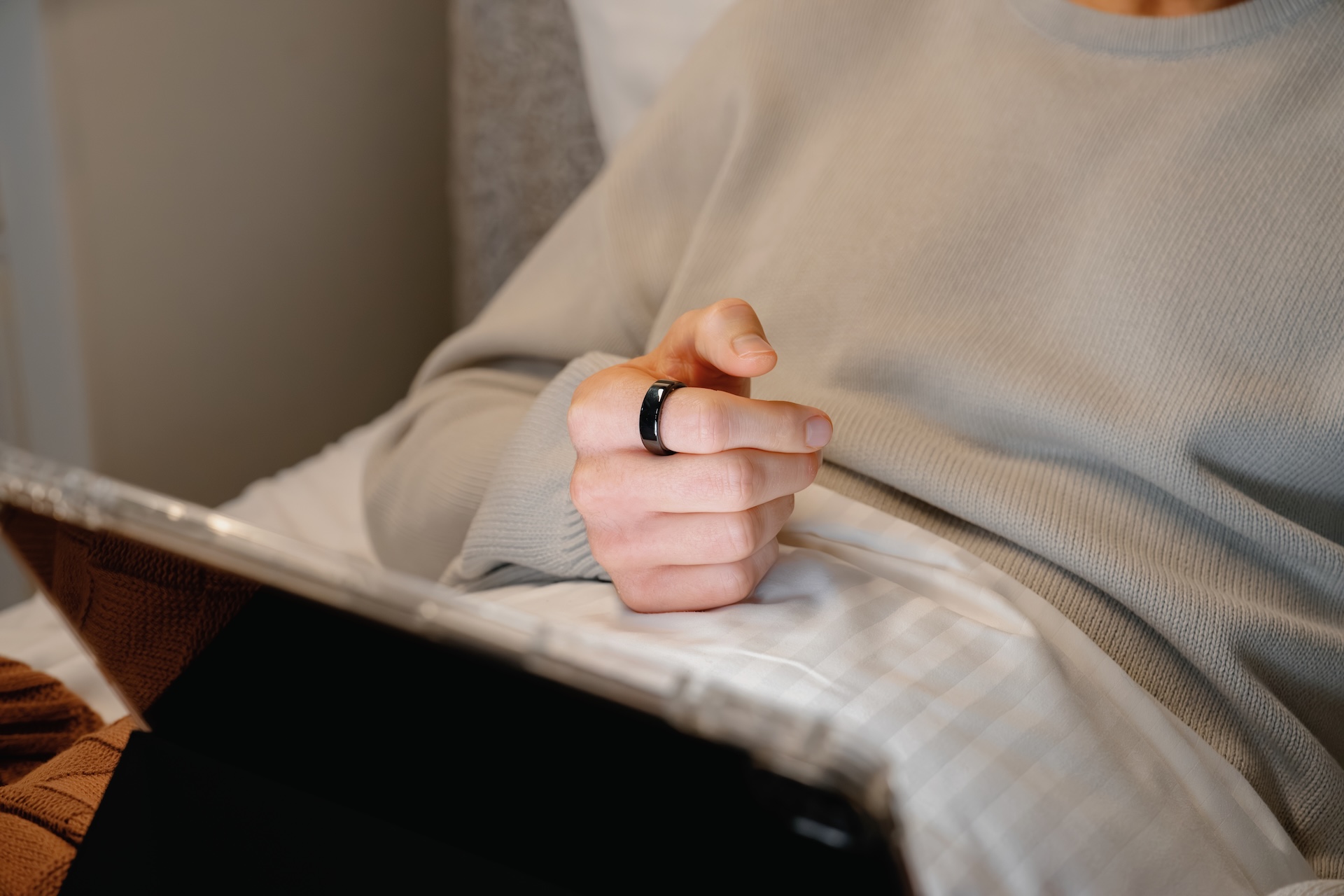
KiWear shows how a sub-5-gram ring could become a universal input layer for agent-driven devices.
30-Second TL;DR
What Changed
The ring supports up to eight connected devices and maps gestures to navigation, playback, volume, confirmation, home, and remote photography.
Why It Matters
If KiWear can make gestures reliable across device categories, smart rings could become a practical physical interface for agent-based computing rather than merely a health wearable. The main adoption risks remain gesture accuracy, low-latency feedback, permissions, and incomplete support for complex device workflows.
What To Do Next
Prototype a cross-device agent interface with Bluetooth HID events, testing gesture confidence, latency, confirmation flows, and device switching across at least three endpoint types.
Key Points
- •The ring supports up to eight connected devices and maps gestures to navigation, playback, volume, confirmation, home, and remote photography.
- •KiWear relies on standard Bluetooth input protocols to reduce one-by-one integrations with phone, TV, and automotive manufacturers.
- •The product is positioned as a universal mouse for AI glasses and other computing endpoints, with agents handling intent understanding and device selection.
- •Prototype battery life is about 3.5–4 days with frequent interaction and approximately one week for health monitoring; the shipping target is over five days of interactive use.
Deep Insight
AI-generated analysis for this event — not the original article.
Enhanced Key Takeaways
- •KiWear utilizes a proprietary IMU (Inertial Measurement Unit) fusion algorithm that distinguishes between intentional user gestures and accidental hand movements to prevent false triggers.
- •The device incorporates a low-latency BLE (Bluetooth Low Energy) stack optimized specifically for HID (Human Interface Device) profiles to ensure sub-50ms response times across cross-platform environments.
- •KiWear has secured partnerships with select AI hardware startups to integrate their ring as a native input peripheral for spatial computing headsets, bypassing the need for proprietary controllers.
- •The ring's manufacturing process employs a specialized ceramic-polymer composite to maintain structural integrity while allowing for high-sensitivity antenna performance for stable connectivity.
- •KiWear is exploring an open API strategy that allows third-party developers to map custom gesture macros to specific AI agent workflows, effectively creating a 'gesture-as-a-service' ecosystem.
Competitor Analysis
- KiWear Ring
- AI Input/Gesture Control
- Oura Ring Gen 4
- Health/Sleep Tracking
- Samsung Galaxy Ring
- Health/Ecosystem Integration
- KiWear Ring
- Advanced (Multi-device)
- Oura Ring Gen 4
- Limited (Basic)
- Samsung Galaxy Ring
- Limited (Double Tap)
- KiWear Ring
- Universal HID (Cross-platform)
- Oura Ring Gen 4
- Proprietary App
- Samsung Galaxy Ring
- Samsung Ecosystem
- KiWear Ring
- 5+ Days (Target)
- Oura Ring Gen 4
- Up to 8 Days
- Samsung Galaxy Ring
- Up to 7 Days
| Feature | KiWear Ring | Oura Ring Gen 4 | Samsung Galaxy Ring |
|---|---|---|---|
| Primary Focus | AI Input/Gesture Control | Health/Sleep Tracking | Health/Ecosystem Integration |
| Gesture Support | Advanced (Multi-device) | Limited (Basic) | Limited (Double Tap) |
| Connectivity | Universal HID (Cross-platform) | Proprietary App | Samsung Ecosystem |
| Battery Life | 5+ Days (Target) | Up to 8 Days | Up to 7 Days |
Technical Deep Dive
- Sensor Suite: High-precision 6-axis IMU (accelerometer and gyroscope) paired with a capacitive touch surface for multi-modal input.
- Connectivity: Bluetooth 5.4 with support for HID over GATT (Generic Attribute Profile) to ensure compatibility with Windows, macOS, Android, and iOS without custom drivers.
- Power Management: Custom ultra-low-power MCU (Microcontroller Unit) with dedicated hardware acceleration for gesture recognition inference.
- Material Science: Hypoallergenic ceramic outer shell with an inner resin molding to house the flexible PCB and battery components.
- Latency Optimization: Implements a predictive gesture-tracking model that anticipates movement patterns to reduce perceived input lag in real-time applications.
Future ImplicationsAI analysis grounded in cited sources
Timeline
- 2025-03KiWear founded with a focus on human-computer interaction (HCI) research.
- 2025-11Successful completion of the first functional prototype featuring multi-device gesture mapping.
- 2026-05KiWear announces strategic shift toward AI agent integration for cross-device control.
Weekly AI Recap
Read this week's curated digest of top AI events →
Related Updates

AI-curated news aggregator. All content rights belong to original publishers.
Original source: 极客公园 ↗
This is a summary, not the original. Read the source, or get the weekly briefing.
The weekly digest
One email a week. Unsubscribe anytime.