Kimi Raises Prices as US AI Giants Cut Costs
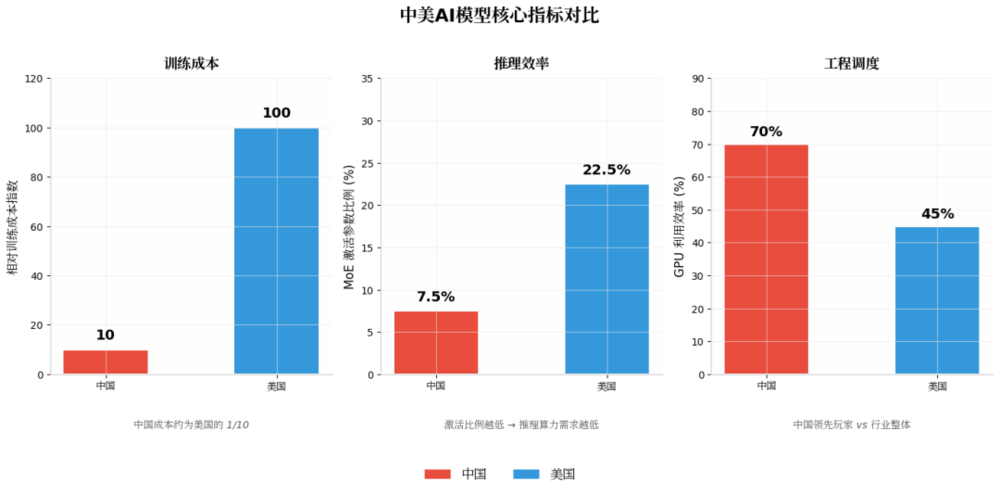
💡US API prices are falling while Kimi and DeepSeek signal increases—cost models are being rewritten.
⚡ 30-Second TL;DR
What Changed
OpenAI cut GPT-5.6 Sol input pricing from $5 to $4 and output pricing from $30 to $20 per million tokens for three months.
Why It Matters
AI builders may gain significantly lower inference costs from the US price cuts, but should not assume list price equals total cost. Cache-hit behavior, output-token volume, model quality, latency, and contract duration could materially change the economics of switching providers.
What To Do Next
Benchmark your top workloads across GPT-5.6 Sol, Gemini 3.7 Flash, Kimi K3, and DeepSeek using real cache-hit rates, output-token counts, latency, and task accuracy before renegotiating API spend.
Key Points
- •OpenAI cut GPT-5.6 Sol input pricing from $5 to $4 and output pricing from $30 to $20 per million tokens for three months.
- •Google priced Gemini 3.7 Flash at $0.75 per million input tokens and $3.75 per million output tokens, roughly half its predecessor's price.
- •Kimi K3 raised output pricing to RMB 100 per million tokens, compared with RMB 27 for K2.6.
- •Kimi's Mooncake architecture reportedly achieves over 90% cache-hit rates in coding scenarios, potentially reducing effective enterprise costs.
- •The article argues that MoE designs, engineering efficiency, and open-source ecosystems are pressuring US providers to reduce token prices.
🧠 Deep Insight
Background and context from public sources — not the original article. 13 sources cited.
🔑 Enhanced Key Takeaways
- •Moonshot AI launched Kimi K3 on July 16, 2026, explicitly moving away from the 'DeepSeek playbook' of aggressive price undercutting to position itself as a premium, capability-focused provider.
- •Kimi K3 is a 2.8-trillion-parameter model featuring native vision support and a 1-million-token context window, marking a significant architectural scale-up for the company.
- •To offset higher base costs, Moonshot AI introduced a specialized cache-hit pricing tier for Kimi K3 at $0.30 per million tokens, which is 10 times cheaper than its standard input rate.
- •Kimi K3 is the first Chinese-developed model to achieve a leading position on the frontend Code Arena benchmark, justifying its premium pricing through specialized coding performance.
- •Moonshot AI maintains a strict separation between its consumer subscription services (¥199/month) and API billing, ensuring that subscription revenue does not subsidize enterprise API token usage.
📊 Competitor Analysis▸ Show
| Feature | Kimi K3 | GPT-5.6 Sol | Gemini 3.7 Flash |
|---|---|---|---|
| Input Price (per M tokens) | $3.00 | $4.00 | $0.75 |
| Output Price (per M tokens) | $15.00 | $20.00 | $3.75 |
| Primary Positioning | Premium/Coding | Frontier/General | Efficiency/Speed |
| Context Window | 1M | N/A | N/A |
🛠️ Technical Deep Dive
- Model Architecture: 2.8-trillion-parameter MoE (Mixture-of-Experts) design.
- Cache Optimization: Implements a high-efficiency caching layer for system prompts and long document prefixes, achieving >90% hit rates in coding workflows.
- Native Capabilities: Built-in native vision processing integrated directly into the transformer stack.
- Inference Strategy: Optimized for long-context reasoning and agentic workflows rather than raw low-latency throughput.
🔮 Future ImplicationsAI analysis grounded in cited sources
⏳ Timeline
📎 Sources (13)
Factual claims are grounded in the sources below. Forward-looking analysis is AI-generated interpretation.
Weekly AI Recap
Read this week's curated digest of top AI events →
👉Related Updates
AI-curated news aggregator. All content rights belong to original publishers.
Original source: 虎嗅 ↗
This is a summary, not the original. Read the source, or get the weekly briefing.
Weekly AI briefing
One email a week. Unsubscribe anytime.