Keio Startup Launches Surgical AI Advisor
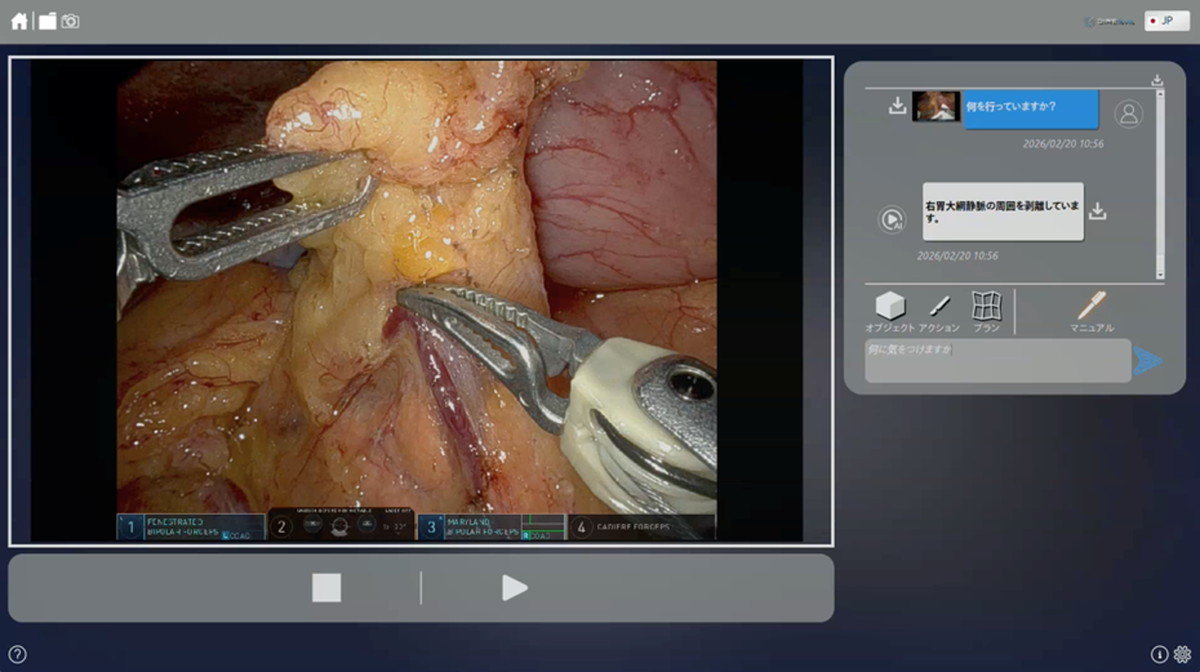
💡Keio's Surgical VLM gives real-time advice from op images—med AI breakthrough
⚡ 30-Second TL;DR
What Changed
Direava from Keio University Medicine launched Surgical VLM
Why It Matters
This VLM application demonstrates real-time AI in high-stakes surgery, potentially accelerating surgeon training and reducing errors. AI practitioners can draw insights for vision models in healthcare.
What To Do Next
Explore Direava's site for Surgical VLM demos to benchmark medical VLMs
Key Points
- •Direava from Keio University Medicine launched Surgical VLM
- •AI views intraoperative images to give surgical advice
- •Designed to support surgeon training and development
🧠 Deep Insight
AI-generated analysis for this event — not the original article.
🔑 Enhanced Key Takeaways
- •Direava leverages proprietary datasets derived from Keio University's extensive surgical archives, focusing on high-fidelity video annotation to train its Vision-Language Model (VLM) for real-time anatomical recognition.
- •The system is specifically engineered to address the 'cognitive load' of surgeons-in-training by providing context-aware, non-intrusive guidance during complex laparoscopic procedures.
- •Beyond training, the startup is positioning the technology to integrate with existing robotic surgical platforms to provide automated surgical phase recognition and safety alerts.
📊 Competitor Analysis▸ Show
| Feature | Direava (Surgical VLM) | Theator (Surgical Intelligence) | Intuitive Surgical (Iris) |
|---|---|---|---|
| Core Focus | Real-time VLM guidance | Post-op video analysis/analytics | Pre-op planning/imaging |
| Primary User | Surgeons-in-training | Surgical departments/Hospitals | Operating surgeons |
| Benchmarks | Proprietary (Keio data) | Industry-standard video metrics | Clinical imaging accuracy |
🛠️ Technical Deep Dive
- •Architecture: Utilizes a multimodal Vision-Language Model (VLM) backbone, likely fine-tuned on a transformer-based architecture optimized for temporal video processing.
- •Input Processing: Employs low-latency frame-by-frame analysis of endoscopic video feeds to identify surgical instruments and anatomical structures.
- •Inference: Designed for edge-computing deployment within the operating room to minimize latency and ensure data privacy by keeping sensitive surgical video local.
- •Training Methodology: Incorporates supervised fine-tuning (SFT) using expert-annotated surgical video datasets to align visual features with surgical terminology and procedural steps.
🔮 Future ImplicationsAI analysis grounded in cited sources
⏳ Timeline
Weekly AI Recap
Read this week's curated digest of top AI events →
👉Related Updates
AI-curated news aggregator. All content rights belong to original publishers.
Original source: ITmedia AI+ (日本) ↗
This is a summary, not the original. Read the source, or get the weekly briefing.
The weekly digest
One email a week. Unsubscribe anytime.