John Ternus Takes Apple Into the AI Era
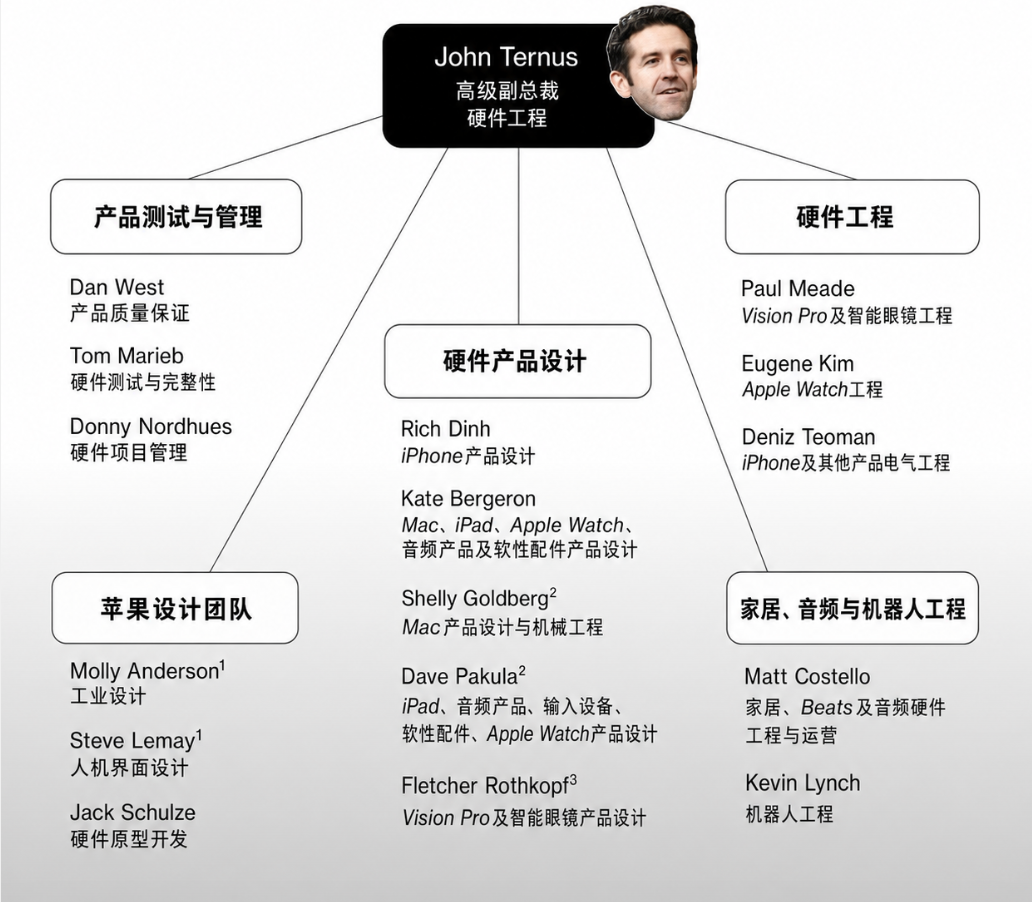
💡Apple's new CEO inherits a hardware advantage—and a major opportunity to redefine local AI.
⚡ 30-Second TL;DR
What Changed
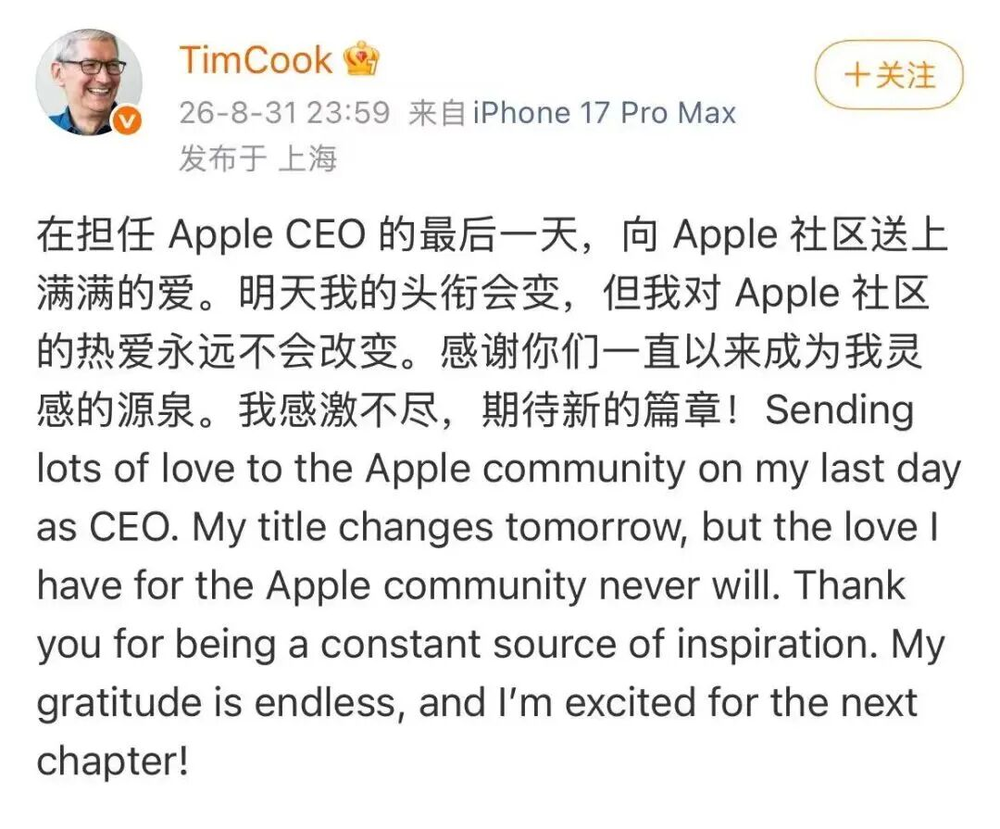
John Ternus became CEO at age 50, while Tim Cook moved to the board as executive chairman.
Why It Matters
The leadership change could push Apple toward a hardware-led AI strategy centered on on-device inference and ecosystem integration. If Ternus can connect Apple Silicon, its installed base, and cross-application agent capabilities, Apple may compete in local AI without relying entirely on cloud models.
What To Do Next
Prototype an on-device workflow with Apple's Foundation Models framework and App Intents, then benchmark latency, memory use, and cloud fallback costs.
Key Points
- •John Ternus became CEO at age 50, while Tim Cook moved to the board as executive chairman.
- •Ternus has led major hardware programs including iPad, AirPods, iPhone, Mac, and the transition to Apple Silicon.
- •Apple's new leadership inherits pressure to address delayed generative AI features and the repeatedly postponed Siri upgrade.
- •Mac products are positioned for local AI workloads, with Apple extending neural acceleration across its lineup.
- •Mac revenue reached $10.4 billion in the June quarter, up 28.7% year over year.
🧠 Deep Insight
Background and context from public sources — not the original article. 16 sources cited.
🔑 Enhanced Key Takeaways
- •John Ternus joined Apple in 2001, transitioning from a background in product engineering to the CEO role, signaling a shift from Tim Cook's operations-centric leadership to a product-first strategy.
- •Apple is maintaining a 'capex-light' AI strategy, prioritizing partnerships with providers like Google for Gemini integration rather than building massive proprietary data center infrastructure.
- •The upcoming September 9, 2026, product event is widely anticipated to be the debut of Apple's first foldable iPhone, serving as the first major public test of Ternus's leadership.
- •Apple has recently refreshed its Mac mini and Mac Studio lineups with M5 and M6 series chips specifically optimized for on-device agentic workflows.
- •Tim Cook will remain at Apple as Executive Chairman of the Board, focusing his efforts on government relations and high-level corporate strategy.
📊 Competitor Analysis▸ Show
| Feature | Apple (Ternus Era) | Google (Alphabet) | OpenAI | Microsoft |
|---|---|---|---|---|
| AI Strategy | On-device/Capex-light | Cloud-first/Model-heavy | Model-first/Research | Cloud/Enterprise AI |
| Hardware | Vertical Integration | Pixel/TPU | N/A | Surface/Azure |
| Ecosystem | Closed/Hardware-led | Open/Cloud-led | API-led | Enterprise/OS-led |
🛠️ Technical Deep Dive
- Apple Silicon M5/M6 architecture: Focuses on high-bandwidth unified memory and increased Neural Engine throughput to support local execution of large language models.
- Agentic Computing Framework: Designed to enable Siri to perform cross-app actions by leveraging on-device context awareness and local model inference.
- Capex-light infrastructure: Utilizes a hybrid model where complex queries are offloaded to partner clouds (e.g., Google Gemini) while maintaining privacy-sensitive tasks on-device.
🔮 Future ImplicationsAI analysis grounded in cited sources
⏳ Timeline
📎 Sources (16)
Factual claims are grounded in the sources below. Forward-looking analysis is AI-generated interpretation.
Weekly AI Recap
Read this week's curated digest of top AI events →
👉Related Updates

AI-curated news aggregator. All content rights belong to original publishers.
Original source: 虎嗅 ↗
This is a summary, not the original. Read the source, or get the weekly briefing.
Weekly AI briefing
One email a week. Unsubscribe anytime.