JD.com Launches $1.4B Embodied AI RoboBase Network
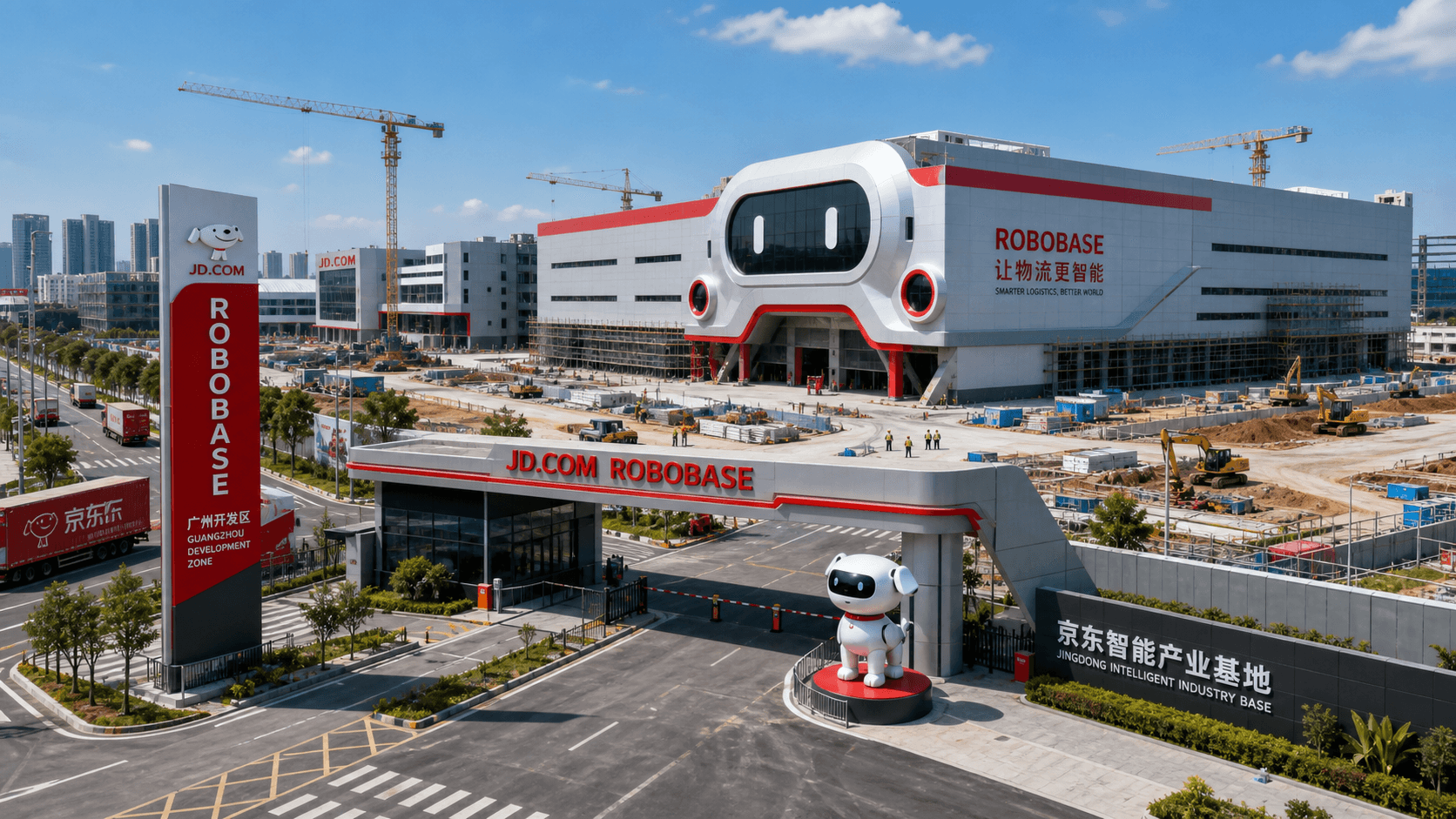
💡JD.com's $1.4B pivot to embodied AI signals massive demand for robotics software and fleet management innovation.
⚡ 30-Second TL;DR
What Changed
JD.com investing $1.4 billion into a nationwide RoboBase network.
Why It Matters
This massive infrastructure investment suggests a rapid scaling of embodied AI in logistics, likely setting new standards for automated warehouse operations and robotics integration.
What To Do Next
Evaluate JD.com's open robotics APIs or developer documentation if you are building embodied AI agents for logistics environments.
Key Points
- •JD.com investing $1.4 billion into a nationwide RoboBase network.
- •Strategic transformation from a logistics giant to an embodied AI platform.
- •Targeting 300 million robot procurements and 80+ operational bases.
🧠 Deep Insight
AI-generated analysis for this event — not the original article.
🔑 Enhanced Key Takeaways
- •The RoboBase network is designed to integrate JD.com's proprietary 'JD-Brain' embodied AI model, which focuses on cross-domain task generalization for logistics and warehouse automation.
- •The initiative leverages JD.com's existing 'Asia No. 1' smart warehouse infrastructure as the foundational testing ground for the new robot fleet.
- •JD.com is partnering with domestic Chinese robotics manufacturers to standardize hardware interfaces, aiming to reduce the cost of humanoid and quadrupedal robot deployment by 40%.
- •The Guangzhou facility will serve as a centralized R&D hub for 'Sim-to-Real' training, utilizing massive datasets from JD's decade-long logistics operations to accelerate robot learning.
- •The project includes a dedicated open-source developer ecosystem, allowing third-party robotics firms to deploy their software stacks on JD's hardware network.
📊 Competitor Analysis▸ Show
| Feature | JD.com (RoboBase) | Amazon (Robotics) | Tesla (Optimus) |
|---|---|---|---|
| Primary Focus | Logistics & Supply Chain | Warehouse Automation | General Purpose Humanoid |
| Deployment Model | Nationwide Base Network | Internal Warehouse Integration | Direct-to-Enterprise/Consumer |
| AI Integration | JD-Brain (Embodied) | Proprietary Fleet AI | FSD/Optimus AI Stack |
🛠️ Technical Deep Dive
- Architecture: Utilizes a hierarchical control system where the central JD-Brain handles high-level task planning while edge-based controllers manage real-time motor feedback.
- Sim-to-Real Pipeline: Employs NVIDIA Isaac Sim for synthetic data generation, mapping warehouse environments to digital twins to train robots before physical deployment.
- Hardware Standardization: Implements a modular 'Plug-and-Play' interface for end-effectors, allowing robots to switch between picking, sorting, and heavy-lifting tasks.
- Connectivity: Operates on a private 5G network architecture within RoboBase facilities to ensure low-latency communication for swarm coordination.
🔮 Future ImplicationsAI analysis grounded in cited sources
⏳ Timeline
Weekly AI Recap
Read this week's curated digest of top AI events →
👉Related Updates

AI-curated news aggregator. All content rights belong to original publishers.
Original source: Pandaily ↗
This is a summary, not the original. Read the source, or get the weekly briefing.
The weekly digest
One email a week. Unsubscribe anytime.