Japan to Acquire 27,500 Nvidia Rubin Chips for Robotics
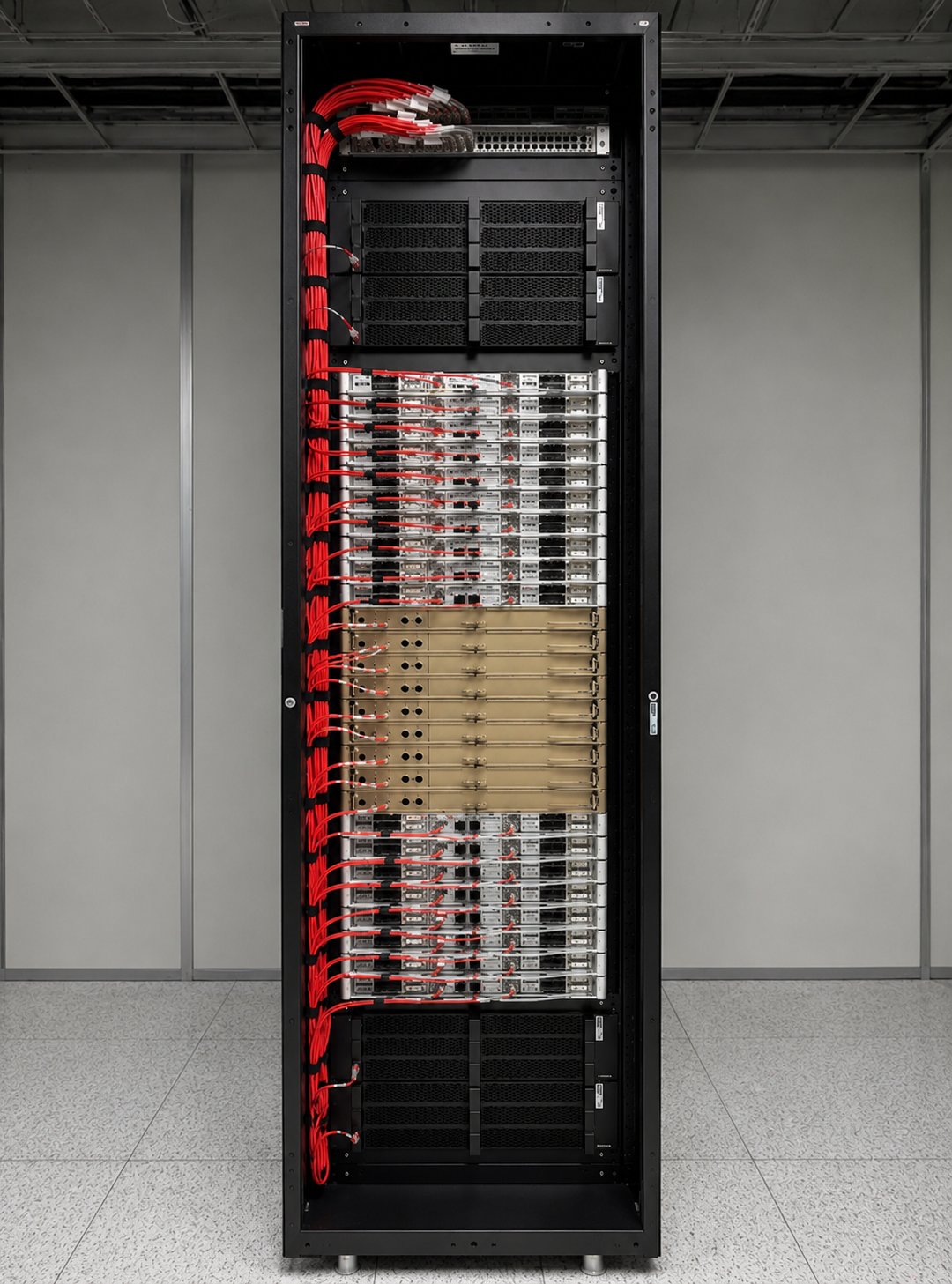
💡Japan's massive investment in Rubin chips highlights the critical hardware path for scaling embodied AI models.
⚡ 30-Second TL;DR
What Changed
Noetra Corp will manage the data center infrastructure and AI model development.
Why It Matters
This move signals a major shift in Japan's sovereign AI strategy, focusing on embodied AI and robotics. It strengthens the local supply chain for high-performance computing and reduces reliance on foreign cloud providers.
What To Do Next
Monitor the hardware specifications of the Rubin architecture to understand how its memory bandwidth improvements will impact your future robotics model training workflows.
Key Points
- •Noetra Corp will manage the data center infrastructure and AI model development.
- •The project is backed by 387.3 billion yen in Japanese government funding.
- •Major industry players including SoftBank, Toyota's Preferred Networks, and NEC are supporting the initiative.
- •The procurement focuses on Nvidia's next-generation Rubin architecture.
🧠 Deep Insight
AI-generated analysis for this event.
🔑 Enhanced Key Takeaways
- •The Rubin architecture utilizes HBM4 memory technology, marking a significant shift from the HBM3e used in Blackwell-based systems to support higher bandwidth requirements for robotics-specific inference.
- •Noetra Corp's data center initiative is part of Japan's 'AI Sovereignty' strategy, aimed at reducing reliance on US-based cloud providers for sensitive industrial and robotics data.
- •The 387.3 billion yen funding package includes specific provisions for liquid cooling infrastructure, necessitated by the high thermal design power (TDP) of the Rubin GPU clusters.
- •Preferred Networks (PFN) is contributing its proprietary MN-Core architecture to work in tandem with the Nvidia Rubin chips, creating a hybrid compute environment for specialized robotics training.
- •The procurement contract includes a 'priority allocation' clause, ensuring Noetra Corp receives the first batch of Rubin chips ahead of general commercial availability in the Asia-Pacific region.
📊 Competitor Analysis▸ Show
| Feature | Nvidia Rubin (Noetra) | AMD Instinct MI400 | Google TPU v6 |
|---|---|---|---|
| Primary Focus | Robotics/Edge AI | General Purpose HPC | Cloud/Foundation Models |
| Memory | HBM4 | HBM3e/HBM4 | Custom HBM |
| Interconnect | NVLink 6.0 | Infinity Fabric | Custom ICI |
| Availability | Priority (Japan) | Commercial | Internal/Cloud |
🛠️ Technical Deep Dive
- Rubin architecture features a multi-die chiplet design optimized for low-latency inference required by real-time robotics control systems.
- Integration of HBM4 memory provides a 2x increase in memory bandwidth compared to previous generation H100/Blackwell architectures.
- The system utilizes a new optical interconnect fabric to reduce power consumption in large-scale data center clusters.
- Implementation includes specialized transformer engines designed to accelerate sparse model execution, critical for robotics foundation models.
🔮 Future ImplicationsAI analysis grounded in cited sources
⏳ Timeline
Weekly AI Recap
Read this week's curated digest of top AI events →
👉Related Updates



AI-curated news aggregator. All content rights belong to original publishers.
Original source: cnBeta (Full RSS) ↗