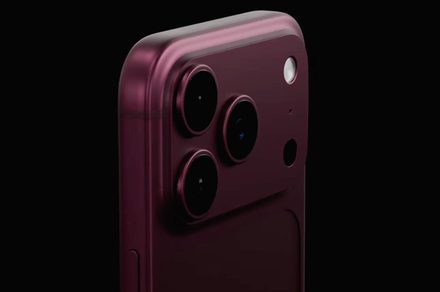
iPhone 18 Pro Max leak suggests massive battery capacity
💡Larger batteries enable more complex on-device AI; see how Apple's hardware shifts impact future mobile AI performance.
⚡ 30-Second TL;DR
What Changed
iPhone 18 Pro Max battery size may surpass Galaxy S26 Ultra
Why It Matters
Increased battery density is critical for running on-device AI models, which are highly power-intensive for mobile processors.
What To Do Next
Monitor Apple's hardware specifications for future devices to optimize your on-device AI models for longer battery life and thermal constraints.
Key Points
- •iPhone 18 Pro Max battery size may surpass Galaxy S26 Ultra
- •Capacity gains linked to the removal of physical SIM tray components
- •Hardware design shift suggests focus on power density and internal space optimization
🧠 Deep Insight
AI-generated analysis for this event — not the original article.
🔑 Enhanced Key Takeaways
- •The iPhone 18 series is expected to utilize a new stacked battery design, leveraging high-density silicon-carbon anode technology to increase energy density without increasing physical volume.
- •Apple's transition to a fully eSIM-only architecture in global markets is projected to reclaim approximately 15-20% of internal logic board space previously occupied by the SIM tray and reader module.
- •Thermal management systems in the iPhone 18 Pro Max are reportedly being redesigned with a graphene-based heat spreader to compensate for the increased heat dissipation requirements of higher-capacity cells.
- •Supply chain reports indicate that Apple is diversifying its battery cell suppliers, moving toward a dual-sourcing strategy between ATL and LG Energy Solution to ensure yield stability for the high-capacity packs.
- •The removal of the physical SIM tray is also expected to improve the device's IP69 ingress protection rating, as it eliminates one of the primary structural weak points for water and dust entry.
📊 Competitor Analysis▸ Show
| Feature | iPhone 18 Pro Max (Est.) | Samsung Galaxy S26 Ultra | Google Pixel 11 Pro |
|---|---|---|---|
| Battery Capacity | ~5,800 mAh | 5,500 mAh | 5,400 mAh |
| SIM Architecture | eSIM Only | Physical + eSIM | Physical + eSIM |
| Thermal Solution | Graphene/Stacked | Vapor Chamber | Vapor Chamber |
🛠️ Technical Deep Dive
- Battery Architecture: Implementation of a stacked cell design which allows for a higher volume-to-capacity ratio compared to traditional wound jelly-roll batteries.
- Anode Material: Integration of silicon-carbon composite anodes, which offer higher theoretical capacity than standard graphite anodes.
- Space Optimization: Utilization of a modular internal layout where the SIM tray cavity is repurposed for a larger battery cell footprint and enhanced antenna array placement.
- Power Management: Adoption of a new proprietary PMIC (Power Management Integrated Circuit) designed to handle higher charging currents and improve efficiency during high-load tasks.
🔮 Future ImplicationsAI analysis grounded in cited sources
⏳ Timeline
Weekly AI Recap
Read this week's curated digest of top AI events →
👉Related Updates

AI-curated news aggregator. All content rights belong to original publishers.
Original source: Digital Trends ↗
This is a summary, not the original. Read the source, or get the weekly briefing.
Weekly AI briefing
One email a week. Unsubscribe anytime.