🗾Stalecollected in 2h

IPA Tackles LLM Data Drought with Data Spaces
IPA Tackles LLM Data Drought with Data Spaces
PostLinkedIn
🗾Read original on ITmedia AI+ (日本)

💡IPA's data spaces combat 2026 LLM training data crisis via cross-org sharing

⚡ 30-Second TL;DR

What Changed

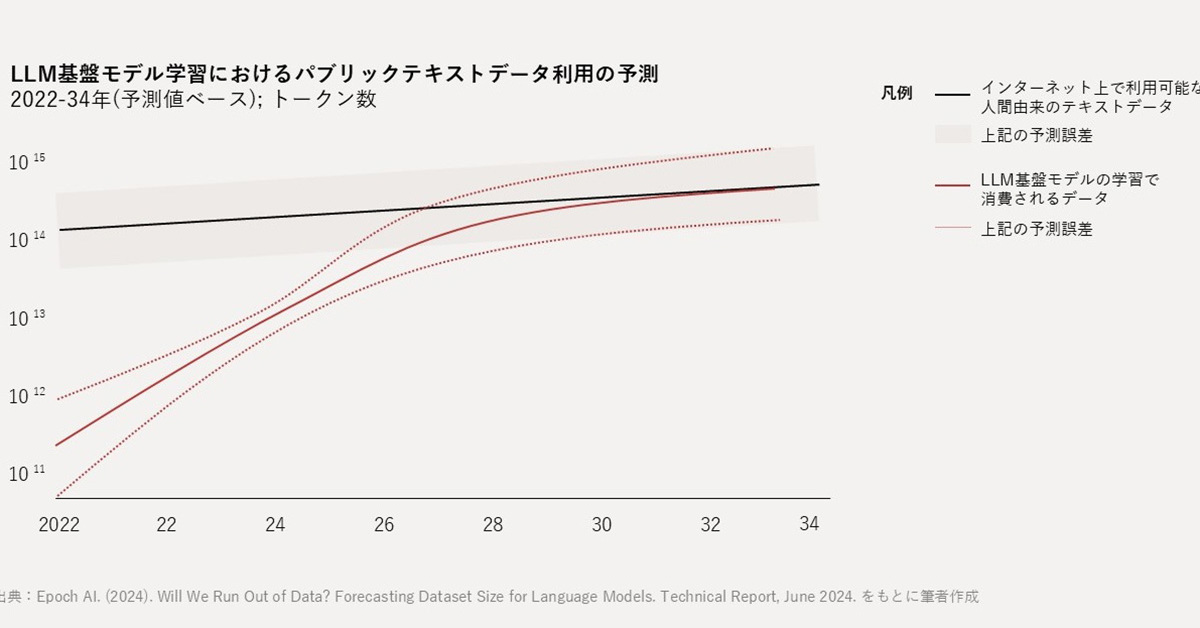
IPA forecasts 2026 as LLM training 'data depletion year one'

Why It Matters

This initiative could standardize global data sharing for LLMs, easing training bottlenecks. It positions Japan as a leader in AI data infrastructure, benefiting international researchers and enterprises.

What To Do Next

Download IPA's data spaces deliverables from IPA website to evaluate for multi-org LLM data pipelines.

Who should care:Researchers & Academics

Key Points

  • IPA forecasts 2026 as LLM training 'data depletion year one'
  • Published deliverables for cross-country/organization 'data spaces'
  • Aims to utilize dormant high-quality data in enterprises
  • Addresses critical shortage hindering AI evolution

🧠 Deep Insight

AI-generated analysis for this event.

🔑 Enhanced Key Takeaways

  • The IPA's initiative aligns with the 'Data Free Flow with Trust' (DFFT) framework, aiming to establish standardized governance protocols that ensure data sovereignty while facilitating interoperability between Japanese enterprise silos and international AI research hubs.
  • The deliverables include a reference architecture for 'Data Spaces' that utilizes decentralized identity (DID) and verifiable credentials to allow companies to contribute training data without exposing proprietary intellectual property or sensitive PII.
  • This effort is a direct response to the 'AI Data Wall' phenomenon, where the saturation of public internet data has forced a pivot toward high-value, domain-specific enterprise data that is currently trapped in legacy formats and fragmented databases.

🛠️ Technical Deep Dive

  • Architecture utilizes a federated data exchange model, moving away from centralized data lakes to avoid the security risks associated with massive data aggregation.
  • Implementation of 'Data Clean Rooms' (DCRs) to enable secure computation on sensitive datasets, allowing LLM training processes to query data without direct access to raw records.
  • Integration of standardized metadata schemas (based on international ISO/IEC standards) to ensure semantic interoperability across disparate enterprise data sources.
  • Deployment of automated data-cleansing and synthetic data generation pipelines within the 'Data Space' to normalize enterprise-grade data for transformer-based model ingestion.

🔮 Future ImplicationsAI analysis grounded in cited sources

Enterprise data monetization will become a primary revenue stream for non-tech Japanese firms by 2028.
The IPA's framework provides the legal and technical infrastructure necessary for companies to safely license their proprietary data for AI training.
The 'Data Space' initiative will reduce the reliance of Japanese AI startups on US-based public datasets.
By unlocking domestic high-quality, domain-specific data, local models can achieve higher accuracy in specialized fields like manufacturing and robotics.

Timeline

2024-05
IPA establishes the AI Data Infrastructure Working Group to address training data scarcity.
2025-02
Release of the 'Data Space' conceptual framework for public comment.
2025-11
Completion of pilot programs testing cross-organizational data sharing in the manufacturing sector.
2026-03
Official publication of the 'Data Space' technical deliverables and governance guidelines.
📰

Weekly AI Recap

Read this week's curated digest of top AI events →

👉Related Updates

AI-curated news aggregator. All content rights belong to original publishers.
Original source: ITmedia AI+ (日本)