Intel's 'Wildcat' chips to challenge MacBook Neo
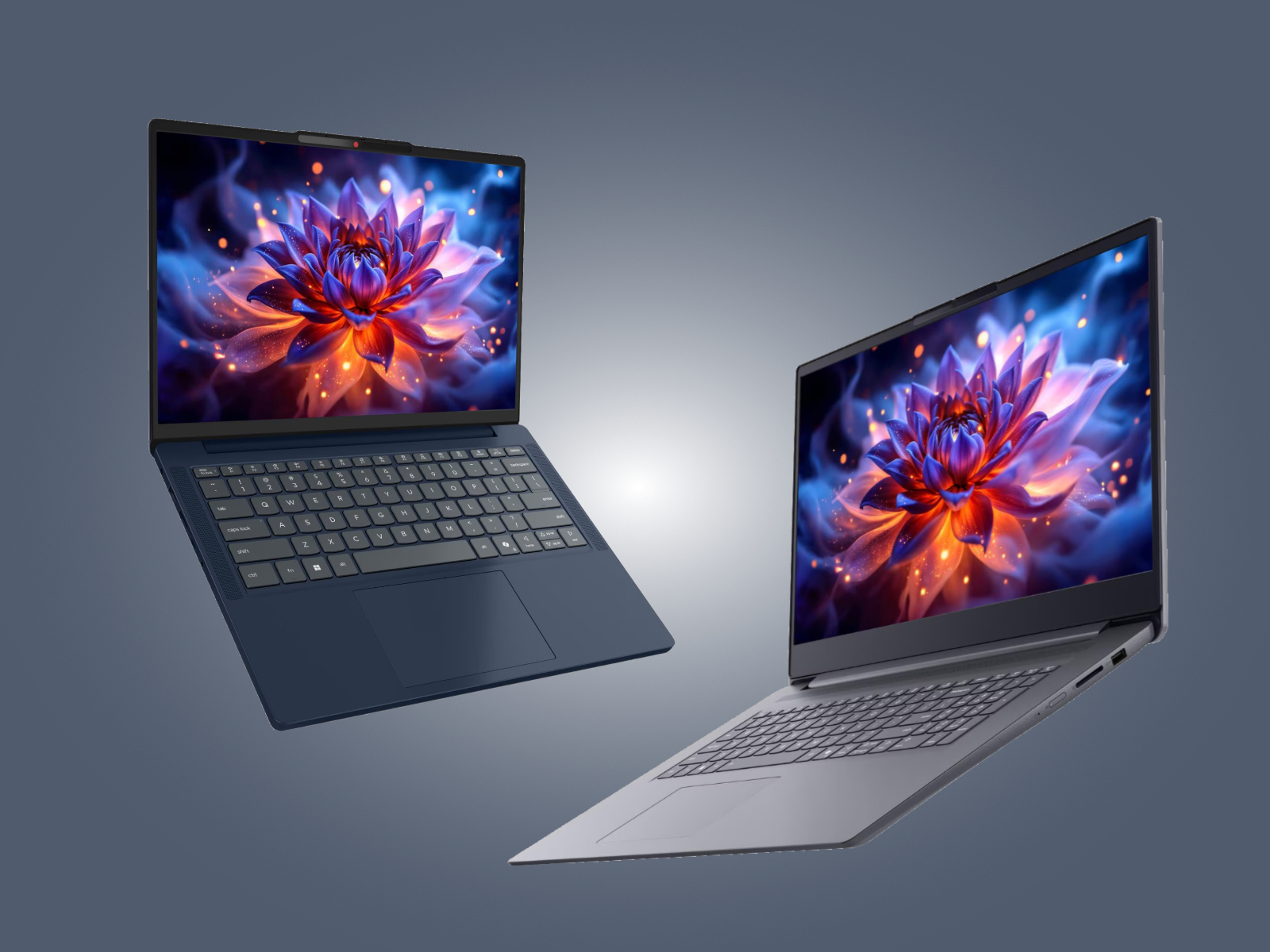
Intel's strategic shift to bring flagship chips to entry-level hardware could reshape the laptop AI hardware landscape.
30-Second TL;DR
What Changed
Intel is developing a new 'Wildcat' processor series to counter Apple's market dominance.
Why It Matters
If successful, this could narrow the performance gap between x86 and ARM-based laptops, potentially slowing Apple's market share growth in the entry-level segment.
What To Do Next
Monitor Intel's upcoming product roadmap for 'Wildcat' architecture benchmarks to evaluate if x86 efficiency can finally compete with Apple Silicon for local AI workloads.
Key Points
- •Intel is developing a new 'Wildcat' processor series to counter Apple's market dominance.
- •The strategy involves bringing flagship-tier manufacturing processes to entry-level hardware.
- •This move signals a direct competitive response to the performance efficiency of Apple Silicon.
Deep Insight
Background and context from public sources — not the original article. 11 sources cited.
Enhanced Key Takeaways
- •Intel's 'Wildcat Lake' processors, officially unveiled on April 16, 2026, are part of the new Core 300 series, specifically designed for the entry-level PC segment with a focus on value, small form factors, and edge AI capabilities.
- •The Wildcat Lake series features a hybrid core configuration, combining two 'Cougar Cove' P-cores with four LPE 'Darkmont' cores, and utilizes Intel's advanced 18A manufacturing process for its primary compute and GPU die.
- •These new Intel processors are capable of Copilot+ AI PC certification, integrating an NPU 5 that delivers 40 TOPS (Tera Operations Per Second) for local AI processing, alongside support for modern connectivity standards like Wi-Fi 7 and Thunderbolt 4.
- •Apple's competing MacBook Neo, released on March 11, 2026, is positioned as an entry-level laptop starting at US$599, and notably features an A-series chip (Apple A18 Pro SoC) rather than the M-series, coupled with 8GB of unified memory and a 13-inch Liquid Retina display.
- •The MacBook Neo's performance, particularly for gaming, is functionally equivalent to an iPhone 16 Pro, falling short of higher-end M-series Macs and iPads, and it omits a backlit keyboard as a cost-saving measure for its budget-friendly positioning.
Competitor Analysis
- Intel 'Wildcat Lake' (Core 300 Series)
- Entry-level PC, value-oriented, commercial, edge AI PCs
- Apple MacBook Neo
- Entry-level MacBook, mainstream users, students
- Intel 'Wildcat Lake' (Core 300 Series)
- April 16, 2026 (unveiled)
- Apple MacBook Neo
- March 11, 2026 (released)
- Intel 'Wildcat Lake' (Core 300 Series)
- Intel Core 300 series (e.g., Core 7 360, Core 5 320, Core 3 305)
- Apple MacBook Neo
- Apple A18 Pro SoC
- Intel 'Wildcat Lake' (Core 300 Series)
- Hybrid: 2 'Cougar Cove' P-cores + 4 LPE 'Darkmont' cores
- Apple MacBook Neo
- 6-core CPU (2 performance, 4 efficiency)
- Intel 'Wildcat Lake' (Core 300 Series)
- Intel 18A (for compute/GPU die)
- Apple MacBook Neo
- (A18 Pro is likely on a TSMC advanced node, not specified in search results)
- Intel 'Wildcat Lake' (Core 300 Series)
- NPU 5, 40 TOPS (INT8) for Copilot+ AI PC certification
- Apple MacBook Neo
- 16-core Neural Engine (TOPS not specified, but A18 Pro is AI-capable)
- Intel 'Wildcat Lake' (Core 300 Series)
- Up to two Xe3 cores
- Apple MacBook Neo
- 5-core GPU
- Intel 'Wildcat Lake' (Core 300 Series)
- LPDDR5X up to 7,467 MT/s or DDR5 up to 6,400 MT/s
- Apple MacBook Neo
- 8GB unified memory (not upgradeable)
- Intel 'Wildcat Lake' (Core 300 Series)
- (Varies by OEM, not specified for chip itself)
- Apple MacBook Neo
- 13-inch Liquid Retina (2408 × 1506, 218 ppi)
- Intel 'Wildcat Lake' (Core 300 Series)
- Wi-Fi 7, Bluetooth 6.0, Thunderbolt 4, PCIe Gen 4
- Apple MacBook Neo
- Wi-Fi 6E, Bluetooth 6, 2x USB-C (1x 10Gbps DP 1.4, 1x USB 2.0)
- Intel 'Wildcat Lake' (Core 300 Series)
- (Varies by OEM, not specified for chip itself)
- Apple MacBook Neo
- US$599 (US$499 education)
- Intel 'Wildcat Lake' (Core 300 Series)
- Advanced 18A process for entry-level, Copilot+ AI PC certification
- Apple MacBook Neo
- First Mac with A-series chip, lowest price point for a MacBook
| Feature/Spec | Intel 'Wildcat Lake' (Core 300 Series) | Apple MacBook Neo |
|---|---|---|
| Target Segment | Entry-level PC, value-oriented, commercial, edge AI PCs | Entry-level MacBook, mainstream users, students |
| Launch Date | April 16, 2026 (unveiled) | March 11, 2026 (released) |
| Processor | Intel Core 300 series (e.g., Core 7 360, Core 5 320, Core 3 305) | Apple A18 Pro SoC |
| CPU Cores | Hybrid: 2 'Cougar Cove' P-cores + 4 LPE 'Darkmont' cores | 6-core CPU (2 performance, 4 efficiency) |
| Manufacturing Node | Intel 18A (for compute/GPU die) | (A18 Pro is likely on a TSMC advanced node, not specified in search results) |
| NPU Performance | NPU 5, 40 TOPS (INT8) for Copilot+ AI PC certification | 16-core Neural Engine (TOPS not specified, but A18 Pro is AI-capable) |
| GPU | Up to two Xe3 cores | 5-core GPU |
| Memory | LPDDR5X up to 7,467 MT/s or DDR5 up to 6,400 MT/s | 8GB unified memory (not upgradeable) |
| Display | (Varies by OEM, not specified for chip itself) | 13-inch Liquid Retina (2408 × 1506, 218 ppi) |
| Connectivity | Wi-Fi 7, Bluetooth 6.0, Thunderbolt 4, PCIe Gen 4 | Wi-Fi 6E, Bluetooth 6, 2x USB-C (1x 10Gbps DP 1.4, 1x USB 2.0) |
| Starting Price | (Varies by OEM, not specified for chip itself) | US$599 (US$499 education) |
| Key Differentiator | Advanced 18A process for entry-level, Copilot+ AI PC certification | First Mac with A-series chip, lowest price point for a MacBook |
Technical Deep Dive
-
Intel 'Wildcat Lake' Processors (Core 300 Series):
- Architecture: Features a hybrid core design with two 'Cougar Cove' P-cores and four LPE 'Darkmont' cores.
- Manufacturing Process: The primary compute and GPU die is built on Intel's 18A internal node.
- Die Configuration: A two-die solution, with the main compute/GPU tile on 18A and a separate I/O die manufactured externally.
- NPU: Integrates NPU 5, providing 40 TOPS (INT8) for local AI processing, enabling Copilot+ AI PC certification.
- GPU: Includes up to two Xe3 cores for graphics.
- Memory Support: Supports LPDDR5X memory running at up to 7,467 MT/s or DDR5 memory at up to 6,400 MT/s.
- Cache: Features a 4 MB memory-side cache.
- I/O: The I/O die supports 6 PCIe Gen 4 lanes, two Thunderbolt 4 connections, two USB 3.2 connectors, and up to eight USB 2.0 connectors.
- Wireless: Includes Wi-Fi 7 and Bluetooth 6.0.
- Power: 15W TDP, rumored to go up to 25W in PL2.
-
Apple MacBook Neo:
- Processor: Apple A18 Pro SoC.
- CPU: 6-core CPU with 2 performance cores and 4 efficiency cores.
- GPU: 5-core GPU with hardware-accelerated ray tracing.
- Neural Engine: 16-core Neural Engine.
- Memory: 8 GB of unified memory (not upgradeable), with 60GB/s memory bandwidth.
- Display: 13.0-inch Liquid Retina display with 2408 × 1506 native resolution (218 ppi) and 500 nits brightness.
- Ports: Two USB-C ports (one USB 10Gbps with DisplayPort 1.4, one USB 2.0) and a headphone jack.
- Wireless: Wi-Fi 6E and Bluetooth 6.
- Design: Aluminum body, notchless display, available in Silver, Blush, Citrus, and Indigo with color-matched keyboard and feet.
- Media Engine: Hardware-accelerated H.264, HEVC, ProRes, ProRes RAW, video decode/encode engines, and ProRes encode/decode engine, AV1 decode.
Future ImplicationsAI analysis grounded in cited sources
Timeline
- 2021Intel publishes its process node roadmap, aiming to clear five nodes in four years.
- 2024Intel 20A process expected to be available, debuting RibbonFET and PowerVia technologies.
- 2025Intel 18A process slated for manufacturing, targeting process leadership.
- 2026-01Intel's Panther Lake (Core Ultra Series 3 mobile processors) architecture launched at CES 2026.
- 2026-03-04Apple announces the MacBook Neo.
- 2026-04Intel officially unveils 'Wildcat Lake' Core 300 series processors for the entry-level segment.
Sources (11)
Factual claims are grounded in the sources below. Forward-looking analysis is AI-generated interpretation.
Weekly AI Recap
Read this week's curated digest of top AI events →
AI-curated news aggregator. All content rights belong to original publishers.
Original source: Ifanr (爱范儿) ↗
This is a summary, not the original. Read the source, or get the weekly briefing.
The weekly digest
One email a week. Unsubscribe anytime.