Intel to extend CPU socket longevity to three generations
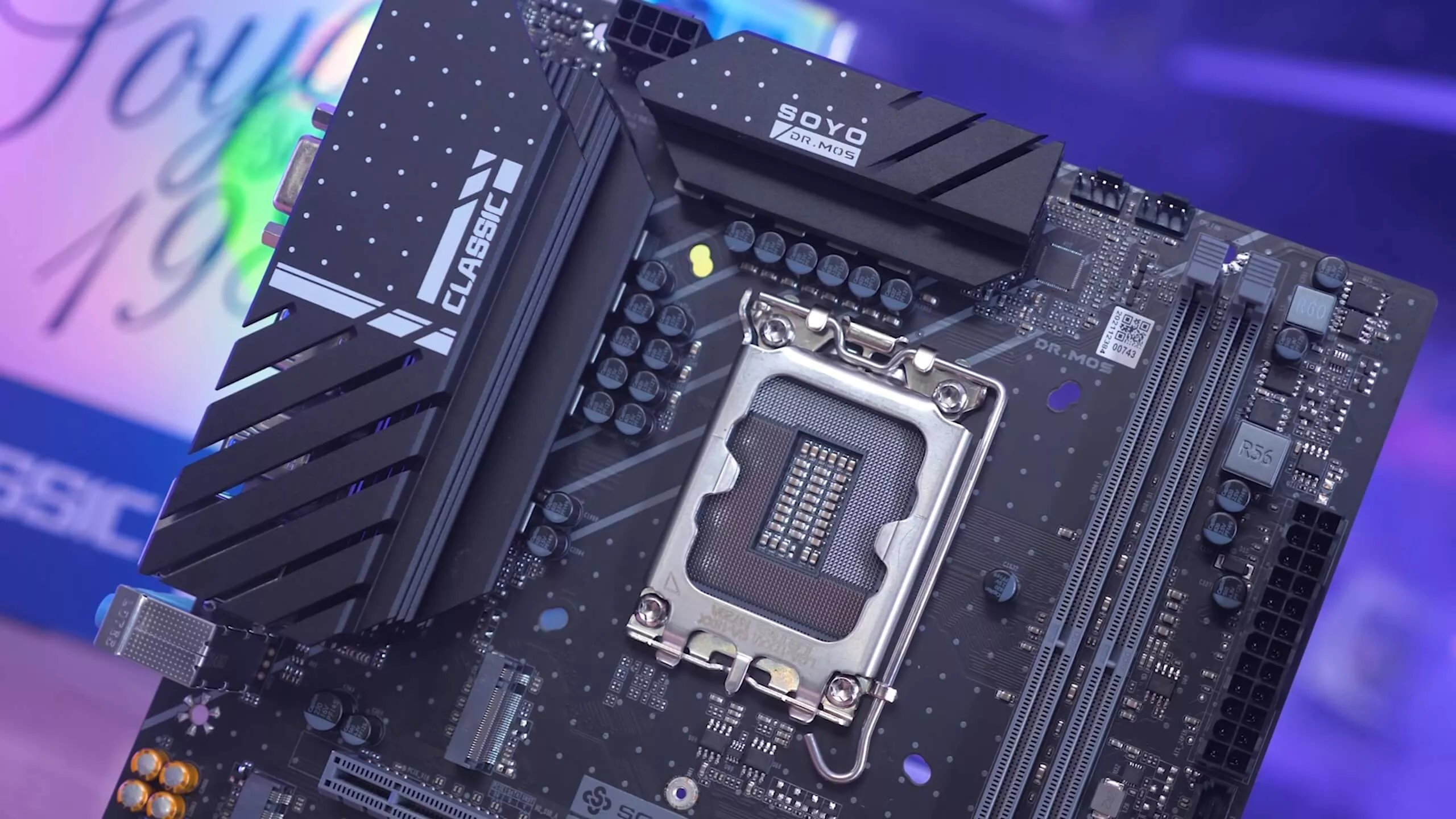
💡Lower hardware upgrade costs for AI workstations as Intel finally matches AMD's long-term socket support.
⚡ 30-Second TL;DR
What Changed
Intel plans to end the 'two-generation' socket replacement cycle.
Why It Matters
This change reduces the total cost of ownership for high-performance workstations and AI development rigs, allowing for more frequent CPU upgrades without replacing the entire motherboard.
What To Do Next
Evaluate your hardware lifecycle planning for AI training clusters to account for potential motherboard reuse over longer periods.
Key Points
- •Intel plans to end the 'two-generation' socket replacement cycle.
- •New policy aims for at least three generations of CPU support per socket.
- •Strategy shift reduces hardware upgrade costs and complexity for DIY users.
🧠 Deep Insight
Background and context from public sources — not the original article. 27 sources cited.
🔑 Enhanced Key Takeaways
- •The LGA 1700 socket, introduced in November 2021, already supports three generations of Intel CPUs: 12th Gen Alder Lake, 13th Gen Raptor Lake, and 14th Gen Raptor Lake Refresh, demonstrating a prior instance of multi-generational support.
- •Intel's upcoming LGA 1851 socket, designed for Arrow Lake processors (15th Gen), is anticipated to have a shorter lifespan, potentially supporting only one or two generations, before a transition to LGA 1954.
- •The subsequent LGA 1954 socket, expected for Nova Lake processors (16th Gen), is rumored to support up to four CPU generations, including Nova Lake, Razor Lake, Titan Lake, and Hammer Lake, marking a significant departure from Intel's traditional two-generation cycle.
- •Intel's VP and GM of its enthusiast channel, Robert Hallock, publicly confirmed in March 2026 that he envisions future Intel sockets supporting more CPU generations, acknowledging past criticism from PC builders and enthusiasts.
📊 Competitor Analysis▸ Show
| Feature | Intel (New Strategy) | AMD (Current Strategy) |
|---|---|---|
| Socket Longevity | Aiming for 3+ generations (LGA 1954 rumored for 4 generations) | AM4 supported ~5 generations for nearly a decade; AM5 committed through 2029 (Zen 4, Zen 5, Zen 6) |
| Upgrade Costs | Reduced due to fewer motherboard replacements | Historically lower due to consistent socket support |
| Overclocking Support | Requires K-series CPUs and Z-series chipsets for CPU overclocking | Generally supported on most Ryzen CPUs (except X3D) and B-series/X-series chipsets |
| Memory Support | LGA 1700 supported DDR4/DDR5; LGA 1851 and LGA 1954 are DDR5-only | AM5 is DDR5-only |
| Market Perception | Historically criticized for frequent socket changes | Praised for consumer-friendly long-term platform support |
🛠️ Technical Deep Dive
- LGA 1700 (Socket V): Introduced November 2021, it features 1700 pins in a land grid array configuration. The socket has a rectangular form factor (45 mm x 37.5 mm), making it 7.5 mm longer than its predecessor, LGA 1200. It requires new cooling solutions due to a redesigned 78 mm x 78 mm mounting pattern. This socket supports Intel's hybrid architecture (Performance-cores and Efficient-cores), PCIe 5.0, and both DDR4 and DDR5 memory.
- LGA 1851 (Socket V1): Released October 2024, this socket is designed for Meteor Lake-PS embedded and Arrow Lake-S desktop processors. It increases the pin count from 1700 to 1851 while maintaining the same physical dimensions (37.5 mm x 45 mm) and cooler mounting hole spacing (78 mm x 78 mm) as LGA 1700, ensuring backward compatibility with existing CPU coolers. LGA 1851 provides 20 PCIe 5.0 lanes (x16 for expansion cards, x4 for storage) and an additional 4 PCIe 4.0 lanes for storage, with the ability to bifurcate PCIe lanes for expansion cards into three devices (x8, x4, x4). It exclusively supports DDR5 SDRAM.
- LGA 1954 (Upcoming): Rumored to support multiple future CPU generations, including Nova Lake, Razor Lake, Titan Lake, and Hammer Lake. Motherboards designed for this socket, particularly Z-series chipsets (e.g., Z970, Z990), may require a 64MB BIOS flash chip to accommodate the firmware for these successive processors.
- Challenges for Socket Longevity: Extending socket support across multiple generations involves significant engineering challenges related to maintaining stable power delivery, ensuring robust electrical signaling, and adapting the platform to evolving industry standards such as new PCIe versions and memory technologies (e.g., DDR6).
🔮 Future ImplicationsAI analysis grounded in cited sources
⏳ Timeline
📎 Sources (27)
Factual claims are grounded in the sources below. Forward-looking analysis is AI-generated interpretation.
- grokipedia.com
- orangehardwares.com
- intel.com
- wikipedia.org
- club386.com
- techspot.com
- multicoreperformance.com
- tomshardware.com
- techspot.com
- wccftech.com
- club386.com
- overclock3d.net
- tomshardware.com
- pcgamer.com
- hothardware.com
- techradar.com
- xda-developers.com
- techpowerup.com
- ndtvprofit.com
- videocardz.com
- bestbuy.com
- geekawhat.com
- wikipedia.org
- corsair.com
- orangehardwares.com
- tomshardware.com
- coastipc.com
Weekly AI Recap
Read this week's curated digest of top AI events →
👉Related Updates
AI-curated news aggregator. All content rights belong to original publishers.
Original source: cnBeta (Full RSS) ↗
This is a summary, not the original. Read the source, or get the weekly briefing.
The weekly digest
One email a week. Unsubscribe anytime.