Intel Diamond Rapids Reportedly Packs 256 P-Cores
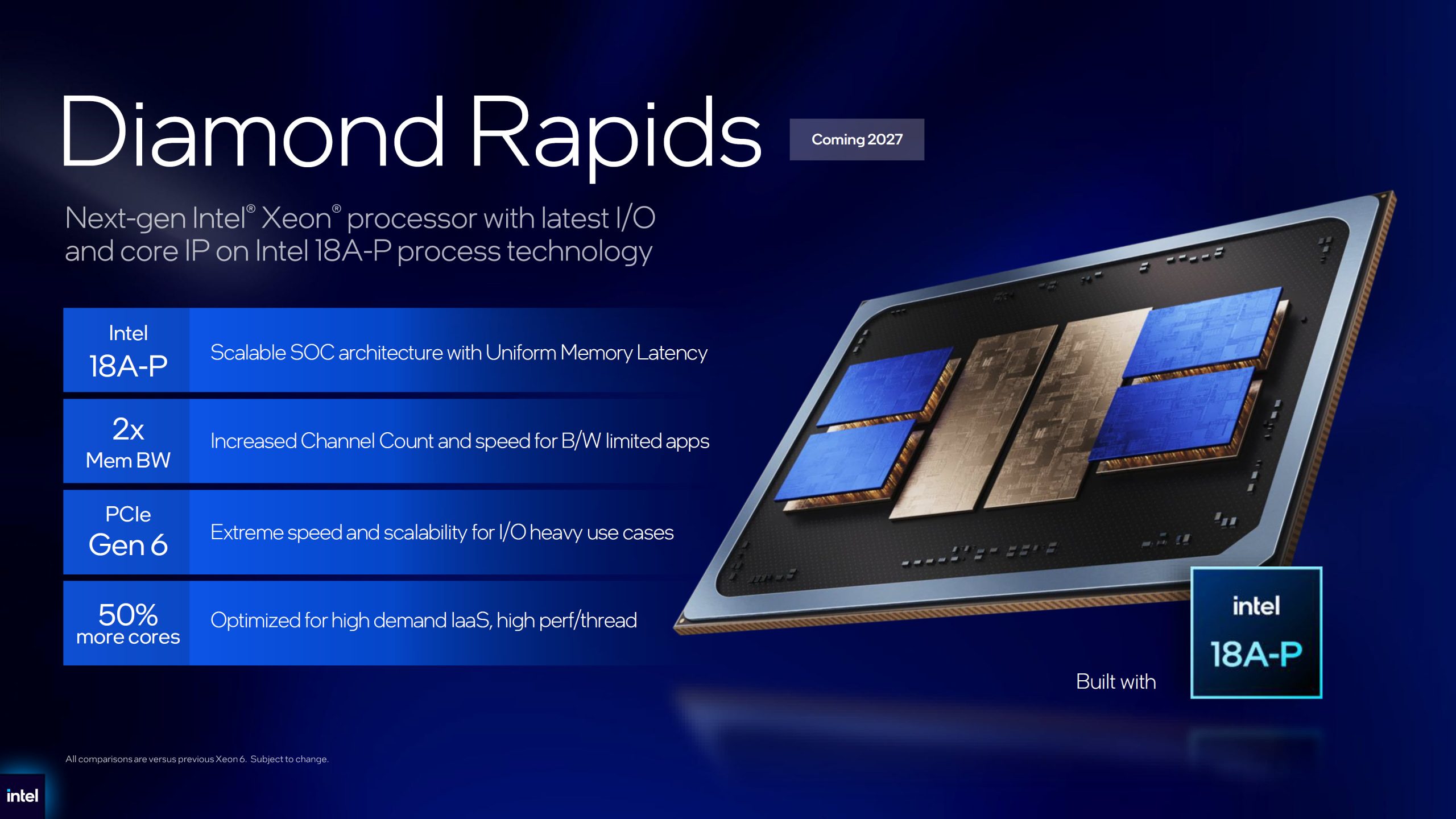
A potential 256-core Xeon could reshape CPU capacity planning for parallel AI inference and data workloads.
30-Second TL;DR
What Changed
The reported flagship configuration includes up to 256 P-Cores.
Why It Matters
If confirmed, the core count could improve throughput for highly parallel workloads such as batch inference, data processing, and virtualization. However, real-world AI value will depend on memory bandwidth, accelerator integration, power efficiency, and software optimization.
What To Do Next
Use Intel oneAPI and a representative CPU-inference benchmark to profile whether your workloads can benefit from very high core counts before revising your server roadmap.
Key Points
- •The reported flagship configuration includes up to 256 P-Cores.
- •Diamond Rapids is Intel’s top-tier server processor platform, codenamed Xeon 7.
- •The processor is positioned as a direct competitor to AMD EPYC Venice.
Deep Insight
AI-generated analysis for this event — not the original article.
Enhanced Key Takeaways
- •Diamond Rapids is expected to utilize the new LGA 9467 socket, marking a significant transition in Intel's server infrastructure requirements.
- •The architecture is projected to leverage Intel's 18A process node, focusing on power efficiency and density improvements over previous generations.
- •Reports indicate the platform will support advanced memory technologies, including DDR5-8800 and potentially CXL 3.0/4.0 integration for high-bandwidth AI workloads.
- •The 256-core configuration is achieved through a multi-tile (chiplet) design, moving away from monolithic dies to improve manufacturing yields for high-core-count server parts.
- •Diamond Rapids is designed to support significantly higher TDP envelopes compared to Granite Rapids, necessitating advanced liquid cooling solutions for data center deployments.
Competitor Analysis
- Intel Diamond Rapids (Xeon 7)
- P-Cores (High Performance)
- AMD EPYC Venice (Zen 6)
- Zen 6 (Performance/Efficiency Hybrid)
- Intel Diamond Rapids (Xeon 7)
- Intel 18A
- AMD EPYC Venice (Zen 6)
- TSMC 2nm (Projected)
- Intel Diamond Rapids (Xeon 7)
- LGA 9467
- AMD EPYC Venice (Zen 6)
- SP6 / Next-Gen Socket
- Intel Diamond Rapids (Xeon 7)
- DDR5-8800
- AMD EPYC Venice (Zen 6)
- DDR5-8800+
- Intel Diamond Rapids (Xeon 7)
- High-Performance Computing (HPC)
- AMD EPYC Venice (Zen 6)
- Cloud & Enterprise Data Center
| Feature | Intel Diamond Rapids (Xeon 7) | AMD EPYC Venice (Zen 6) |
|---|---|---|
| Core Architecture | P-Cores (High Performance) | Zen 6 (Performance/Efficiency Hybrid) |
| Process Node | Intel 18A | TSMC 2nm (Projected) |
| Socket | LGA 9467 | SP6 / Next-Gen Socket |
| Memory Support | DDR5-8800 | DDR5-8800+ |
| Target Market | High-Performance Computing (HPC) | Cloud & Enterprise Data Center |
Technical Deep Dive
- Architecture: Utilizes a modular chiplet-based design to scale up to 256 performance cores.
- Process Node: Manufactured on Intel 18A, incorporating RibbonFET gate-all-around transistors and PowerVia backside power delivery.
- Memory Interface: 12-channel DDR5 memory controller to support massive memory bandwidth requirements.
- I/O Capabilities: Enhanced PCIe Gen 6 support and increased CXL lanes to facilitate direct memory access for AI accelerators and GPU clusters.
- Thermal Design: Designed for high-TDP operation, likely exceeding 500W for top-tier SKUs.
Future ImplicationsAI analysis grounded in cited sources
Timeline
- 2023-12Intel outlines roadmap updates including the transition to 18A process technology.
- 2024-09Intel launches Granite Rapids (Xeon 6), establishing the chiplet-based server architecture foundation.
- 2025-05Initial industry leaks emerge regarding the development of the Diamond Rapids platform.
- 2026-02Intel confirms progress on 18A manufacturing readiness for high-volume server production.
Weekly AI Recap
Read this week's curated digest of top AI events →
Related Updates


AI-curated news aggregator. All content rights belong to original publishers.
Original source: cnBeta (Full RSS) ↗
This is a summary, not the original. Read the source, or get the weekly briefing.
The weekly digest
One email a week. Unsubscribe anytime.