Inner Mongolia Energy Storage Market Trends 2026
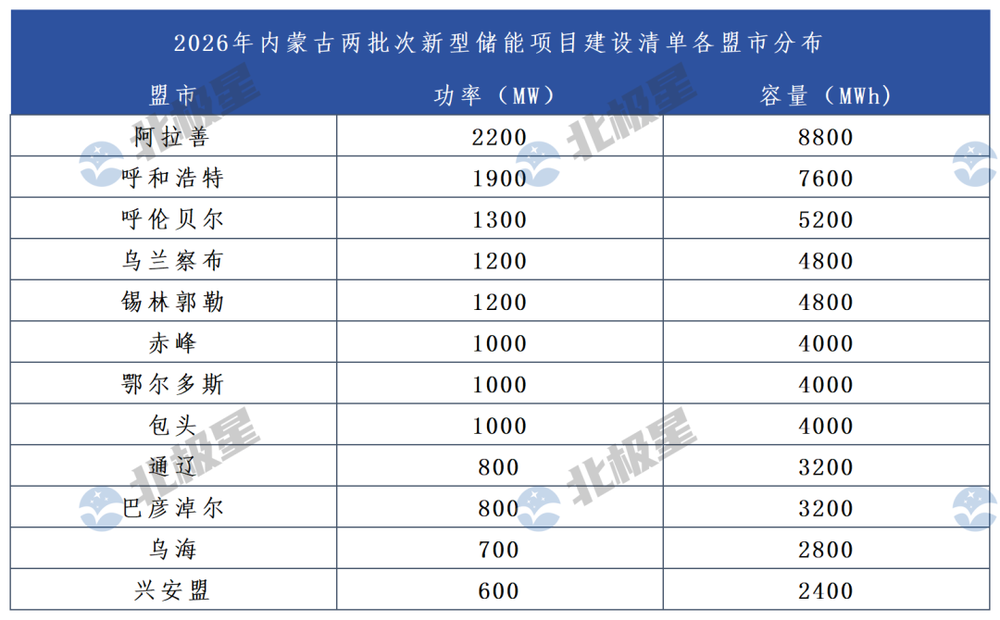
💡Understand the shift in China's largest energy storage market and how grid-side dispatch is replacing simple subsidies.
⚡ 30-Second TL;DR
What Changed
Market shift from 'capacity grabbing' to 'operational efficiency' competition.
Why It Matters
The market is maturing, favoring companies with advanced energy management software and high-efficiency hardware. Developers must optimize for grid-side dispatch performance to survive.
What To Do Next
Analyze grid-side dispatch requirements in Inner Mongolia to optimize your BESS control algorithms for higher auxiliary service revenue.
Key Points
- •Market shift from 'capacity grabbing' to 'operational efficiency' competition.
- •EPC prices stabilizing in the 0.6-0.7 RMB/Wh range.
- •New market entrants include major tech and equipment leaders like CATL and HiBOS.
- •Auxiliary service market revenue is becoming a critical supplement to project profitability.
🧠 Deep Insight
AI-generated analysis for this event — not the original article.
🔑 Enhanced Key Takeaways
- •Inner Mongolia has implemented a 'mandatory allocation' policy requiring new energy projects to pair with energy storage capacity ranging from 15% to 20% for 2-4 hours, driving the initial market surge.
- •The regional grid has introduced a 'two-part' electricity pricing mechanism that allows energy storage operators to capture arbitrage spreads while simultaneously receiving capacity payments.
- •Grid congestion in western Inner Mongolia has led to a high curtailment rate for wind and solar, making energy storage essential for grid connection permits rather than just a profit-seeking asset.
- •Local government initiatives are prioritizing 'Shared Energy Storage' (SES) models, allowing independent storage plants to provide services to multiple renewable energy stations to improve utilization rates.
- •The integration of AI-driven Virtual Power Plant (VPP) software is becoming a standard requirement for new projects to optimize dispatch and participate in the North China power market.
📊 Competitor Analysis▸ Show
| Feature | CATL (EnerC Series) | HiBOS (High-Efficiency) | Industry Average |
|---|---|---|---|
| Energy Density | High (Liquid Cooling) | Moderate (Air/Liquid) | Standard |
| EPC Cost (RMB/Wh) | 0.68 - 0.72 | 0.62 - 0.66 | 0.65 |
| Cycle Life | 8,000+ cycles | 6,000 - 7,000 | 6,000 |
| Market Focus | Large-scale Utility | Industrial/Commercial | Mixed |
🛠️ Technical Deep Dive
- Adoption of 300Ah+ LFP (Lithium Iron Phosphate) cells as the industry standard for utility-scale containers to reduce footprint and balance of system costs.
- Implementation of liquid cooling thermal management systems to maintain cell temperature variance within 3 degrees Celsius, extending battery life.
- Utilization of multi-level PCS (Power Conversion System) topologies to improve grid-forming capabilities and harmonic suppression.
- Integration of cloud-based BMS (Battery Management System) with real-time state-of-health (SOH) monitoring and predictive maintenance algorithms.
🔮 Future ImplicationsAI analysis grounded in cited sources
⏳ Timeline
Weekly AI Recap
Read this week's curated digest of top AI events →
👉Related Updates

AI-curated news aggregator. All content rights belong to original publishers.
Original source: 虎嗅 ↗
This is a summary, not the original. Read the source, or get the weekly briefing.
The weekly digest
One email a week. Unsubscribe anytime.