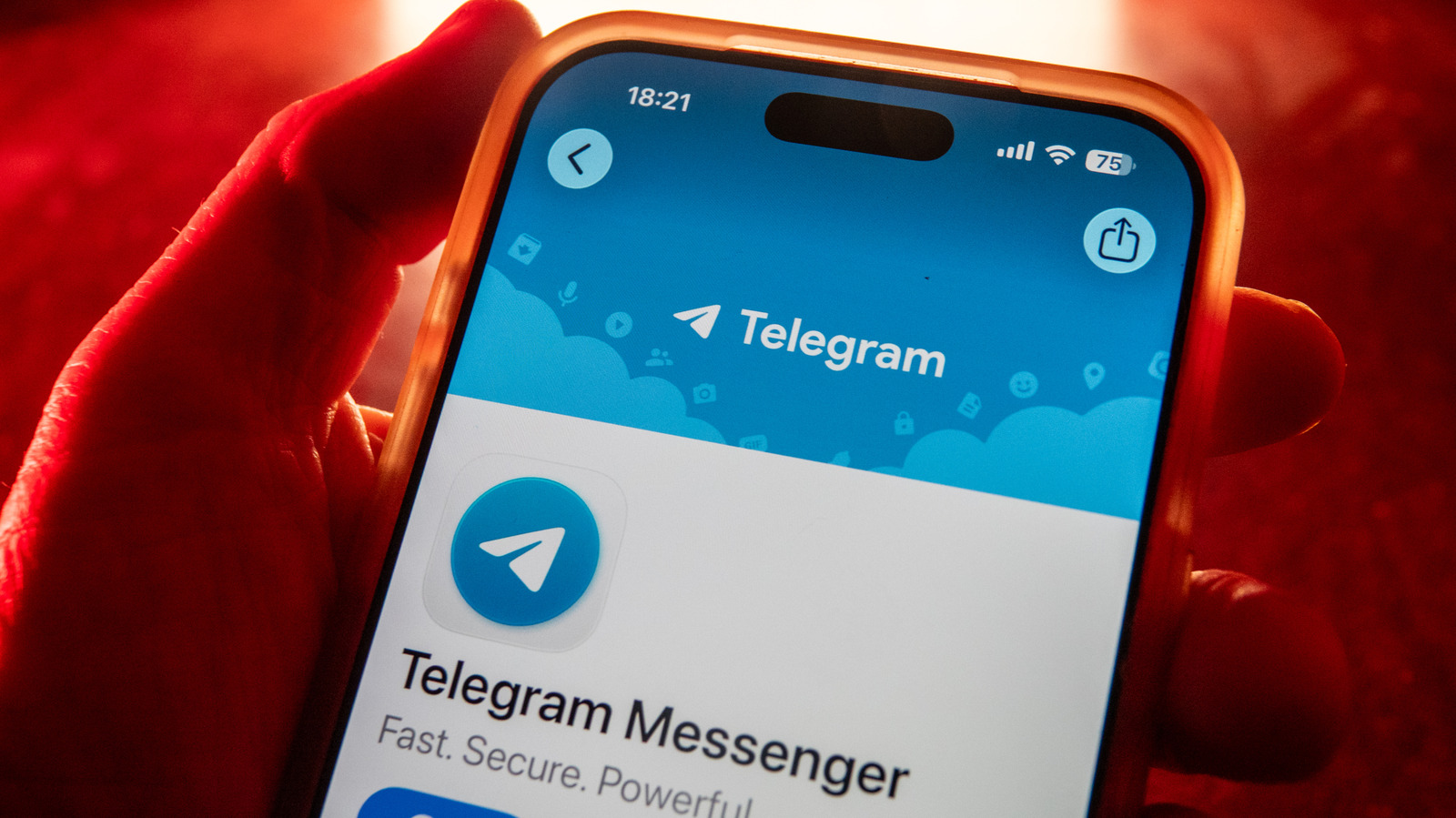
India blocks Telegram to prevent entrance exam fraud
💡Understand how government-mandated platform blocks impact service availability and regulatory compliance for developers.
⚡ 30-Second TL;DR
What Changed
Indian authorities blocked Telegram to curb exam cheating.
Why It Matters
This action sets a precedent for how governments may restrict communication tools to enforce institutional integrity. It serves as a warning for platforms relying on end-to-end encryption to navigate complex regulatory environments.
What To Do Next
If your application relies on Telegram bots for distribution, diversify your communication channels to include platforms with more stable regulatory standing.
Key Points
- •Indian authorities blocked Telegram to curb exam cheating.
- •The restriction is temporary but signals strict government oversight.
- •Encrypted messaging platforms face increasing pressure to moderate content in India.
🧠 Deep Insight
Background and context from public sources — not the original article. 33 sources cited.
🔑 Enhanced Key Takeaways
- •The temporary block on Telegram is specifically tied to the NEET-UG medical entrance re-examination, lasting until June 22, 2026, the day after the re-exam.
- •A primary reason for the block and the additional restriction is Telegram's message-editing feature, which authorities allege was used by cheating rackets to alter old messages with original timestamps to falsely present leaked exam papers after the actual test.
- •Beyond the full platform block, the Indian government has also mandated Telegram to disable its message-editing functionality in India until June 30, 2026, to prevent post-examination fabrication of evidence.
- •The government invoked Section 69A of the Information Technology Act to implement the block, a provision that allows restricting online access in the interest of 'sovereignty and integrity of India' or 'public order'.
- •Indian authorities described the temporary block as a 'last resort' after previous attempts to remove fraudulent content and channels from Telegram proved insufficient to curb the scale of the problem.
🛠️ Technical Deep Dive
- Telegram utilizes a proprietary encryption protocol known as MTProto for its communications.
- Standard 'cloud chats' on Telegram employ client-server encryption, meaning messages are encrypted during transit between the user's device and Telegram's servers, but Telegram retains the ability to decrypt and access these messages.
- True end-to-end encryption (E2EE) is only available in 'Secret Chats,' which users must manually enable and are not supported for group conversations.
- The MTProto protocol incorporates a 2048-bit Diffie-Hellman key exchange, AES-256 encryption, SHA-256 hashing, and a unique encryption mode called Infinite Garble Extension (IGE).
- Cryptographic experts have raised concerns regarding MTProto's implementation, specifically its reliance on the server for certain cryptographic parameters and the use of a non-standard encryption mode.
- Telegram's distributed infrastructure stores cloud chat data across multiple global data centers, with decryption keys split and held separately from the data, theoretically requiring multiple court orders from different jurisdictions for data access.
🔮 Future ImplicationsAI analysis grounded in cited sources
⏳ Timeline
📎 Sources (33)
Factual claims are grounded in the sources below. Forward-looking analysis is AI-generated interpretation.
- thenextweb.com
- channelnewsasia.com
- freemalaysiatoday.com
- indiatimes.com
- dubaieye1038.com
- bestmediainfo.com
- hindustantimes.com
- newbusinessage.com
- thehindu.com
- openthemagazine.com
- tempo.co
- assamtribune.com
- newswire.lk
- independent.co.uk
- modernghana.com
- businesstimes.com.sg
- internetgovernance.org
- protectstar.com
- eset.com
- josa.ngo
- reddit.com
- telegram.org
- eff.org
- iapp.org
- bharatchugh.in
- eff.org
- economictimes.com
- youtube.com
- internetsociety.org
- brookings.edu
- internetsociety.org
- vidhilegalpolicy.in
- carnegieendowment.org
Weekly AI Recap
Read this week's curated digest of top AI events →
👉Related Updates
AI-curated news aggregator. All content rights belong to original publishers.
Original source: Engadget ↗
This is a summary, not the original. Read the source, or get the weekly briefing.
Weekly AI briefing
One email a week. Unsubscribe anytime.