Impulse Space secures $500 million for orbital maneuvering race
💡Space logistics is an emerging frontier for autonomous AI. See how $500M in funding is shaping the orbital market.
⚡ 30-Second TL;DR
What Changed
Impulse Space raised $500 million in new funding
Why It Matters
Increased capital in space logistics often leads to more demand for autonomous navigation and AI-driven satellite control systems.
What To Do Next
Explore the API requirements for satellite telemetry and autonomous orbital maneuvering if you are working in the aerospace AI stack.
Key Points
- •Impulse Space raised $500 million in new funding
- •Focus on orbital maneuvering technology and space logistics
- •Reflects intense competition in the commercial space sector
🧠 Deep Insight
Background and context from public sources — not the original article. 17 sources cited.
🔑 Enhanced Key Takeaways
- •The recent $500 million funding is a Series D round, elevating Impulse Space's total capital raised to over $1 billion since its inception in 2021.
- •Impulse Space was founded by Tom Mueller, a renowned propulsion engineer and former founding employee of SpaceX, where he led the development of engines like Merlin and Draco.
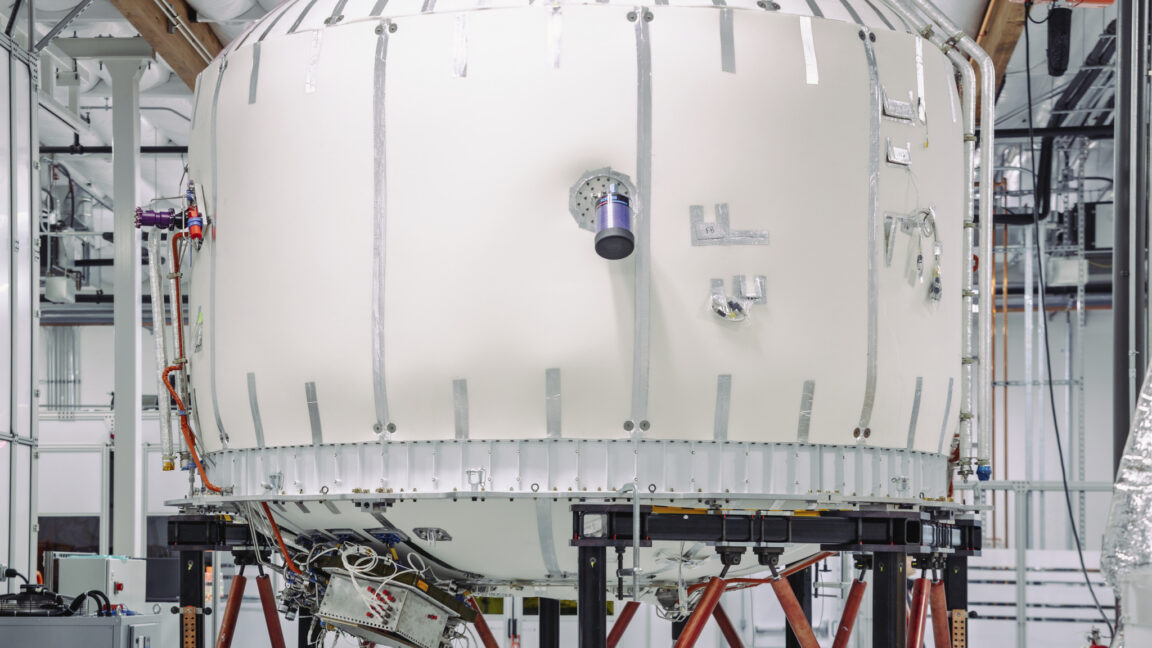
- •The company operates two primary orbital maneuvering vehicles: Mira, a smaller spacecraft for 'last-mile' delivery and precise maneuvers, and Helios, a high-energy kick stage designed for rapid transfers to geostationary orbit (GEO) and beyond.
- •Impulse Space has already successfully completed three missions with its Mira spacecraft, demonstrating capabilities such as responsive maneuvering and autonomous collision avoidance.
- •The new capital injection will be utilized to significantly expand the company's workforce, with over 200 open positions, and to boost manufacturing capacity across its facilities in Redondo Beach, Boulder, Washington D.C., and Mojave.
🛠️ Technical Deep Dive
- Mira Orbital Transfer Vehicle (OTV): A dishwasher-sized spacecraft weighing approximately 300 kg when fully loaded with propellant. It utilizes eight Saiph bipropellant thrusters, which use non-toxic nitrous oxide and ethane propellants, offering a specific impulse (Isp) of 290 seconds. Mira can achieve a delta-v of 500 m/s with a 300 kg payload or 900 m/s with a 100 kg payload, enabling high-agility maneuvers, station-keeping, rendezvous, and hosted payload missions across LEO, MEO, GEO, and cislunar orbits.
- Helios High-Energy Kick Stage: Designed to propel payloads of up to 4-5 tons from Low Earth Orbit (LEO) directly into geostationary orbit (GEO) in less than 24 hours. Helios is powered by the Deneb engine, a 67 kN (15,000 lbf) thrust, staged combustion cycle engine that uses liquid oxygen (LOX) and liquid methane propellants. It can burn up to 14,000 kg of propellant per mission and is compatible with modern launch vehicles like Falcon 9 and Relativity's Terran R.
- Propulsion Systems: Impulse Space has developed several engines:
- Saiph: A 5 lbf (22 N) bipropellant thruster qualified for 12 continuous minutes of burn and 50,000 pulses, using nitrous oxide and ethane.
- Deneb: A 15,000 lbf (67 kN) staged combustion engine using LOX/methane, designed for the Helios vehicle.
- Rigel: Mentioned for landers and responsive maneuvers.
- Vertical Integration: The company adopts a vertically integrated approach, designing and manufacturing its engines, flight software, structures, and avionics in-house to ensure quality control and rapid development cycles.
🔮 Future ImplicationsAI analysis grounded in cited sources
⏳ Timeline
📎 Sources (17)
Factual claims are grounded in the sources below. Forward-looking analysis is AI-generated interpretation.
Weekly AI Recap
Read this week's curated digest of top AI events →
👉Related Updates
AI-curated news aggregator. All content rights belong to original publishers.
Original source: Ars Technica ↗
This is a summary, not the original. Read the source, or get the weekly briefing.
The weekly digest
One email a week. Unsubscribe anytime.