Illinois Proposes Ban on Smart Glasses While Driving
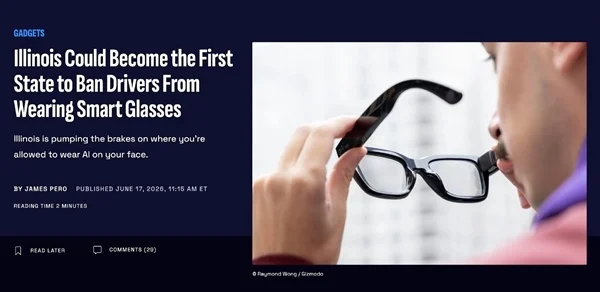
💡New regulations on smart glasses could impact the design and adoption of wearable AI hardware. Know the legal risks.
⚡ 30-Second TL;DR
What Changed
Illinois legislation classifies smart glasses as restricted electronic devices for drivers
Why It Matters
This regulation signals a growing trend of legislative scrutiny toward wearable AI devices. Developers of AR/smart glasses must consider safety-focused UX design and compliance features.
What To Do Next
Review your smart glass product's safety features and consider adding 'driving mode' detection to ensure compliance with emerging regional laws.
Key Points
- •Illinois legislation classifies smart glasses as restricted electronic devices for drivers
- •First-time offense carries a $75 fine, with penalties doubling for repeat offenses
- •The bill is currently awaiting the governor's signature to become law
🧠 Deep Insight
AI-generated analysis for this event — not the original article.
🔑 Enhanced Key Takeaways
- •The legislation specifically targets devices with heads-up displays (HUDs) or augmented reality (AR) capabilities that overlay digital information onto the driver's field of vision.
- •Law enforcement agencies in Illinois have expressed support for the bill, citing the difficulty of distinguishing between hands-free navigation and distracting AR content during traffic stops.
- •The bill includes specific exemptions for integrated vehicle HUD systems that are factory-installed and safety-certified by the National Highway Traffic Safety Administration (NHTSA).
- •Advocacy groups for the visually impaired have raised concerns that the broad language of the bill could inadvertently penalize users of assistive smart glasses designed for navigation assistance.
- •The legislative push was accelerated by a 2025 study from the Illinois Department of Transportation linking a 12% increase in distracted driving accidents to the rise of wearable AR devices.
🔮 Future ImplicationsAI analysis grounded in cited sources
⏳ Timeline
Weekly AI Recap
Read this week's curated digest of top AI events →
👉Related Updates


AI-curated news aggregator. All content rights belong to original publishers.
Original source: cnBeta (Full RSS) ↗
This is a summary, not the original. Read the source, or get the weekly briefing.
Weekly AI briefing
One email a week. Unsubscribe anytime.