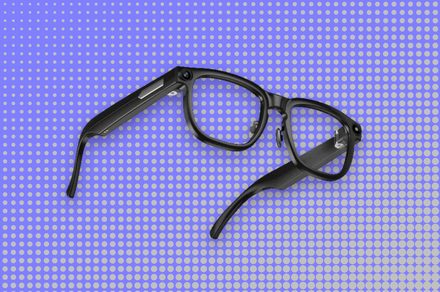
ICE Bans Meta Smart Glasses Over Privacy Risks

💡A federal ban signals the privacy controls wearable-AI builders may need before enterprise deployment.
⚡ 30-Second TL;DR
What Changed
ICE banned Meta smart glasses from federal workplaces.
Why It Matters
The policy highlights the governance gap between consumer wearable AI products and government use of biometric technologies. AI teams developing camera- or audio-enabled devices may face stricter workplace privacy, consent, and data-retention requirements.
What To Do Next
Audit your camera-enabled wearable workflow by documenting recording consent, biometric processing, access controls, and retention limits before any enterprise deployment.
Key Points
- •ICE banned Meta smart glasses from federal workplaces.
- •Privacy concerns around camera-enabled wearables prompted the restriction.
- •DHS is seeking funding for custom smart glasses that could enable biometric identification during immigration enforcement.
🧠 Deep Insight
AI-generated analysis for this event.
🔑 Enhanced Key Takeaways
- •The ban specifically targets devices equipped with always-on recording capabilities, citing potential violations of the Privacy Act of 1974 regarding the unauthorized collection of personally identifiable information (PII).
- •Internal DHS memos indicate that the restriction extends to all 'non-authorized' wearable technology, classifying Meta smart glasses as a high-risk vector for data exfiltration in secure environments.
- •The proposed DHS-funded smart glasses project, internally referred to as 'Project Sentinel,' aims to integrate real-time facial recognition linked directly to the Automated Biometric Identification System (IDENT).
- •Civil liberties groups, including the ACLU, have formally petitioned the DHS Inspector General to investigate the potential for 'mission creep' regarding the use of biometric wearables in field operations.
- •Meta has responded to the ICE directive by emphasizing that their consumer-grade smart glasses lack the enterprise-grade encryption and data-segregation protocols required for federal security compliance.
📊 Competitor Analysis▸ Show
| Feature | Meta Smart Glasses | DHS 'Project Sentinel' (Proposed) | Enterprise AR Headsets (e.g., HoloLens 2) |
|---|---|---|---|
| Primary Use | Consumer/Social | Law Enforcement/Biometrics | Industrial/Defense |
| Data Privacy | Cloud-based/Consumer | Air-gapped/Secure | On-premise/Encrypted |
| Biometrics | None (Consumer) | Real-time IDENT Integration | Authentication-only |
| Compliance | FCC/Consumer Standards | FIPS 140-3 / FedRAMP | ITAR / NIST Compliant |
🛠️ Technical Deep Dive
- Meta Smart Glasses utilize the Qualcomm Snapdragon AR1 Gen 1 platform, which lacks the dedicated neural processing units (NPUs) required for secure, on-device biometric matching.
- The proposed DHS devices are expected to leverage edge computing architectures to process biometric data locally, minimizing latency for field identification.
- Security protocols for the DHS project are modeled after FIPS 140-3 standards, ensuring that all captured biometric templates are encrypted at rest and in transit.
- Integration with the IDENT database requires a secure API gateway that supports multi-factor authentication (MFA) and granular audit logging for every query performed by the wearable.
🔮 Future ImplicationsAI analysis grounded in cited sources
⏳ Timeline
📰 Event Coverage
Weekly AI Recap
Read this week's curated digest of top AI events →
👉Related Updates

AI-curated news aggregator. All content rights belong to original publishers.
Original source: Digital Trends ↗