Amazon Targets 500 Cities for Prime Air Drones
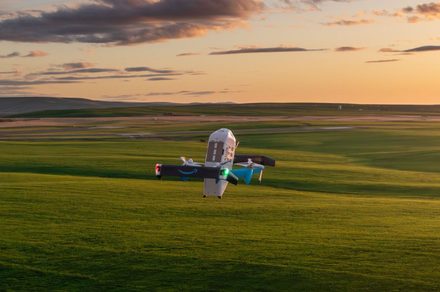
💡Amazon’s sixfold drone expansion exposes the safety and regulatory hurdles facing embodied-AI systems.
⚡ 30-Second TL;DR
What Changed
Prime Air could reach nearly 500 cities by 2026.
Why It Matters
A rapid expansion would provide a major real-world test for autonomous navigation, fleet coordination, and last-mile logistics systems. For AI companies, the safety incidents also show that scaling embodied AI requires regulatory readiness and operational monitoring, not just better models.
What To Do Next
Before designing an autonomous-delivery pilot, review Prime Air’s published service-area, geofencing, and safety requirements and turn them into measurable monitoring checks.
Key Points
- •Prime Air could reach nearly 500 cities by 2026.
- •The planned footprint is approximately six times larger than the current deployment.
- •Amazon faces mounting safety incidents and federal scrutiny as it scales autonomous drone operations.
🧠 Deep Insight
AI-generated analysis for this event.
🔑 Enhanced Key Takeaways
- •Amazon's expansion relies heavily on the MK30 drone, which is designed to be quieter and capable of operating in more diverse weather conditions than previous iterations.
- •The Federal Aviation Administration (FAA) granted Amazon expanded beyond-visual-line-of-sight (BVLOS) flight permissions, a critical regulatory hurdle for scaling operations in densely populated areas.
- •Amazon has integrated Prime Air logistics into existing Same-Day Delivery facilities to streamline the transition from warehouse to drone launchpad.
- •The company has faced specific investigations from the National Transportation Safety Board (NTSB) regarding drone crashes during testing phases in Oregon and California.
- •To mitigate safety concerns, Amazon has implemented a proprietary 'sense-and-avoid' system that utilizes onboard computer vision and ultrasonic sensors to detect obstacles in real-time.
📊 Competitor Analysis▸ Show
| Feature | Amazon Prime Air | Wing (Alphabet) | Zipline |
|---|---|---|---|
| Primary Focus | Small parcel delivery | Small parcel/food | Medical/Retail delivery |
| Tech Approach | Hexacopter (MK30) | Wingcopter/Fixed-wing | Platform 2 (Droid) |
| Regulatory Status | BVLOS approved | BVLOS approved | BVLOS approved |
| Delivery Range | ~10 miles | ~6 miles | ~10+ miles |
🛠️ Technical Deep Dive
- MK30 Drone Architecture: Utilizes a hexacopter configuration for increased stability and redundancy in the event of motor failure.
- Noise Reduction: Features custom-designed propellers that reduce perceived noise by approximately 25% compared to the MK27-2 model.
- Sense-and-Avoid: Employs a multi-modal sensor suite including LiDAR, stereo vision, and ultrasonic sensors for 360-degree obstacle detection.
- Flight Control: Operates on a decentralized flight management system that allows drones to autonomously re-route based on real-time weather and air traffic data.
- Payload Capacity: Optimized for packages weighing up to 5 pounds, covering roughly 85% of Amazon's total package volume.
🔮 Future ImplicationsAI analysis grounded in cited sources
⏳ Timeline
Weekly AI Recap
Read this week's curated digest of top AI events →
👉Related Updates


AI-curated news aggregator. All content rights belong to original publishers.
Original source: Digital Trends ↗