โš›๏ธFreshcollected in 61m

IBM unveils world's first sub-1 nanometer chip technology
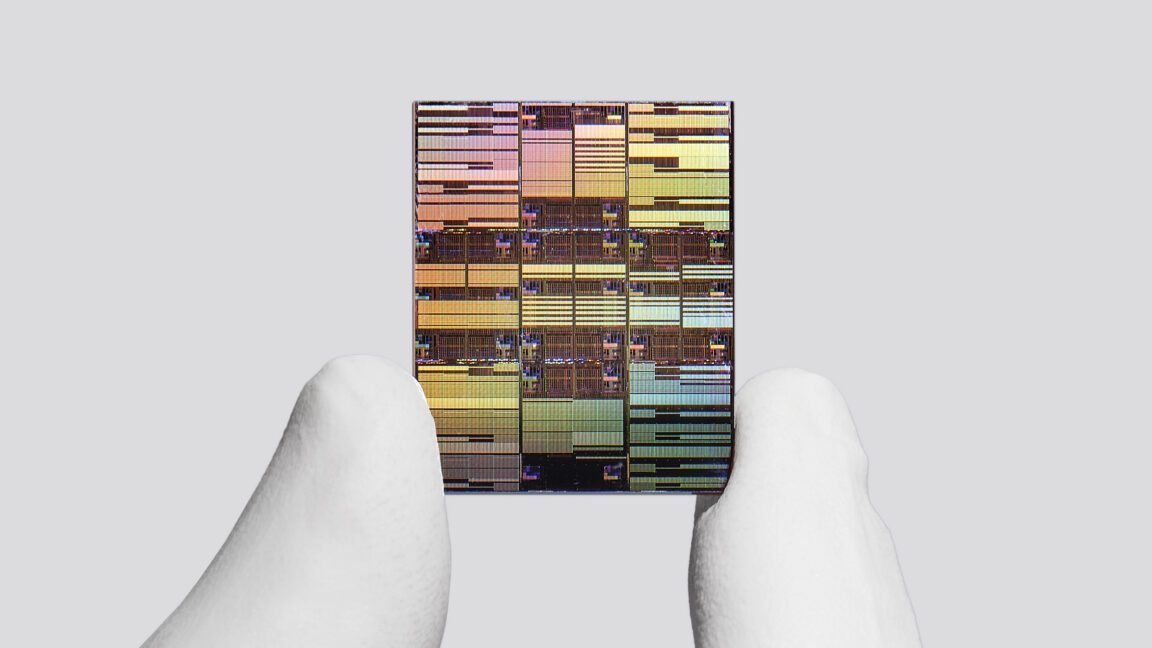
IBM unveils world's first sub-1 nanometer chip technology
PostLinkedIn
โš›๏ธRead original on Ars Technica

๐Ÿ’กSub-1nm chips are critical for the future of AI compute, promising massive gains in energy efficiency and performance.

โšก 30-Second TL;DR

What Changed

IBM successfully developed sub-1 nanometer transistor architecture.

Why It Matters

This advancement could lead to more powerful AI hardware, enabling larger models to run on more energy-efficient edge devices. It sets the stage for the next generation of high-performance computing infrastructure.

What To Do Next

Monitor IBM's roadmap for hardware integration to assess how future edge AI deployments might benefit from increased transistor density.

Who should care:Developers & AI Engineers

๐Ÿง  Deep Insight

AI-generated analysis for this event.

๐Ÿ”‘ Enhanced Key Takeaways

  • โ€ขThe technology utilizes nanosheet-based architecture, evolving from IBM's previous 2nm nanosheet breakthroughs to achieve vertical stacking at sub-1nm scales.
  • โ€ขIBM is leveraging backside power delivery networks (BSPDN) to decouple power and signal routing, which is critical for mitigating IR drop and signal interference at these dimensions.
  • โ€ขThe manufacturing process incorporates extreme ultraviolet (EUV) lithography with high-numerical aperture (High-NA) optics to achieve the necessary resolution for sub-1nm features.
  • โ€ขIBM's research team is utilizing novel 2D materials, such as molybdenum disulfide (MoS2), to replace traditional silicon channels to overcome quantum tunneling effects at the sub-1nm threshold.
  • โ€ขThis development is part of a collaborative ecosystem involving the Albany NanoTech Complex, integrating public-private partnerships to accelerate the transition from lab-scale fabrication to pilot production.
๐Ÿ“Š Competitor Analysisโ–ธ Show
FeatureIBM (Sub-1nm)TSMC (2nm/1.4nm)Intel (14A/10A)
ArchitectureVertical NanostackNanosheet (GAA)RibbonFET (GAA)
Primary FocusResearch/FoundationalHigh-Volume LogicHigh-Volume Logic
StatusLab PrototypePilot/Early ProductionDevelopment

๐Ÿ› ๏ธ Technical Deep Dive

  • Architecture: Utilizes a vertical gate-all-around (GAA) nanostack configuration to maximize current density per unit area.
  • Channel Material: Transition from bulk silicon to transition metal dichalcogenides (TMDs) to maintain electrostatic control.
  • Power Delivery: Implementation of backside power delivery to reduce parasitic resistance and improve thermal management.
  • Lithography: High-NA EUV (0.55 NA) is employed to pattern the ultra-dense interconnects required for sub-1nm scaling.
  • Interconnects: Integration of ruthenium or alternative low-resistance metals to combat electromigration at atomic scales.

๐Ÿ”ฎ Future ImplicationsAI analysis grounded in cited sources

Sub-1nm chips will enable a 30-40% reduction in power consumption for AI inference workloads.
The reduction in parasitic capacitance and improved gate control directly lowers the switching energy required for high-density neural network operations.
Commercial high-volume manufacturing of sub-1nm chips will not occur before 2029.
Current industry roadmaps for High-NA EUV integration and material science maturity indicate a multi-year gap between lab-scale breakthroughs and foundry-scale yield stability.

โณ Timeline

2021-05
IBM unveils the world's first 2nm chip technology.
2022-12
IBM and partners announce the expansion of the Albany NanoTech Complex.
2024-01
IBM demonstrates advancements in backside power delivery for nanosheet transistors.
2026-06
IBM announces the development of sub-1 nanometer nanostack transistor technology.
๐Ÿ“ฐ

Weekly AI Recap

Read this week's curated digest of top AI events โ†’

๐Ÿ‘‰Related Updates

AI-curated news aggregator. All content rights belong to original publishers.
Original source: Ars Technica โ†—

IBM unveils world's first sub-1 nanometer chip technology | Ars Technica | SetupAI | SetupAI