Hyper-Realistic Insect 3D via Gaussian Splats
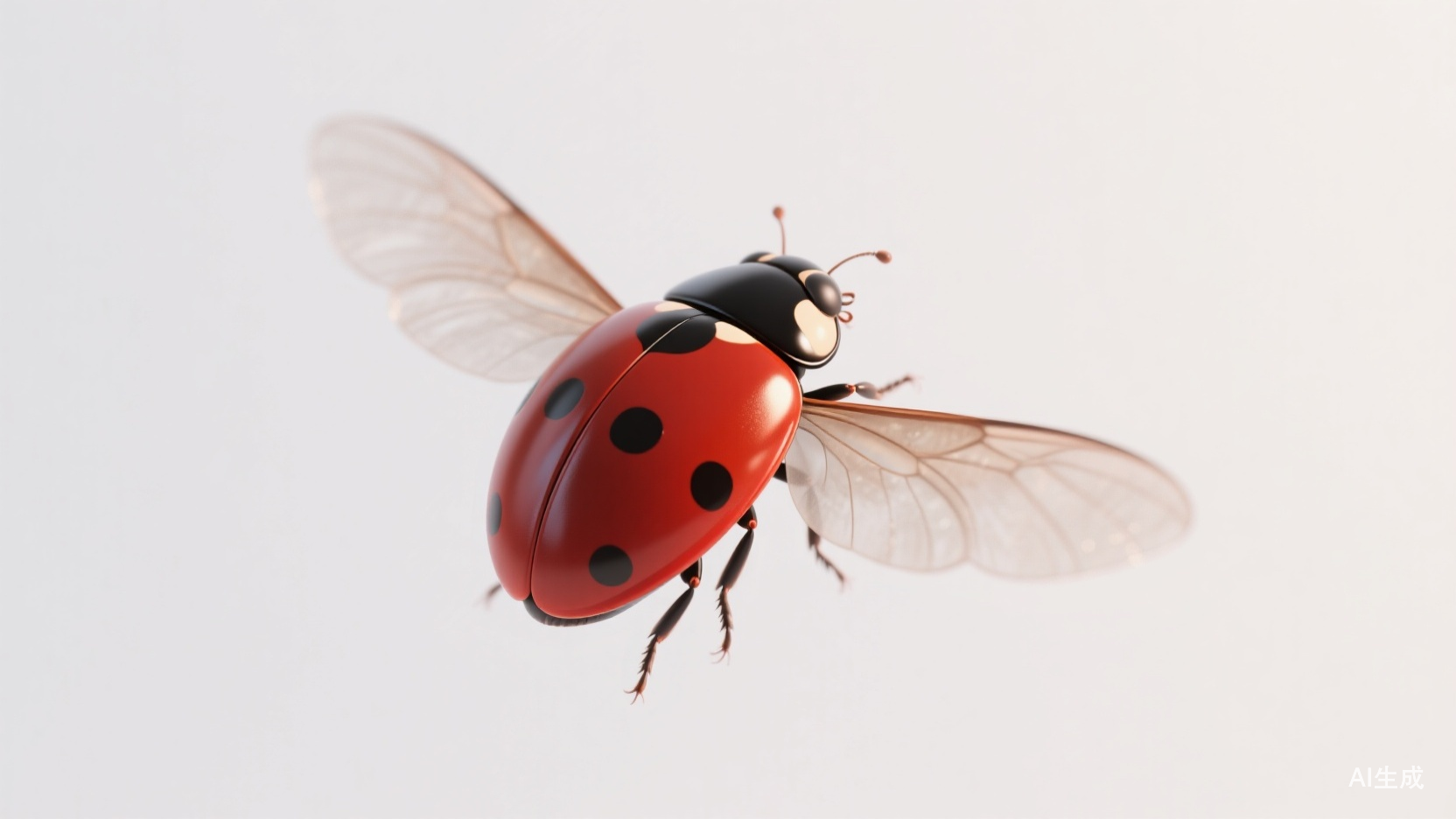
💡Gaussian Splats make insects 3D-photoreal: macro + ML workflow for creators (116-angle demo).
⚡ 30-Second TL;DR
What Changed
116 angles x 16 focus-stack photos per insect for Gaussian Splat training
Why It Matters
Advances accessible 3D capture for creators, blending photography and ML for VFX/AR without full scans. Democratizes hyper-realism for bio-visualization and interactive media.
What To Do Next
Capture 100+ macro photos of an object and process with COLMAP + Postshot for Gaussian Splat model.
Key Points
- •116 angles x 16 focus-stack photos per insect for Gaussian Splat training
- •Tools: COLMAP for 3D structure, Postshot for splat format, DaVinci for effects
- •Captures fine details like compound eyes, hairs via motion blur and perspective colors
- •Models of ladybug, bee, stink bug, fly viewable from any angle interactively
🧠 Deep Insight
Background and context from public sources — not the original article. 5 sources cited.
🔑 Enhanced Key Takeaways
- •Dany Bittel's workflow uses COLMAP for Structure-from-Motion (SfM) to generate a sparse point cloud from 116 angles x 16 focus-stacked macro photos per insect, followed by Gaussian splatting conversion with Postshot for photorealistic 3D models[1][4].
- •3D Gaussian Splatting prioritizes visual realism over precise geometry, excelling at fine details like insect compound eyes, hairs, thin structures, and reflective surfaces that challenge traditional photogrammetry[1][4].
- •The technique represents scenes with millions of 3D Gaussian primitives (ellipsoids) optimized for real-time rendering from any view, enabling interactive web viewing of models like ladybugs and bees[1][3].
- •Gaussian splatting builds on SfM initial alignment, similar to photogrammetry, but replaces dense meshes with splats for faster convergence and higher fidelity in view-dependent effects like motion blur and perspective colors[1][4].
- •Unlike mesh-based photogrammetry, Gaussian splats sacrifice measurement accuracy for lifelike reconstruction, making them ideal for artistic applications like hyper-realistic insect models rather than precise surveying[1][5].
📊 Competitor Analysis▸ Show
| Feature | Gaussian Splatting | Photogrammetry |
|---|---|---|
| Output Representation | 3D Gaussians (splats) for visual realism | Dense point cloud + mesh + textures |
| Strengths | Thin/transparent/reflective surfaces, real-time rendering, fine details like hairs/eyes | Precise geometry, measurement reliability (cm-level accuracy) |
| Weaknesses | No dimensional confidence, not for precise measurements | Struggles with transparency, reflections, thin structures |
| Workflow Start | SfM sparse point cloud | SfM + dense depth estimation |
| Pricing/Benchmarks | Open-source tools (e.g., COLMAP free); faster training/rendering on consumer GPU | Commercial software varies; slower for high-fidelity visuals |
🛠️ Technical Deep Dive
- Workflow: Capture overlapping multi-angle focus-stacked images → COLMAP SfM for sparse point cloud and camera poses → Optimize millions of 3D Gaussians (position, covariance, color, opacity) via differentiable rasterization to match input views[1][4].
- Gaussians are 3D ellipsoids splatted (projected and alpha-blended) for efficient rendering, supporting view-dependent effects without ray marching[1][3].
- Training optimizes Gaussians to minimize rendering loss against original photos; density control prunes redundant splats for efficiency[1].
- Tools: COLMAP (SfM), Postshot (splat conversion), DaVinci Resolve (post-effects); enables web-interactive models[article].
- Limitations: Out-of-core for large scenes via hierarchies (e.g., HSPT for LoD), but insect-scale fits consumer hardware[2].
🔮 Future ImplicationsAI analysis grounded in cited sources
Gaussian splatting advances artistic 3D reconstruction like Bittel's insects, potentially replacing photogrammetry for visual applications in VFX, AR/VR, and e-commerce, emphasizing realism over geometry for interactive experiences.
⏳ Timeline
📎 Sources (5)
Factual claims are grounded in the sources below. Forward-looking analysis is AI-generated interpretation.
Weekly AI Recap
Read this week's curated digest of top AI events →
👉Related Updates


AI-curated news aggregator. All content rights belong to original publishers.
Original source: 虎嗅 ↗
This is a summary, not the original. Read the source, or get the weekly briefing.
Weekly AI briefing
One email a week. Unsubscribe anytime.