Humanoid robot prices drop below 10,000 RMB

💡Understand how the 'China manufacturing' effect is commoditizing humanoid hardware and what it means for AI software.
⚡ 30-Second TL;DR
What Changed
Core component localization rates for Chinese robots have exceeded 80%.
Why It Matters
The rapid commoditization of humanoid hardware shifts the competitive focus from mechanical engineering to software and embodied AI intelligence.
What To Do Next
Evaluate the feasibility of integrating your LLM/VLM agents with low-cost hardware platforms like Unitree R1 to test real-world embodied AI deployment.
Key Points
- •Core component localization rates for Chinese robots have exceeded 80%.
- •Supply chain synergy with the EV industry has significantly reduced production costs.
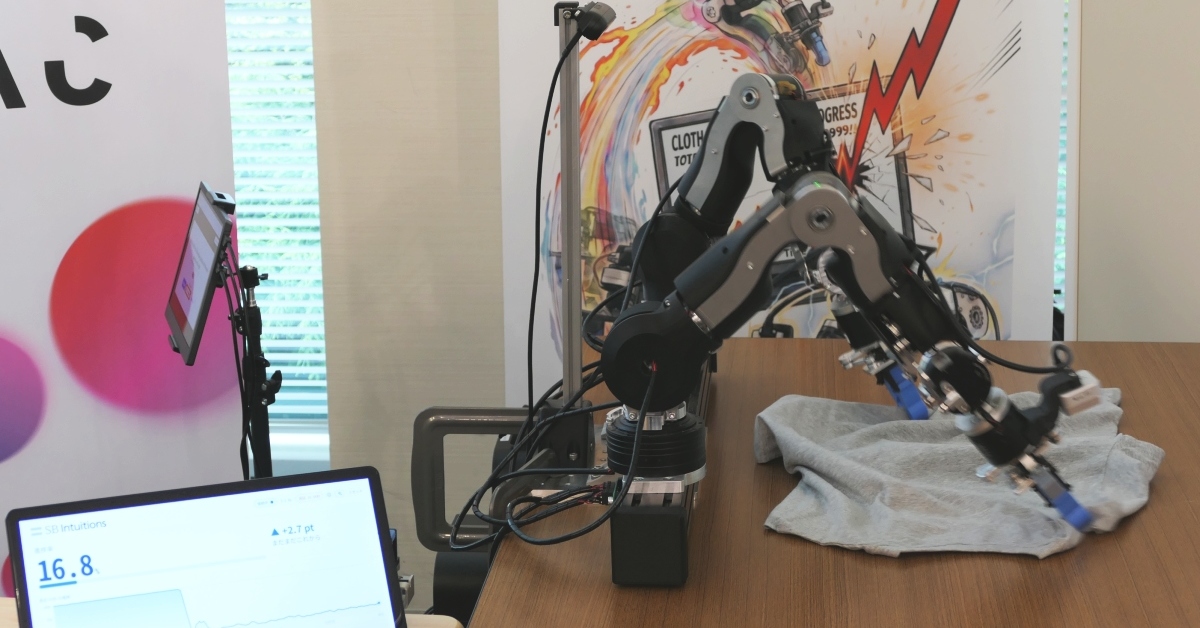
- •Real-world task success rates in home environments remain low at approximately 12%.
- •Manufacturers are prioritizing data collection and market share over immediate hardware profitability.
🧠 Deep Insight
AI-generated analysis for this event — not the original article.
🔑 Enhanced Key Takeaways
- •The 10,000 RMB price point is largely achieved through the adoption of 'general-purpose' actuators originally designed for industrial automation and EV assembly lines, rather than custom-engineered robotics-specific motors.
- •Government subsidies in provinces like Guangdong and Zhejiang are providing direct financial incentives for manufacturers to lower unit costs, effectively subsidizing the 'data collection' phase of development.
- •A significant portion of the cost reduction is attributed to the shift from expensive carbon-fiber frames to high-strength, injection-molded polymers and aluminum alloys optimized for mass production.
- •Leading Chinese humanoid startups are increasingly utilizing synthetic data generated from digital twins to train models, reducing the reliance on expensive physical testing environments.
- •The industry is seeing a shift toward 'modular' humanoid designs where the torso and limbs are sold as separate, swappable units to lower the barrier to entry for research institutions and small businesses.
📊 Competitor Analysis▸ Show
| Manufacturer | Model Class | Est. Price (USD) | Key Differentiator |
|---|---|---|---|
| Tesla | Optimus Gen 3 | $20,000 - $30,000 | FSD-derived neural architecture |
| Figure AI | Figure 02 | $50,000+ | OpenAI-integrated multimodal reasoning |
| Unitree | G1 / H1 | $16,000 - $90,000 | High-speed dynamic movement/agility |
| Fourier | GR-2 | $25,000+ | Advanced force-feedback sensors |
🛠️ Technical Deep Dive
- Actuator Architecture: Transition from harmonic drives to planetary roller screw actuators to reduce cost while maintaining torque density.
- Control Systems: Implementation of end-to-end imitation learning models that bypass traditional inverse kinematics for basic locomotion.
- Power Management: Integration of 48V low-voltage battery architectures derived from micro-mobility (e-scooter) supply chains to reduce BMS complexity.
- Sensor Fusion: Heavy reliance on low-cost solid-state LiDAR and depth cameras combined with visual-inertial odometry (VIO) rather than expensive high-precision IMUs.
🔮 Future ImplicationsAI analysis grounded in cited sources
⏳ Timeline
Weekly AI Recap
Read this week's curated digest of top AI events →
👉Related Updates



AI-curated news aggregator. All content rights belong to original publishers.
Original source: 虎嗅 ↗
This is a summary, not the original. Read the source, or get the weekly briefing.
The weekly digest
One email a week. Unsubscribe anytime.