Huawei’s Chip Queen Makes Time’s AI 100
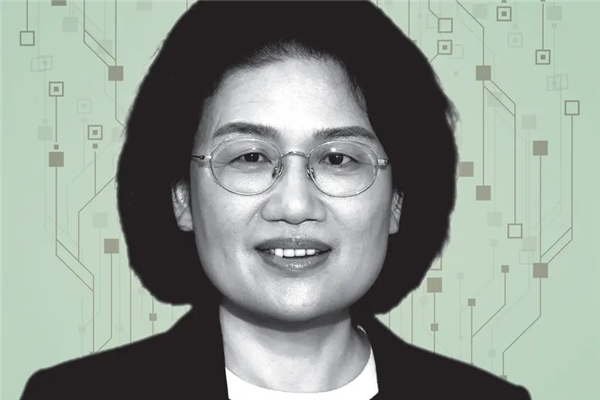
💡Huawei’s chip strategy signals how geopolitical supply-chain shifts could reshape AI infrastructure choices.
⚡ 30-Second TL;DR
What Changed
He Tingbo was selected in Time’s 2026 AI 100 under the Leaders category.
Why It Matters
The recognition highlights Huawei’s semiconductor strategy as an important part of the global AI infrastructure race. For AI companies, continued regionalization of chip supply chains could affect hardware availability, procurement, and deployment choices.
What To Do Next
Review your inference infrastructure roadmap for dependence on U.S. GPUs and test software portability across alternative accelerator platforms.
Key Points
- •He Tingbo was selected in Time’s 2026 AI 100 under the Leaders category.
- •Time characterized her as China’s “chip queen.”
- •Her work is linked to Huawei’s effort to reduce dependence on U.S. semiconductor technology.
- •The recognition underscores the strategic importance of domestic AI chip development.
🧠 Deep Insight
Background and context from public sources — not the original article. 16 sources cited.
🔑 Enhanced Key Takeaways
- •He Tingbo has served as the President of HiSilicon since 2003 and is one of only two women currently serving on Huawei's 17-member board of directors.
- •In May 2026, He Tingbo introduced the 'Tau (τ) Scaling Law' at the IEEE ISCAS, a framework that prioritizes architectural efficiency and signal speed over traditional transistor miniaturization.
- •Huawei has successfully mass-produced 381 distinct chip designs utilizing the Tau Scaling Law principles across smartphone and AI computing sectors between 2020 and 2026.
- •The company is implementing 'LogicFolding' architecture to improve transistor density and reduce signal propagation delays, specifically designed to bypass the lack of access to advanced EUV lithography equipment.
- •Huawei is actively pursuing international AI infrastructure contracts, including a recent bid to supply Ascend 950-series chips for government data centers in Egypt.
📊 Competitor Analysis▸ Show
| Feature | Huawei (HiSilicon) | NVIDIA | Intel |
|---|---|---|---|
| Primary Strategy | Full-stack integration (Tau Scaling) | GPU-centric ecosystem (CUDA) | IDM 2.0 / Foundry model |
| Lithography Dependency | Reduced (via LogicFolding) | High (TSMC/ASML) | High (Internal/Foundry) |
| AI Focus | Ascend 950-series | Blackwell/Rubin architectures | Gaudi 3 / Falcon Shores |
🛠️ Technical Deep Dive
- Tau (τ) Scaling Law: A design methodology focusing on signal transmission speed and architectural efficiency rather than physical transistor shrinking.
- LogicFolding: A circuit layout optimization technique used to increase effective transistor density and minimize signal propagation delays.
- Ascend 950-series: Huawei's current generation AI compute silicon designed for high-performance data center workloads.
- Full-stack Coordinated Design: A development approach that tightly integrates proprietary software, hardware architecture, and silicon manufacturing to mitigate the impact of restricted lithography access.
🔮 Future ImplicationsAI analysis grounded in cited sources
⏳ Timeline
📎 Sources (16)
Factual claims are grounded in the sources below. Forward-looking analysis is AI-generated interpretation.
Weekly AI Recap
Read this week's curated digest of top AI events →
👉Related Updates

AI-curated news aggregator. All content rights belong to original publishers.
Original source: cnBeta (Full RSS) ↗
This is a summary, not the original. Read the source, or get the weekly briefing.
Weekly AI briefing
One email a week. Unsubscribe anytime.