Huawei Rolls Out Collaborative Authentication for Wearables
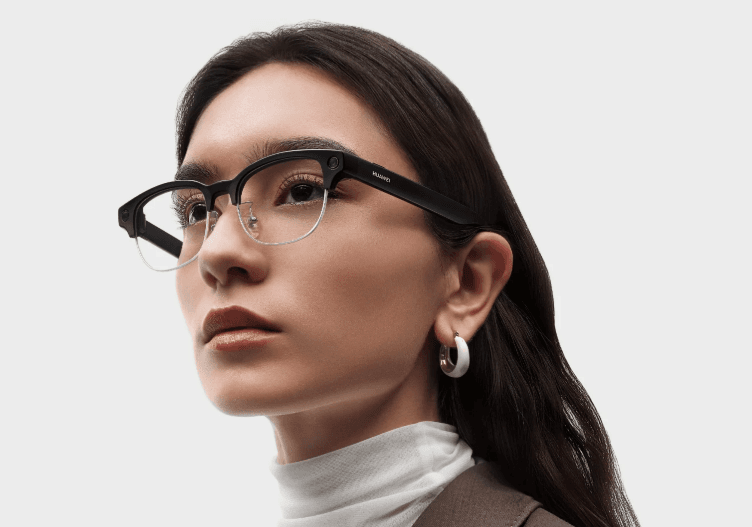
Learn how Huawei is using wearable proximity to replace traditional passwords with multi-device authentication.
30-Second TL;DR
What Changed
Uses nearby wearables like earbuds and smart glasses for identity verification
Why It Matters
This feature signals a shift toward ambient, multi-device authentication, reducing reliance on traditional passwords. It sets a precedent for how integrated hardware ecosystems can handle secure user identity.
What To Do Next
Evaluate how your mobile applications can leverage multi-device proximity APIs to implement passwordless authentication flows.
Key Points
- •Uses nearby wearables like earbuds and smart glasses for identity verification
- •Enhances multi-device security ecosystem within Huawei's hardware
- •Gradual rollout across the existing Huawei device portfolio
Deep Insight
Background and context from public sources — not the original article. 12 sources cited.
Enhanced Key Takeaways
- •The collaborative authentication feature enables specific voice commands through Huawei's assistant without requiring the user to manually unlock their phone or tablet, which was previously necessary for commands involving personal information.
- •This system operates on proximity-based trust signals, where a recognized and already unlocked wearable device, such as a smartwatch, earbuds, or AI glasses, authenticates the broader device context.
- •Huawei's AI glasses have already integrated this collaborative capability, and other Huawei earbuds and smartwatch products are slated to receive the feature through gradual over-the-air updates.
- •The passive verification model is gaining importance as AI assistants are increasingly expected to handle sensitive tasks, including payment authorizations and personal data retrieval, directly from locked screens.
- •The underlying security framework for this feature is built upon HarmonyOS's multi-layered security architecture, which includes a Trusted Execution Environment (TEE) and a Secure Boot mechanism to protect user data.
Technical Deep Dive
- The authentication process relies on proximity-based trust signals between the primary device (phone/tablet) and a paired, recognized, and already unlocked wearable.
- This system allows a subset of voice commands to be executed directly from the lock screen without requiring explicit biometric or PIN confirmation.
- Huawei's AI glasses incorporate a self-developed AI glasses chip to power their functionalities.
- The security foundation is rooted in HarmonyOS, which features a multi-layered architecture, including a Trusted Execution Environment (TEE) and a Secure Boot mechanism.
- HarmonyOS also employs encrypted data storage and an AI-powered threat detection system to safeguard user information.
- Biometric data is securely stored within the TEE and remains on the user's device, with Huawei's TEE microkernel having achieved CC EAL5+ certification.
- Data protection measures include end-to-end encryption, trust relationship authentication for the certificate chain, signatures to prevent data tampering, and mutual trust between devices within a trust circle.
- Huawei's AI glasses support Bluetooth 6.0, facilitating seamless dual-device pairing and ultra-low latency connections.
- The AI glasses are equipped with 64 GB of onboard storage for local storage of photos and videos before synchronization with a phone.
Future ImplicationsAI analysis grounded in cited sources
Timeline
- 2000Huawei's cyber security product line established.
- 2019Huawei Safety Detect officially launched as part of Huawei Mobile Services (HMS) Core.
- 2021-06-09Huawei Global Cybersecurity and Privacy Protection Transparency Center in Dongguan launched.
- 2024-08-28HUAWEI TruSense System unveiled, integrating advances in vital sign monitoring for wearables.
- 2024-10-25HarmonyOS Next security features, including Star Shield Security framework and system-level encryption, highlighted.
- 2025-05-15Huawei announced HUAWEI WATCH 5 with Multi-sensing X-TAP Technology and enhanced gesture control.
- 2026-04-21Huawei unveiled HarmonyOS 6.1 with new privacy and security upgrades.
- 2026-04-25Huawei AI glasses launched.
Sources (12)
Factual claims are grounded in the sources below. Forward-looking analysis is AI-generated interpretation.
Weekly AI Recap
Read this week's curated digest of top AI events →
Related Updates




AI-curated news aggregator. All content rights belong to original publishers.
Original source: Pandaily ↗
This is a summary, not the original. Read the source, or get the weekly briefing.
The weekly digest
One email a week. Unsubscribe anytime.