Huawei Qiankun Brings Its Auto Brand Front and Center
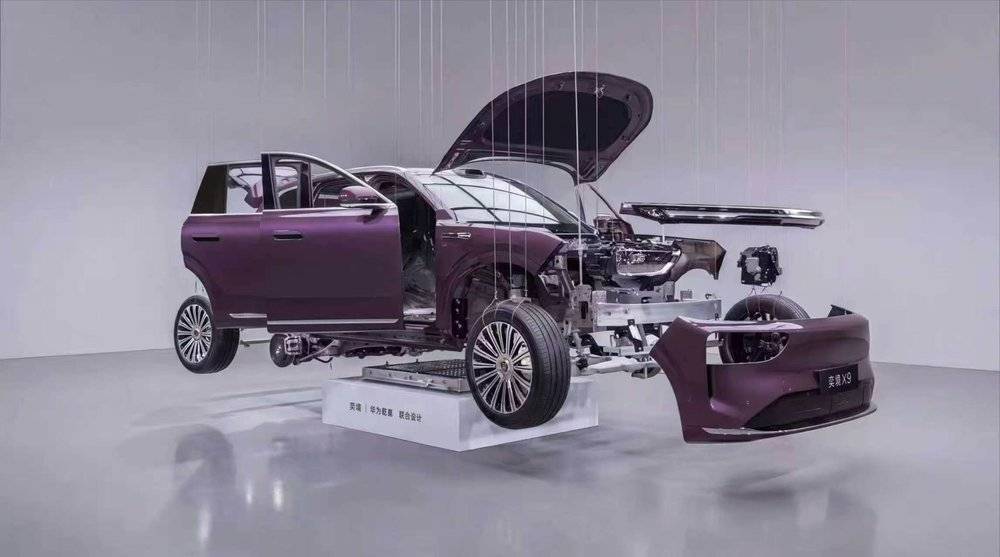
Huawei is turning Qiankun from a hidden supplier stack into a consumer-facing intelligent-driving brand.
30-Second TL;DR
What Changed
HUAWEI Qiankun Intelligent Driving experience centers display technology but do not sell, deliver, or service vehicles.
Why It Matters
The move could turn Huawei’s intelligent-driving stack into a consumer-recognized technology brand rather than an invisible Tier 1 component. It may also intensify competition for consumer mindshare and technology priority between Qiankun and Hongmeng Zhixing.
What To Do Next
Map Huawei Qiankun’s ADS 5 capabilities and supplier integration model against your autonomous-driving stack before selecting a Chinese automotive technology partner.
Key Points
- •HUAWEI Qiankun Intelligent Driving experience centers display technology but do not sell, deliver, or service vehicles.
- •Huawei distinguishes Hongmeng Zhixing’s vehicle-brand endorsement from Qiankun’s technology-supplier branding.
- •Qiankun-equipped vehicles have exceeded 1.9 million units, including 29 models outside the Hongmeng Zhixing ecosystem.
- •The strategy aims to strengthen consumer recognition of Qiankun and support large-scale intelligent-driving component sales.
Deep Insight
AI-generated analysis for this event — not the original article.
Enhanced Key Takeaways
- •HUAWEI Qiankun is the rebranded identity of Huawei's Intelligent Automotive Solution (IAS) business unit, formerly known as the Intelligent Car Solution BU.
- •The strategy utilizes a 'Tier 1.5' supplier model, where Huawei provides deeper integration and software-defined vehicle capabilities than traditional Tier 1 suppliers, while avoiding the capital expenditure of full vehicle manufacturing.
- •Qiankun's ADS (Advanced Driving System) 3.0 utilizes an end-to-end neural network architecture, shifting away from rule-based programming to improve handling of complex, unstructured urban driving scenarios.
- •Huawei has established partnerships with major OEMs including BAIC, Changan, Dongfeng, and GAC, allowing these manufacturers to retain their own brand identity while leveraging Huawei's 'Powered by Qiankun' branding.
- •The separation of Qiankun experience centers from Hongmeng Zhixing (HIMA) showrooms is designed to mitigate channel conflict, ensuring that partner OEMs do not feel their sales channels are being cannibalized by Huawei-led vehicle brands like AITO or Luxeed.
Competitor Analysis
- HUAWEI Qiankun (ADS 3.0)
- Tier 1.5 Supplier
- Tesla (FSD)
- Vertical Integration
- DJI Automotive
- Tier 1 Supplier
- XPeng (XNGP)
- Vertical Integration
- HUAWEI Qiankun (ADS 3.0)
- Multi-sensor (LiDAR/Camera)
- Tesla (FSD)
- Vision-only
- DJI Automotive
- Camera-focused/Cost-effective
- XPeng (XNGP)
- Multi-sensor (LiDAR/Camera)
- HUAWEI Qiankun (ADS 3.0)
- B2B (OEM Partnerships)
- Tesla (FSD)
- B2C (Direct Sales)
- DJI Automotive
- B2B (Mass Market)
- XPeng (XNGP)
- B2C (Direct Sales)
- HUAWEI Qiankun (ADS 3.0)
- High (End-to-End)
- Tesla (FSD)
- High (End-to-End)
- DJI Automotive
- Mid (Cost-optimized)
- XPeng (XNGP)
- High (End-to-End)
| Feature | HUAWEI Qiankun (ADS 3.0) | Tesla (FSD) | DJI Automotive | XPeng (XNGP) |
|---|---|---|---|---|
| Business Model | Tier 1.5 Supplier | Vertical Integration | Tier 1 Supplier | Vertical Integration |
| Hardware Strategy | Multi-sensor (LiDAR/Camera) | Vision-only | Camera-focused/Cost-effective | Multi-sensor (LiDAR/Camera) |
| Market Focus | B2B (OEM Partnerships) | B2C (Direct Sales) | B2B (Mass Market) | B2C (Direct Sales) |
| Urban NOA | High (End-to-End) | High (End-to-End) | Mid (Cost-optimized) | High (End-to-End) |
Technical Deep Dive
- Architecture: Utilizes an end-to-end neural network model that integrates perception, planning, and control into a single framework.
- Sensor Fusion: Employs a high-performance LiDAR-centric fusion approach combined with 4D imaging radar and high-definition cameras for redundancy.
- Compute Platform: Powered by Huawei's MDC (Mobile Data Center) series, specifically optimized for low-latency inference of large-scale transformer models.
- Software Stack: Built on the HarmonyOS-based intelligent vehicle digital platform, enabling OTA updates for driving algorithms and cockpit integration.
Future ImplicationsAI analysis grounded in cited sources
Timeline
- 2019-05Huawei establishes the Intelligent Car Solution BU.
- 2023-12Huawei announces the spin-off of its Intelligent Automotive Solution BU into a new joint venture company.
- 2024-04Huawei officially launches the 'HUAWEI Qiankun' brand at the Beijing International Automotive Exhibition.
- 2025-06Huawei begins the rollout of ADS 3.0, marking the transition to end-to-end AI driving models.
Weekly AI Recap
Read this week's curated digest of top AI events →
AI-curated news aggregator. All content rights belong to original publishers.
Original source: 虎嗅 ↗
This is a summary, not the original. Read the source, or get the weekly briefing.
The weekly digest
One email a week. Unsubscribe anytime.