Huawei MatePad Air global launch challenges iPad Air dominance
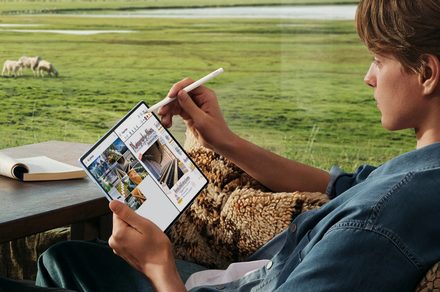
💡See how Huawei is using hardware differentiation to challenge Apple's tablet market share.
⚡ 30-Second TL;DR
What Changed
Features a high-refresh 144Hz OLED display
Why It Matters
The aggressive hardware specs and pricing could force competitors to accelerate their own hardware refresh cycles or improve value-adds.
What To Do Next
Analyze the hardware-software integration of the MatePad Air to understand how non-Apple ecosystems are optimizing for productivity.
Key Points
- •Features a high-refresh 144Hz OLED display
- •Includes bundled accessories to increase value proposition
- •Directly targets the premium tablet market segment dominated by Apple
🧠 Deep Insight
AI-generated analysis for this event — not the original article.
🔑 Enhanced Key Takeaways
- •The MatePad Air utilizes Huawei's proprietary HarmonyOS 4.2, which emphasizes cross-device ecosystem integration with Huawei smartphones and laptops through 'Super Device' features.
- •The device incorporates a specialized 'PaperMatte' display technology option, designed to reduce glare and simulate a tactile writing experience for stylus users.
- •Huawei has integrated a new AI-driven 'GoPaint' application suite, specifically optimized for the tablet's hardware to compete with professional-grade creative software on iPadOS.
- •The global launch strategy relies heavily on aggressive regional pricing bundles that include the M-Pencil and Smart Magnetic Keyboard, undercutting the total cost of ownership for a comparable iPad Air setup.
- •Hardware architecture utilizes the Kirin 9000W chipset, reflecting Huawei's continued focus on domestic semiconductor independence despite international trade restrictions.
📊 Competitor Analysis▸ Show
| Feature | Huawei MatePad Air (2026) | Apple iPad Air (M2/M4) | Samsung Galaxy Tab S9/S10 |
|---|---|---|---|
| Display | 144Hz OLED | 60Hz/120Hz Liquid Retina | 120Hz Dynamic AMOLED |
| OS | HarmonyOS 4.2 | iPadOS 17/18 | Android 14/15 (One UI) |
| Bundled Accessories | Included (Pencil/Keyboard) | Sold Separately | Sold Separately |
| Ecosystem Focus | Huawei Super Device | Apple Continuity | Samsung DeX |
🛠️ Technical Deep Dive
- Display: 12-inch OLED panel with 2.8K resolution and 144Hz adaptive refresh rate.
- Processor: Kirin 9000W octa-core SoC with integrated Maleoon 910 GPU.
- Battery: 10,100mAh capacity with support for 66W wired SuperCharge technology.
- Connectivity: Wi-Fi 6E support and NearLink (NearLink) short-range wireless communication protocol for low-latency peripheral connection.
- Audio: Quad-speaker array tuned with Huawei Sound technology.
🔮 Future ImplicationsAI analysis grounded in cited sources
⏳ Timeline
Weekly AI Recap
Read this week's curated digest of top AI events →
👉Related Updates
AI-curated news aggregator. All content rights belong to original publishers.
Original source: Digital Trends ↗
This is a summary, not the original. Read the source, or get the weekly briefing.
The weekly digest
One email a week. Unsubscribe anytime.