Huang Warns Huawei Chips 'Horrible' for US AI
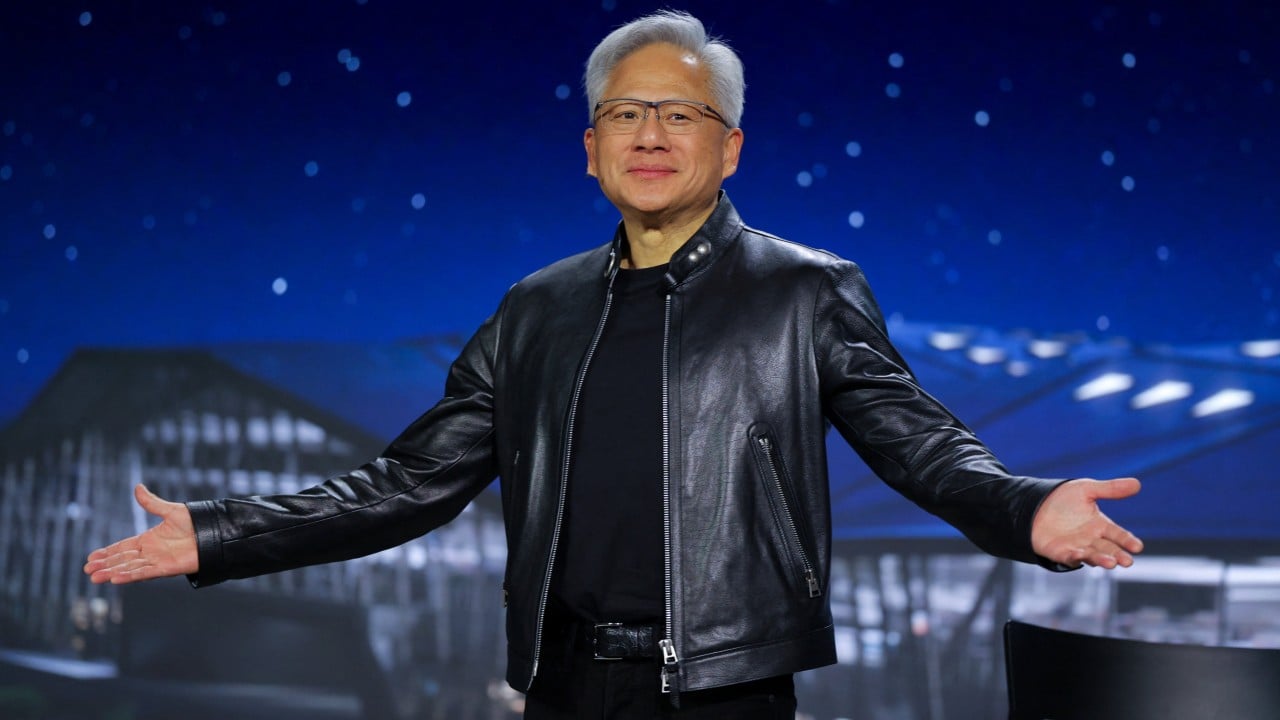
💡Nvidia CEO: Huawei chips could make China beat US in AI dominance
⚡ 30-Second TL;DR
What Changed
Jensen Huang calls DeepSeek on Huawei chips 'horrible' for US
Why It Matters
This underscores US-China AI rivalry, potentially fragmenting global standards and pressuring US firms to innovate faster. AI practitioners may face hardware choice dilemmas amid export controls.
What To Do Next
Evaluate your AI stack's US hardware dependency and explore multi-vendor optimization strategies.
Key Points
- •Jensen Huang calls DeepSeek on Huawei chips 'horrible' for US
- •Non-US AI optimization risks China superiority in AI
- •AI diffusion with Chinese standards threatens US tech lead
🧠 Deep Insight
AI-generated analysis for this event — not the original article.
🔑 Enhanced Key Takeaways
- •Jensen Huang's comments specifically highlight the risk of 'technological bifurcation,' where the global AI ecosystem splits into two incompatible standards, potentially isolating US-based software from the massive Chinese market.
- •DeepSeek's successful optimization on Huawei's Ascend 910 series chips challenges the prevailing industry narrative that US-made GPUs are the only viable hardware for training frontier-level large language models.
- •The US Department of Commerce is reportedly under increased pressure from industry leaders to tighten export controls on high-bandwidth memory (HBM) and advanced packaging technologies to further impede Huawei's ability to scale AI clusters.
📊 Competitor Analysis▸ Show
| Feature | Nvidia H100/H200 | Huawei Ascend 910B/C | DeepSeek Optimization |
|---|---|---|---|
| Architecture | Hopper (CUDA) | Da Vinci (CANN) | Native support for Ascend |
| Ecosystem | CUDA (Dominant) | CANN (Emerging) | Cross-platform compatibility |
| Performance | Industry Benchmark | Competitive in training | High efficiency on Ascend |
| Availability | Restricted in China | Domestic (China) | Optimized for both |
🛠️ Technical Deep Dive
- •DeepSeek utilized a custom-built software stack to bypass the lack of native CUDA support, leveraging Huawei's CANN (Compute Architecture for Neural Networks) library.
- •The optimization involved fine-tuning model kernels specifically for the Ascend 910B's NPU (Neural Processing Unit) architecture, focusing on memory bandwidth utilization to mitigate interconnect bottlenecks.
- •Huawei's Ascend 910 series utilizes a proprietary high-speed interconnect, Ascend Fabric, which DeepSeek engineers successfully integrated to scale training across multi-node clusters.
🔮 Future ImplicationsAI analysis grounded in cited sources
⏳ Timeline
Weekly AI Recap
Read this week's curated digest of top AI events →
👉Related Updates


AI-curated news aggregator. All content rights belong to original publishers.
Original source: SCMP Technology ↗
This is a summary, not the original. Read the source, or get the weekly briefing.
The weekly digest
One email a week. Unsubscribe anytime.