How Telecom Giants Are Building AI Businesses
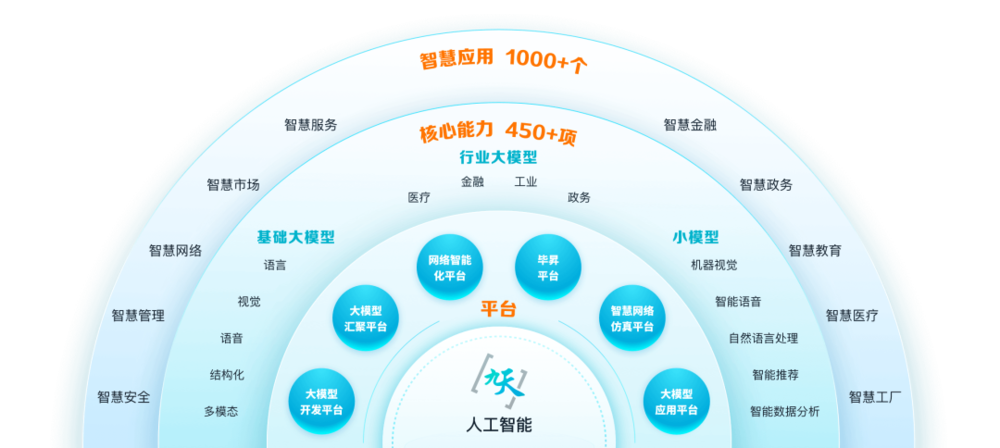
💡Telecoms are turning compute, networks, agents, and security into competing AI delivery stacks.
⚡ 30-Second TL;DR
What Changed
China Mobile reported 61.3 EFLOPS of intelligent-computing capacity, a 3.0-generation Jiutian model portfolio, 3,500TB of industry datasets, and the MoMA model-and-agent platform.
Why It Matters
Telecom operators are moving from connectivity providers toward integrated suppliers of compute, cloud, data, AI platforms, security, and industry applications. For AI companies, this expands potential distribution and deployment channels but also increases the importance of regional infrastructure, compliance, and private deployment.
What To Do Next
Map your AI workload across cloud, telecom edge, and private-deployment options, then compare latency, compliance, and total inference cost before selecting a regional partner.
Key Points
- •China Mobile reported 61.3 EFLOPS of intelligent-computing capacity, a 3.0-generation Jiutian model portfolio, 3,500TB of industry datasets, and the MoMA model-and-agent platform.
- •China Telecom combines Tianyi Cloud, Xirang computing orchestration, Xingchen models, and industry agents, reportedly serving more than 37,000 enterprise customers.
- •China Unicom emphasizes multi-model access and orchestration through its Yuanjing MaaS platform, with AI-related revenue reportedly growing more than 140% in 2025.
- •Verizon and AT&T are positioning AI around fiber, 5G, edge nodes, data-center interconnection, private networks, and security rather than proprietary foundation models.
- •The main risk for Chinese operators is duplicated infrastructure and excessive customization; profitability depends on converting projects into standardized, reusable products.
🧠 Deep Insight
AI-generated analysis for this event.
🔑 Enhanced Key Takeaways
- •Chinese telecom operators are increasingly integrating 'Low-Altitude Economy' infrastructure, utilizing 5G-A (5.5G) networks to provide AI-driven flight path management and drone surveillance services.
- •European operators like Deutsche Telekom and Orange have shifted focus toward the 'Global Telco AI Alliance' (GTAA), prioritizing the development of a standardized Telco-specific Large Language Model (TelcoLLM) to avoid vendor lock-in.
- •Japanese operator SoftBank has pivoted its AI strategy toward massive capital investment in GPU clusters, specifically partnering with NVIDIA to build the most powerful AI computing platform in Japan.
- •US-based operators are leveraging 'Network-as-a-Service' (NaaS) APIs, such as those under the GSMA Open Gateway initiative, to allow developers to monetize network intelligence without building proprietary foundation models.
- •The 'AI-Native Network' architecture is becoming a standard requirement for 6G research, with operators shifting from using AI to optimize networks to building networks that inherently support distributed AI inference.
📊 Competitor Analysis▸ Show
| Feature | Chinese Operators (CMCC/CT/CU) | US Operators (AT&T/Verizon) | European Operators (DT/Orange) |
|---|---|---|---|
| Primary AI Focus | Full-stack (Models + Cloud + Infra) | Connectivity & Edge Monetization | TelcoLLM & Alliance Standards |
| Model Strategy | Proprietary Foundation Models | Third-party/Open Source Integration | Collaborative Telco-specific LLMs |
| Revenue Model | Project-based/Industry Solutions | API/NaaS & Private Networks | Shared Platform/Ecosystem |
| Infrastructure | Massive Intelligent Computing Centers | Fiber/5G-A Edge Nodes | Federated Cloud/Edge Infrastructure |
🛠️ Technical Deep Dive
- Jiutian Model Portfolio: Utilizes a hierarchical architecture consisting of a base model layer, industry-specific fine-tuned models, and a task-specific agent layer for automated network operations.
- Xirang Orchestration: Employs a distributed computing fabric that abstracts heterogeneous GPU resources (NVIDIA, Huawei Ascend, Cambricon) into a unified resource pool for AI training and inference.
- TelcoLLM Architecture: Focuses on parameter-efficient fine-tuning (PEFT) and LoRA (Low-Rank Adaptation) to deploy models on edge servers with limited memory constraints.
- 5G-A/6G Integration: Implements native AI air interfaces where the physical layer uses deep learning for channel estimation and beamforming optimization.
🔮 Future ImplicationsAI analysis grounded in cited sources
⏳ Timeline
Weekly AI Recap
Read this week's curated digest of top AI events →
👉Related Updates

AI-curated news aggregator. All content rights belong to original publishers.
Original source: 虎嗅 ↗