AI Turns Users into Toolmakers
💡AI agents now let non-developers build bespoke tools—while exposing the limits of AI-only debugging.
⚡ 30-Second TL;DR
What Changed
The author migrated from Ulysses to Obsidian because Markdown files are easier for AI agents to read, search, and reuse.
Why It Matters
This workflow could shift software demand from broad, subscription-based products toward small, user-generated utilities. For developers, interoperability through Markdown, CLI interfaces, APIs, and MCP may become a competitive advantage rather than a secondary feature.
What To Do Next
Prototype a small internal utility with an AI coding agent, using Markdown storage and an MCP-compatible integration, then measure how much manual workflow it removes.
Key Points
- •The author migrated from Ulysses to Obsidian because Markdown files are easier for AI agents to read, search, and reuse.
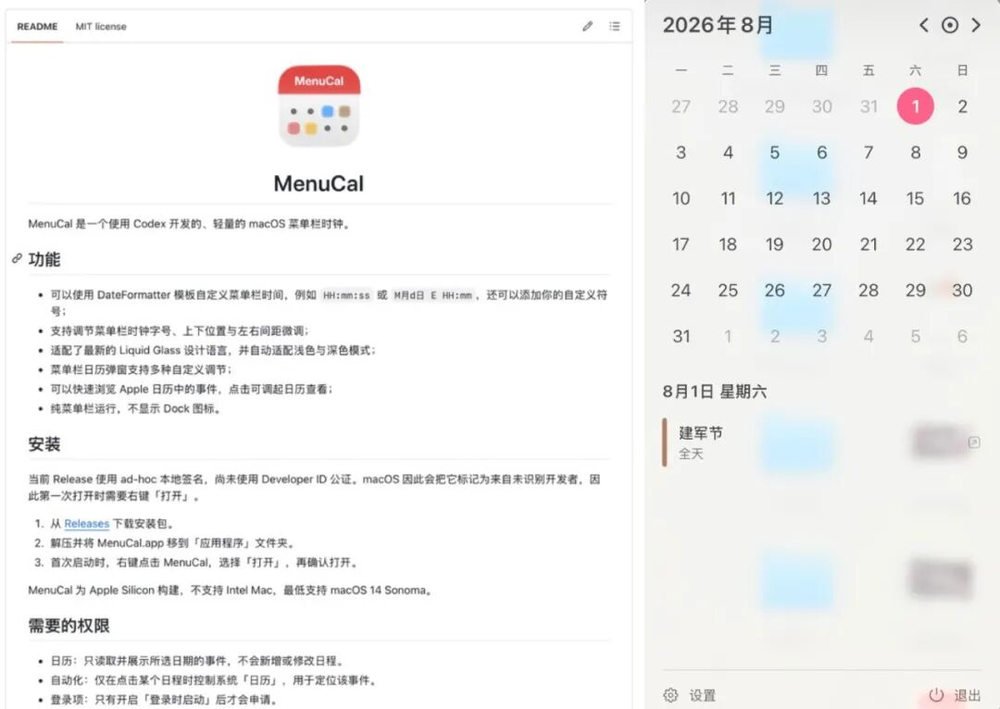
- •A programming agent was used to create lightweight replacements for a Mac menu-bar calendar and an external-display control utility.
- •Home Assistant documentation and MCP access enabled the author to add iOS Live Activities for smart-home device status updates.
- •AI handled implementation efficiently but still required human diagnosis when UI architecture and rendering choices produced poor results.
🧠 Deep Insight
AI-generated analysis for this event.
🔑 Enhanced Key Takeaways
- •The shift toward 'local-first' software architectures is being accelerated by AI agents, which prioritize data portability and offline accessibility over cloud-locked SaaS ecosystems.
- •Model Context Protocol (MCP) has emerged as a critical standard, allowing AI agents to securely bridge local file systems and disparate APIs without requiring complex custom middleware.
- •The 'Software-as-a-Service' (SaaS) model is facing a 'de-bundling' trend where users prefer modular, single-purpose tools generated on-demand rather than monolithic, feature-bloated applications.
- •AI-driven development is shifting the primary bottleneck from 'coding ability' to 'product architecture,' where the user's ability to define requirements and debug UI/UX logic becomes the primary differentiator.
- •The rise of 'Personalized Software' is creating a new market for LLM-optimized documentation, where developers are increasingly structuring technical manuals specifically for agentic consumption rather than human readability.
🛠️ Technical Deep Dive
- Model Context Protocol (MCP): An open standard that enables AI models to connect to local data sources, databases, and tools, facilitating the 'toolmaker' workflow described.
- Agentic UI Debugging: The process involves iterative feedback loops where the AI generates code, the user identifies rendering failures (e.g., layout shifts or state management errors), and the AI performs root-cause analysis on the DOM or view hierarchy.
- Local-First Architecture: Employs technologies like CRDTs (Conflict-free Replicated Data Types) or simple flat-file structures (Markdown/JSON) to ensure AI agents can parse, modify, and maintain state without proprietary database drivers.
🔮 Future ImplicationsAI analysis grounded in cited sources
⏳ Timeline
Weekly AI Recap
Read this week's curated digest of top AI events →
👉Related Updates
AI-curated news aggregator. All content rights belong to original publishers.
Original source: 虎嗅 ↗