Hitachi AI achieves 0.9+ AUC in leukemia diagnosis
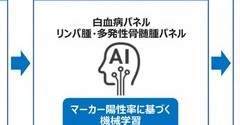
See how Hitachi is pushing clinical AI benchmarks to 0.9 AUC for complex blood malignancy diagnostics.
30-Second TL;DR
What Changed
Developed for flow cytometry-based blood malignancy diagnosis
Why It Matters
This advancement demonstrates the high potential of AI in clinical pathology, potentially reducing diagnostic time and human error in complex blood tests.
What To Do Next
Review the latest clinical AI diagnostic papers on AUC optimization to understand how to handle multi-class classification in high-stakes medical datasets.
Key Points
- •Developed for flow cytometry-based blood malignancy diagnosis
- •Achieved AUC performance of 0.9 or higher
- •Collaborative research between Hitachi and Kyushu University Hospital
Deep Insight
AI-generated analysis for this event — not the original article.
Enhanced Key Takeaways
- •The AI system specifically utilizes flow cytometry data, which measures physical and chemical characteristics of cells in a fluid stream to identify abnormal cell populations.
- •The research addresses the high expertise requirement for manual analysis of flow cytometry data, which is often time-consuming and prone to inter-observer variability.
- •Hitachi's model employs a specialized machine learning architecture designed to handle the high-dimensional, complex data structures inherent in multi-parameter flow cytometry.
- •The collaboration aims to reduce the diagnostic burden on hematopathologists by providing automated, high-accuracy preliminary screening results.
- •The study demonstrated that the AI could maintain high diagnostic performance even across diverse patient cohorts, suggesting robustness in clinical settings.
Technical Deep Dive
- The system processes multi-parameter flow cytometry data, which involves analyzing multiple markers simultaneously to characterize cell phenotypes.
- The model architecture is optimized for multi-class classification, allowing it to distinguish between various types of leukemia and other blood malignancies.
- The training process involved large-scale datasets from Kyushu University Hospital to ensure the model learned to recognize subtle patterns indicative of malignancy.
- The AUC (Area Under the Curve) metric was used to evaluate the model's ability to discriminate between malignant and non-malignant samples across different thresholds.
Future ImplicationsAI analysis grounded in cited sources
Timeline
- 2023-04Hitachi and Kyushu University Hospital announce formal partnership for AI-driven medical diagnostics.
- 2024-11Preliminary results of the AI model's performance on internal hospital datasets are presented at a medical conference.
- 2026-06Official announcement of the AI achieving 0.9+ AUC in multi-disease classification tasks.
Weekly AI Recap
Read this week's curated digest of top AI events →
Related Updates
AI-curated news aggregator. All content rights belong to original publishers.
Original source: ITmedia AI+ (日本) ↗
This is a summary, not the original. Read the source, or get the weekly briefing.
The weekly digest
One email a week. Unsubscribe anytime.