Harness Engineering Supercharges AI Agents
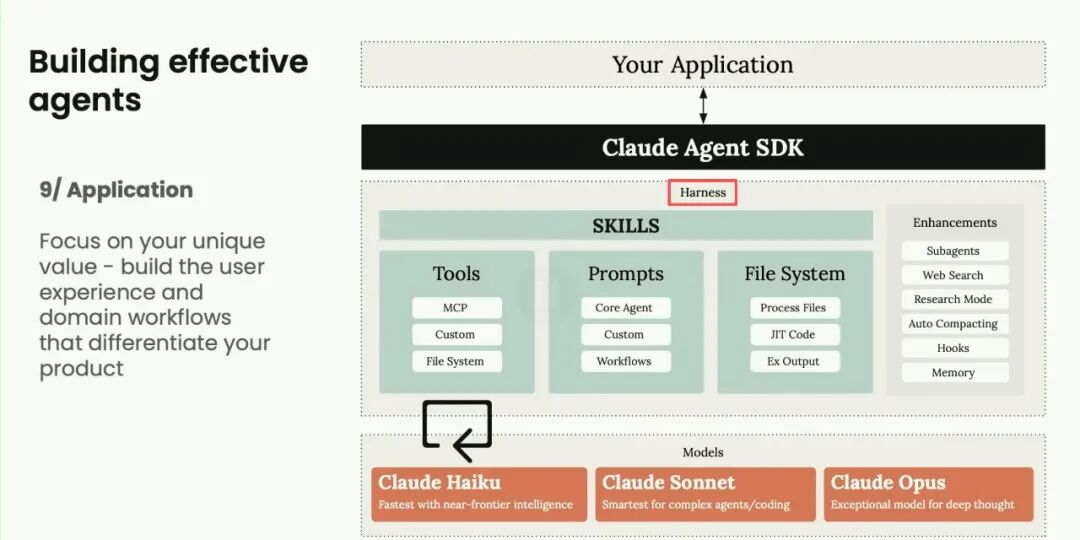
💡Agent benchmarks soar 25% via harness—no new models needed
⚡ 30-Second TL;DR
What Changed
LangChain agent jumps to Top 5 via harness tweaks alone.
Why It Matters
Enables reliable agent performance without model retraining, slashing costs and hallucinations for production apps. Shifts AI dev from prompts to system engineering.
What To Do Next
Add Plan-Build-Verify-Fix loop to your LangChain agents.
Key Points
- •LangChain agent jumps to Top 5 via harness tweaks alone.
- •KV cache cuts Claude input costs 10x with stable prefix rules.
- •Self-verification loops force Plan-Build-Verify-Fix cycles.
- •Progressive disclosure loads skills tier-by-tier to save tokens.
- •Dual-agent setup tracks long tasks via feature lists.
🧠 Deep Insight
Background and context from public sources — not the original article. 8 sources cited.
🔑 Enhanced Key Takeaways
- •Harness engineering has evolved from a theoretical concept into an industrial discipline with measurable benchmarks: LangChain's refactoring cycle (5 times in 6 months) and Vercel's 80% tool reduction demonstrate that competitive advantage now comes from trajectory data captured by harnesses, not prompts[2].
- •Multi-agent specialization is replacing monolithic AI systems: by 2026, teams deploy specialized agents for narrow roles (testing, QA, cleanup) rather than single general-purpose agents, mirroring human team structures and improving performance across software development lifecycles[3][6].
- •Entropy management and documentation are critical but underappreciated harness components: AI-generated codebases accumulate drift in documentation, naming conventions, and dead code, requiring scheduled entropy-management agents and versioning strategies to maintain system reliability at scale[1].
- •Context window management across long-running tasks (8-10 hours) requires hundreds of micro-optimizations: KV caching, progressive disclosure, and incremental progress tracking are not individual solutions but interdependent components of industrial harness engineering[5].
🛠️ Technical Deep Dive
Key Architectural Patterns
- •Self-verification loops: Pre-completion checklist middleware catches errors before submission; agents commit progress to git with descriptive messages and maintain progress files for state recovery[1][3]
- •Context engineering: Directory structure mapping at startup, KV caching with stable prefix rules, and progressive disclosure (tier-by-tier skill loading) reduce token consumption and manage context limits[1]
- •Loop detection and reasoning optimization: Middleware tracks repeated file edits to prevent 'doom loops'; reasoning sandwich pattern applies high reasoning for planning/verification and medium reasoning for implementation to optimize quality within token budgets[1]
- •Incremental progress architecture: Agents work on one feature at a time, leaving the environment in clean state after each change; git commits and progress summaries enable rollback and recovery from bad states[3]
- •Structured environment design: Rigid architectural models with fixed layers, strictly validated dependency directions, and custom linters enforce mechanical constraints that make agent behavior predictable and legible[4]
- •Observability integration: Agents read logs and metrics; performance monitoring dashboards and escalation policies detect when agents get stuck and route to human judgment[1]
Benchmark Data
- •LangChain GPT-5.2-Codex agent: 52.8 → 66.5 on Terminal Bench 2.0 via harness optimization alone[article summary]
- •KV cache cost reduction: 10x input cost savings with stable prefix rules[article summary]
- •Vercel tool optimization: 80% reduction in agent tools led to fewer steps, fewer tokens, faster responses[2]
🔮 Future ImplicationsAI analysis grounded in cited sources
⏳ Timeline
📎 Sources (8)
Factual claims are grounded in the sources below. Forward-looking analysis is AI-generated interpretation.
- nxcode.io — Harness Engineering Complete Guide AI Agent Codex 2026
- philschmid.de — Agent Harness 2026
- Anthropic — Effective Harnesses for Long Running Agents
- OpenAI — Harness Engineering
- stackoverflow.blog — Code Smells for AI Agents Q and a with Eno Reyes of Factory
- harness.io — CTO Predictions for 2026 Durkin
- futureofbeinghuman.com — What We Miss When We Talk About AI Harnesses
- agenticengineer.com — Top 2 Percent Agentic Engineering
Weekly AI Recap
Read this week's curated digest of top AI events →
👉Related Updates

AI-curated news aggregator. All content rights belong to original publishers.
Original source: 虎嗅 ↗
This is a summary, not the original. Read the source, or get the weekly briefing.
Weekly AI briefing
One email a week. Unsubscribe anytime.