Hangmo Tech raises 100M RMB for intelligent variable-stiffness joints
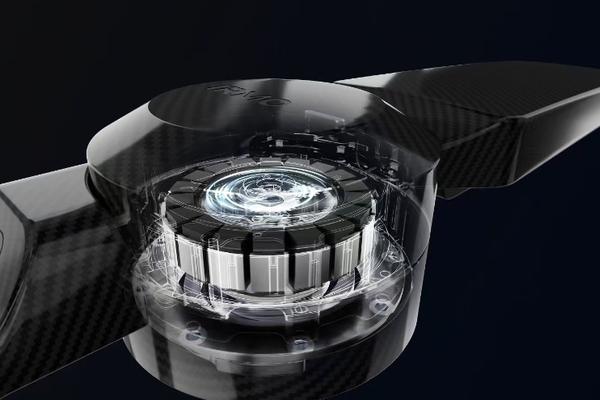
Learn how variable-stiffness hardware combined with AI models is solving energy and safety bottlenecks in robotics.
30-Second TL;DR
What Changed
Secured nearly 100 million RMB in angel funding from investors including Zhongtou Wanfang.
Why It Matters
The integration of variable-stiffness hardware with AI-driven perception models marks a significant step toward safer, more energy-efficient human-robot interaction in industrial and rehabilitation settings.
What To Do Next
Evaluate the use of variable-stiffness actuators in your next robotic design to improve safety and energy efficiency in human-collaborative environments.
Key Points
- •Secured nearly 100 million RMB in angel funding from investors including Zhongtou Wanfang.
- •Developed FlexmoJoint, a variable-stiffness module that reduces energy consumption by 31.2%.
- •Launching IRMO M1, the first AI-powered exoskeleton with visual perception for all-terrain adaptation.
- •Utilizes an EPA (Exteroception+Proprioception+Action) large model for gait adaptation and user personalization.
Deep Insight
AI-generated analysis for this event — not the original article.
Enhanced Key Takeaways
- •Hangmo Tech's founding team originates from the Beihang University Robotics Institute, specifically leveraging years of research in biomechatronics and soft robotics.
- •The company's variable-stiffness technology utilizes a proprietary mechanical design that allows for real-time adjustment of joint compliance without requiring complex sensor feedback loops.
- •The IRMO M1 exoskeleton targets specific industrial scenarios such as logistics and construction, focusing on reducing musculoskeletal strain for workers performing repetitive heavy lifting.
- •The EPA large model architecture integrates multimodal sensor fusion, allowing the exoskeleton to predict user intent by analyzing both environmental visual data and internal proprioceptive joint feedback.
- •The angel round funding is earmarked for scaling production capacity and establishing a dedicated R&D center in Beijing to accelerate the iteration of the FlexmoJoint series.
Competitor Analysis
- Hangmo Tech (FlexmoJoint)
- Variable-Stiffness Joints
- Fourier Intelligence
- Force-Feedback Actuators
- ULS Robotics
- Industrial Exoskeletons
- Hangmo Tech (FlexmoJoint)
- Industrial/Consumer
- Fourier Intelligence
- Medical/Rehab
- ULS Robotics
- Industrial/Logistics
- Hangmo Tech (FlexmoJoint)
- EPA Large Model
- Fourier Intelligence
- Clinical Data Models
- ULS Robotics
- Task-Specific Algorithms
- Hangmo Tech (FlexmoJoint)
- Competitive (Startup)
- Fourier Intelligence
- Premium (Medical)
- ULS Robotics
- Mid-Range (Industrial)
| Feature | Hangmo Tech (FlexmoJoint) | Fourier Intelligence | ULS Robotics |
|---|---|---|---|
| Core Tech | Variable-Stiffness Joints | Force-Feedback Actuators | Industrial Exoskeletons |
| Target Market | Industrial/Consumer | Medical/Rehab | Industrial/Logistics |
| AI Integration | EPA Large Model | Clinical Data Models | Task-Specific Algorithms |
| Pricing | Competitive (Startup) | Premium (Medical) | Mid-Range (Industrial) |
Technical Deep Dive
- FlexmoJoint Architecture: Employs a dual-motor antagonistic configuration to achieve variable stiffness, enabling the joint to switch between rigid and compliant states in under 50ms.
- Energy Recovery Mechanism: Utilizes regenerative braking during the deceleration phase of the gait cycle, feeding energy back into the battery system to achieve the reported 31.2% efficiency gain.
- EPA Model Implementation: The Exteroception layer processes RGB-D camera data for terrain mapping, while the Proprioception layer monitors joint torque and angle at 1kHz frequency to ensure stability.
- Material Science: Incorporates carbon-fiber reinforced polymers in the exoskeleton frame to maintain a high strength-to-weight ratio, keeping the total unit weight under 8kg.
Future ImplicationsAI analysis grounded in cited sources
Timeline
- 2024-05Hangmo Tech officially incorporated in Beijing by Beihang University research team.
- 2025-02Successful prototype testing of the first-generation FlexmoJoint module.
- 2026-03Completion of the IRMO M1 exoskeleton pilot testing in industrial logistics environments.
- 2026-06Announcement of nearly 100 million RMB angel funding round led by Zhongtou Wanfang.
Weekly AI Recap
Read this week's curated digest of top AI events →
Related Updates


AI-curated news aggregator. All content rights belong to original publishers.
Original source: 36氪 ↗
This is a summary, not the original. Read the source, or get the weekly briefing.
The weekly digest
One email a week. Unsubscribe anytime.