Hainan's 2030 Fuel Car Ban Strategy
💡Understand the infrastructure and policy requirements for a regional transition to 100% electric vehicles.
⚡ 30-Second TL;DR
What Changed
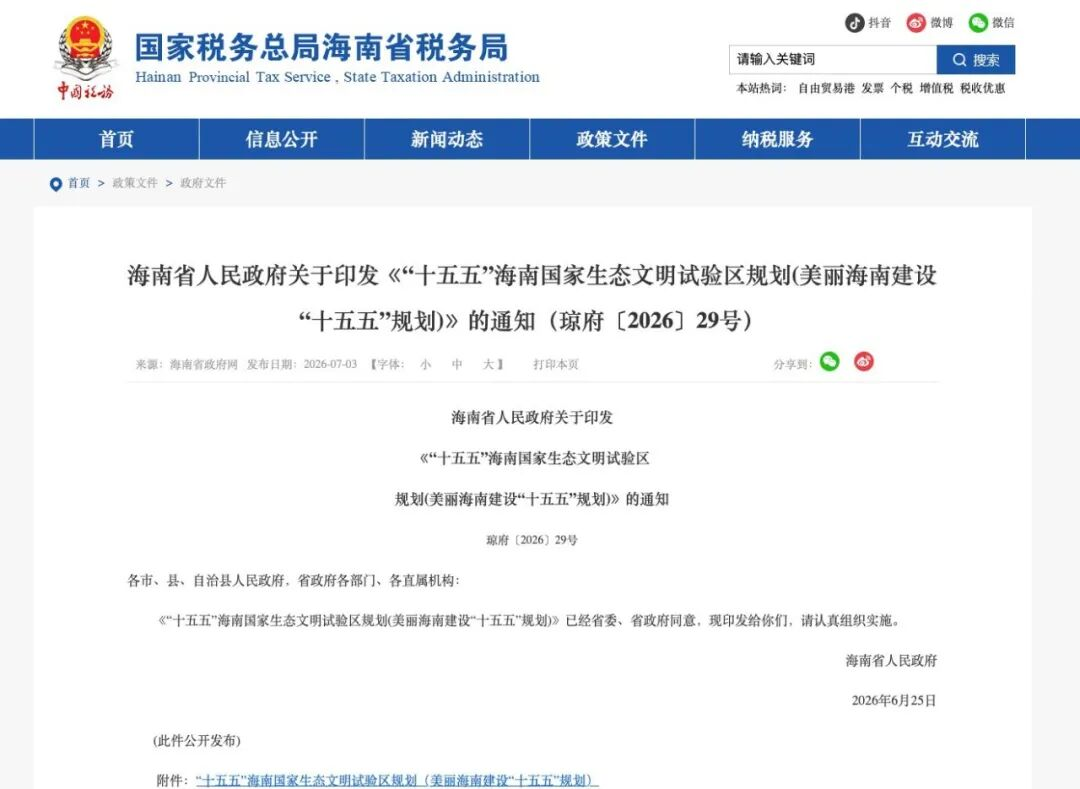
Hainan aims for 100% new energy vehicle sales in public and private sectors by 2030.
Why It Matters
Hainan's model serves as a blueprint for other regions to transition to green transportation, potentially accelerating the national EV supply chain.
What To Do Next
Monitor Hainan's 'one-network' charging infrastructure data for insights into large-scale EV grid management.
Key Points
- •Hainan aims for 100% new energy vehicle sales in public and private sectors by 2030.
- •The province has achieved a 62.9% new energy vehicle penetration rate during the 14th Five-Year Plan.
- •Infrastructure includes a unified charging/swapping network with over 73,000 charging points.
- •Economic incentives include internalizing road maintenance costs into fuel prices to encourage EV adoption.
🧠 Deep Insight
AI-generated analysis for this event — not the original article.
🔑 Enhanced Key Takeaways
- •Hainan's strategy is officially designated as the 'Clean Energy Vehicle Development Plan,' which serves as a pilot program for China's national 'Dual Carbon' goals.
- •The province has implemented a 'Vehicle-to-Grid' (V2G) pilot program to utilize the high density of EVs as distributed energy storage to stabilize the local power grid.
- •Hainan has introduced a 'Green License Plate' policy that grants NEVs exemption from certain traffic restrictions and provides priority parking in urban centers.
- •The local government has established a dedicated 'Hainan New Energy Vehicle Promotion Center' to manage data monitoring, subsidy distribution, and public awareness campaigns.
- •Hainan is leveraging its Free Trade Port status to pilot the import of specialized NEV components and technologies with reduced tariffs to foster a local EV industrial chain.
🛠️ Technical Deep Dive
- Implementation of a province-wide 'Smart Charging Platform' that integrates real-time grid load data with charging station availability to prevent peak-load congestion.
- Deployment of high-power DC fast-charging stations (120kW+) along major expressways to facilitate the 'Hainan Island Loop' travel requirement.
- Integration of battery swapping standards (GB/T) to ensure interoperability between different EV brands operating within the province.
- Utilization of blockchain technology for the verification and trading of carbon credits generated by private EV owners.
🔮 Future ImplicationsAI analysis grounded in cited sources
⏳ Timeline
Weekly AI Recap
Read this week's curated digest of top AI events →
👉Related Updates


AI-curated news aggregator. All content rights belong to original publishers.
Original source: 虎嗅 ↗
This is a summary, not the original. Read the source, or get the weekly briefing.
The weekly digest
One email a week. Unsubscribe anytime.