🐯虎嗅•Freshcollected in 10m
Haidilao struggles to scale non-hotpot brands
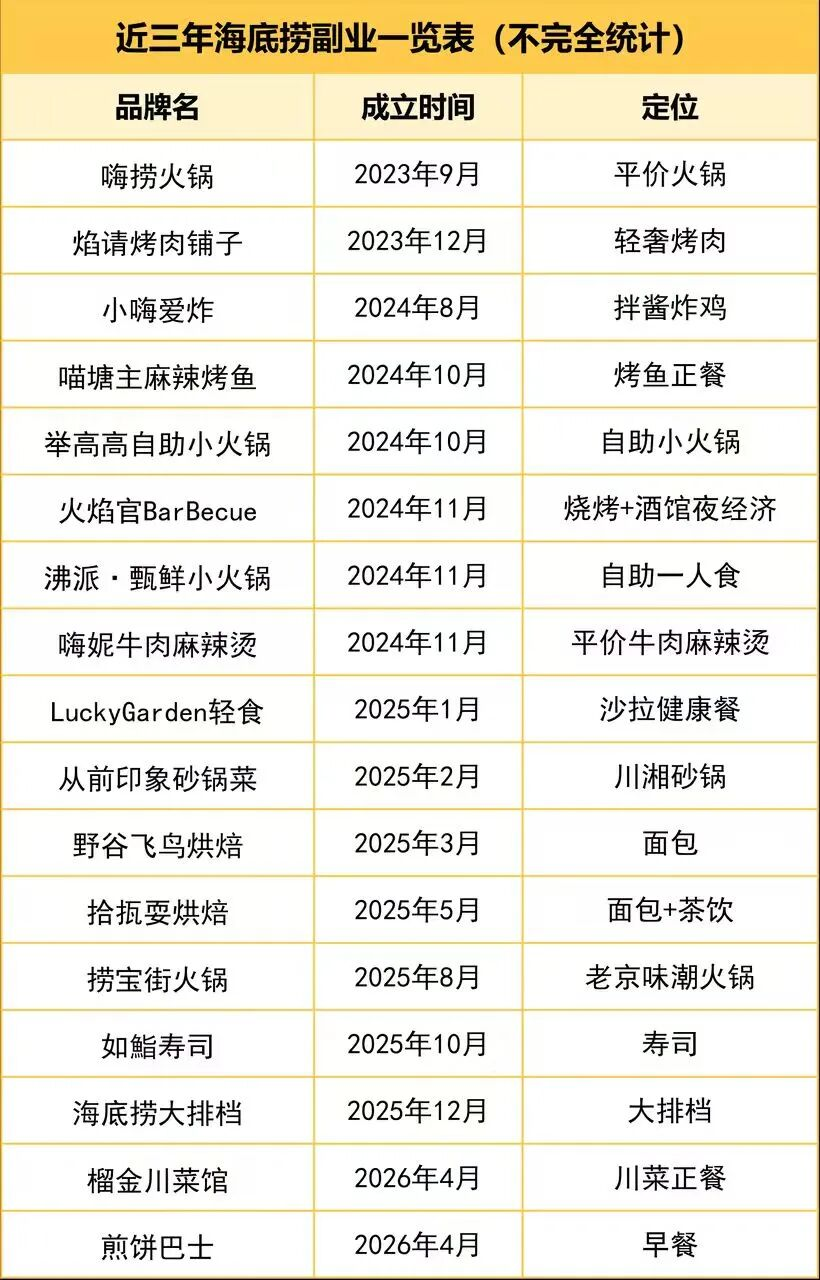
💡A case study on why operational standardization doesn't always guarantee success in new markets.
⚡ 30-Second TL;DR
What Changed
Core hotpot business shows signs of saturation with declining turnover rates.
Why It Matters
This highlights the difficulty of applying a 'one-size-fits-all' operational infrastructure to diverse business models, a lesson relevant to scaling AI-enabled services.
What To Do Next
When scaling AI products, ensure your operational infrastructure is modular enough to adapt to specific domain requirements.
Who should care:Founders & Product Leaders
Key Points
- •Core hotpot business shows signs of saturation with declining turnover rates.
- •The 'Red Pomegranate Plan' aims to incubate 1-3 brands with over 500 stores in three years.
- •Standardization advantages in hotpot are difficult to replicate in complex categories like Sichuan cuisine.
🧠 Deep Insight
AI-generated analysis for this event.
🔑 Enhanced Key Takeaways
- •Haidilao's multi-brand strategy has faced significant internal restructuring, including the closure of several experimental sub-brands like 'Hi Noodles' (Mian Guan Er) and 'Mr. Garlic' to optimize capital allocation.
- •The company has shifted its focus toward 'regional exclusivity' and localized menu adaptations, moving away from the rigid, centralized supply chain model that defined its early hotpot success.
- •Financial reports indicate that Haidilao's 'Red Pomegranate Plan' encountered headwinds due to high labor costs and the inability to achieve the same economies of scale in non-hotpot categories as they did with their standardized hotpot ingredients.
- •Haidilao has increasingly utilized its 'Super Hi' (Shu Hai) supply chain subsidiary to test new product categories, though this has created friction between maintaining quality control and the agility required for fast-food expansion.
- •Recent strategic pivots involve a 'store-manager-as-entrepreneur' model, allowing local managers more autonomy to adjust menus and pricing, a departure from the company's historically top-down operational management.
📊 Competitor Analysis▸ Show
| Feature | Haidilao (Non-Hotpot) | Jiumaojiu Group | Xiabuxiabu |
|---|---|---|---|
| Brand Portfolio | Diverse/Experimental | Focused (Tai Er, Song) | Hotpot/Tea (Coucou) |
| Operational Model | Centralized/Standardized | Multi-brand/Agile | Hybrid/Service-oriented |
| Market Positioning | Mid-to-High End | Mass Market/Casual | Mid-Range |
🔮 Future ImplicationsAI analysis grounded in cited sources
Haidilao will likely divest from non-core fast-food ventures by 2027.
The persistent failure to replicate hotpot margins in fast-food categories suggests a strategic retreat to focus on core profitability.
Increased reliance on M&A for growth.
Given the difficulty of organic incubation, the company is expected to acquire established regional brands rather than building from scratch.
⏳ Timeline
2021-06
Haidilao officially launches the 'Red Pomegranate Plan' to incubate diverse sub-brands.
2021-11
Company announces the 'Woodpecker Plan' to close underperforming stores and halt expansion.
2022-09
Haidilao spins off its overseas business, Super Hi International, to focus on domestic restructuring.
2023-12
Haidilao pivots to a franchise model to accelerate growth in lower-tier cities.
2025-03
Financial disclosures reveal continued losses in non-hotpot sub-brand segments.
📰
Weekly AI Recap
Read this week's curated digest of top AI events →
👉Related Updates

AI-curated news aggregator. All content rights belong to original publishers.
Original source: 虎嗅 ↗