💰钛媒体•Freshcollected in 28m
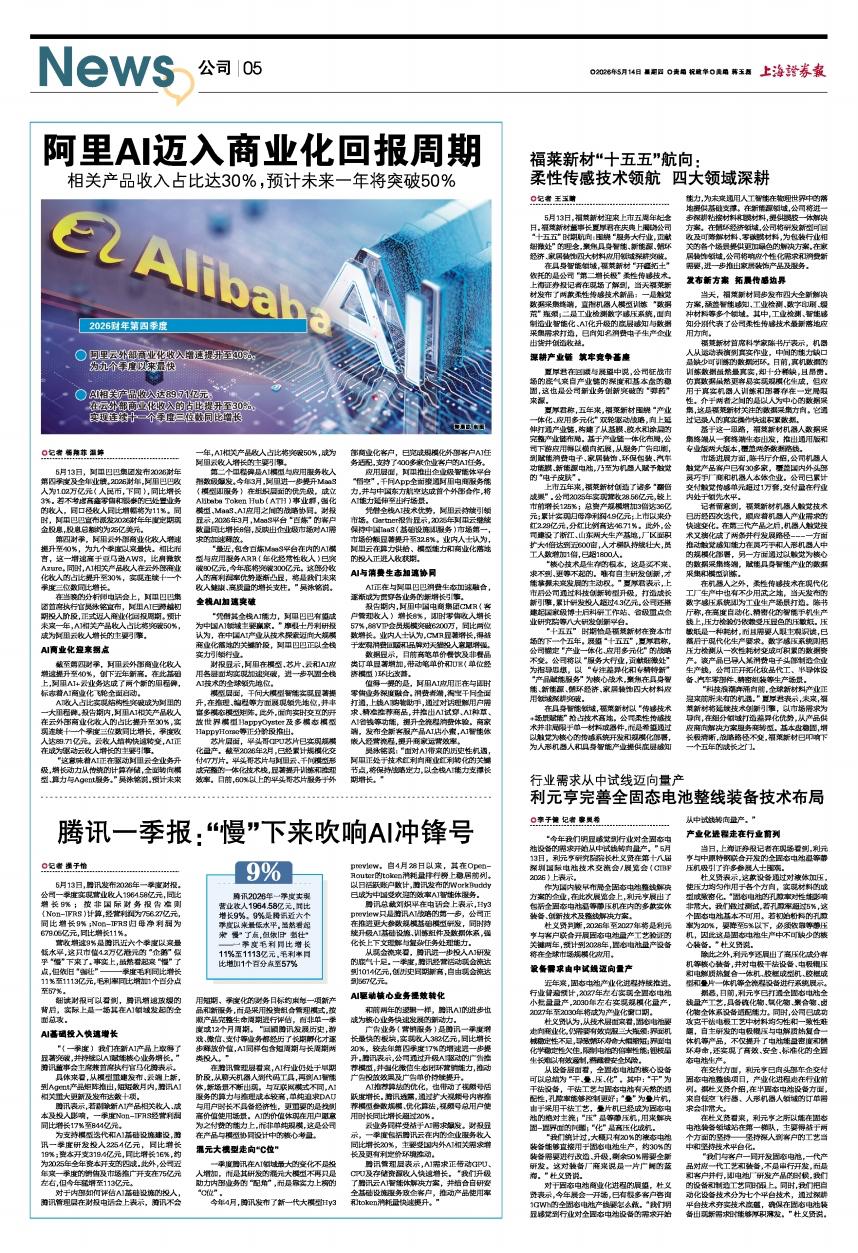
Alibaba and ByteDance in high-stakes AI infrastructure war
#ai-infrastructure#cloud-computing#business-strategyalibaba-cloud-/-bytedance-doubaoalibababytedancedoubao
💡See how tech giants are burning cash to sustain their AI infrastructure dominance.
⚡ 30-Second TL;DR
What Changed
Alibaba uses cloud cash flow to support full-stack AI infrastructure
Why It Matters
The aggressive capital expenditure by these tech giants highlights the extreme cost of scaling foundation models in the current competitive landscape.
What To Do Next
Analyze the infrastructure strategies of Alibaba and ByteDance to optimize your own model deployment costs.
Who should care:Founders & Product Leaders
Key Points
- •Alibaba uses cloud cash flow to support full-stack AI infrastructure
- •ByteDance relies on advertising revenue to cover Doubao model costs
- •Both companies face significant pressure on net profit due to high AI capex
🧠 Deep Insight
AI-generated analysis for this event.
🔑 Enhanced Key Takeaways
- •Alibaba has aggressively lowered API prices for its Qwen series models by up to 97% since mid-2024 to capture market share from startups and smaller enterprises.
- •ByteDance's Doubao has rapidly scaled to become one of China's most-used AI applications, leveraging its integration into the TikTok/Douyin ecosystem to achieve massive user acquisition costs (CAC) efficiency.
- •Both companies are facing severe GPU supply constraints due to U.S. export controls, forcing them to invest heavily in domestic chip alternatives and custom interconnect technologies.
- •Alibaba is prioritizing the 'Model-as-a-Service' (MaaS) strategy on its cloud platform, aiming to lock in developers by offering a comprehensive suite of open-source and proprietary Qwen models.
- •ByteDance has shifted its internal R&D focus toward multi-modal capabilities, specifically optimizing its infrastructure for real-time video generation and interactive AI agents.
📊 Competitor Analysis▸ Show
| Feature | Alibaba (Qwen/Cloud) | ByteDance (Doubao) | Baidu (Ernie) |
|---|---|---|---|
| Primary Revenue Model | Cloud Infrastructure/MaaS | Advertising/Consumer Apps | Search/Enterprise Cloud |
| Model Strategy | Open-weights & Proprietary | Proprietary/Closed-source | Proprietary/Closed-source |
| Pricing Strategy | Aggressive API price cuts | High-volume, low-cost API | Tiered enterprise pricing |
| Key Strength | Full-stack cloud integration | Massive consumer traffic | Established enterprise ecosystem |
🛠️ Technical Deep Dive
- Alibaba's Qwen-Max and Qwen-2.5 architectures utilize a Mixture-of-Experts (MoE) approach to optimize inference latency and reduce compute overhead for cloud customers.
- ByteDance employs a proprietary distributed training framework designed to handle massive parallelization across heterogeneous GPU clusters, mitigating the impact of hardware fragmentation.
- Both firms are heavily utilizing RDMA (Remote Direct Memory Access) over Converged Ethernet (RoCE) to scale their AI clusters beyond the limitations of traditional networking.
- ByteDance's Doubao infrastructure incorporates a specialized 'inference-on-the-fly' engine that prioritizes low-latency token generation for mobile user interactions.
🔮 Future ImplicationsAI analysis grounded in cited sources
Consolidation of China's AI model market will accelerate by 2027.
The extreme capital expenditure required to maintain competitive AI infrastructure will likely force smaller players to exit, leaving only the largest tech conglomerates.
Domestic chip adoption will become a primary performance differentiator.
As U.S. export restrictions tighten, the ability to optimize software stacks for domestic AI accelerators will determine long-term infrastructure sustainability.
⏳ Timeline
2023-08
Alibaba releases Qwen-7B, marking its formal entry into the open-source LLM ecosystem.
2024-05
ByteDance officially launches the Doubao AI chatbot app to the public.
2024-05
Alibaba Cloud announces massive price cuts for its core Qwen models to stimulate developer adoption.
2025-02
ByteDance reports significant infrastructure scaling to support the integration of AI agents across its short-video platforms.
2026-01
Alibaba integrates advanced reasoning capabilities into its cloud-based AI development platform.
📰
Weekly AI Recap
Read this week's curated digest of top AI events →
👉Related Updates


AI-curated news aggregator. All content rights belong to original publishers.
Original source: 钛媒体 ↗