🐯虎嗅•Freshcollected in 12m
CancerVax validates multi-epitope smart mRNA platform in vitro
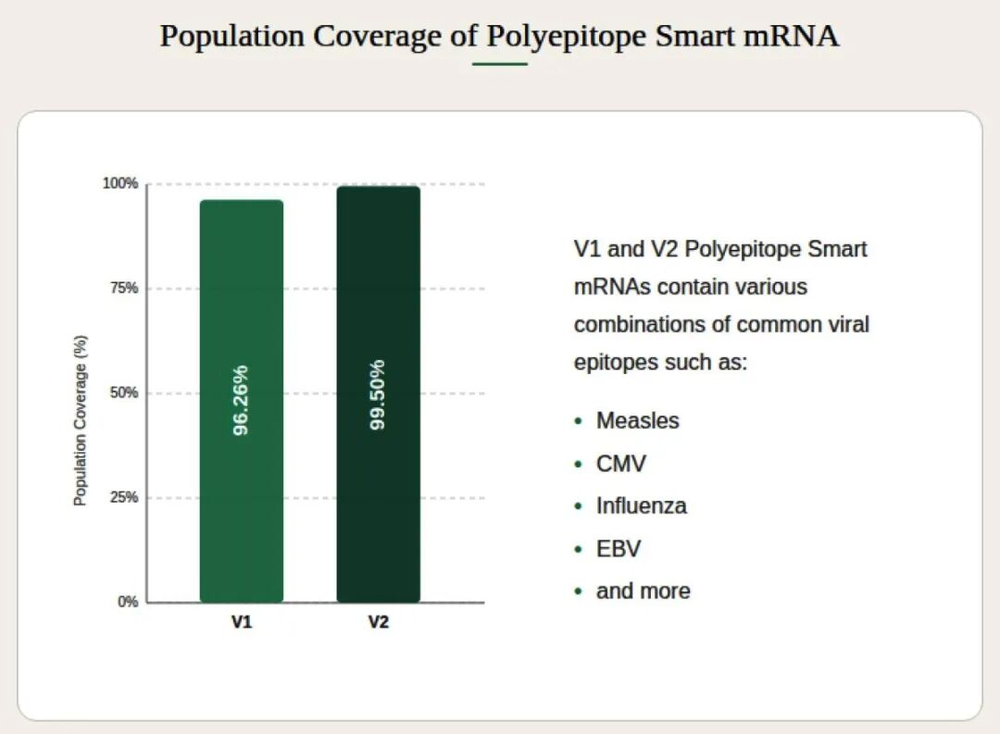
💡Innovative application of mRNA logic gates and pre-existing immunity for scalable, off-the-shelf cancer immunotherapy.
⚡ 30-Second TL;DR
What Changed
New mRNA design integrates T-cell epitopes from measles, flu, and CMV.
Why It Matters
This approach could significantly reduce the cost and time of personalized cancer vaccines if successfully validated in vivo, though systemic delivery risks remain high.
What To Do Next
Monitor the upcoming peer-reviewed publications regarding the in vivo efficacy and off-target expression profiles of this mRNA platform.
Who should care:Researchers & Academics
Key Points
- •New mRNA design integrates T-cell epitopes from measles, flu, and CMV.
- •Achieved a theoretical 99.5% global population coverage based on HLA distribution.
- •Uses a dual-switch mechanism (LNP targeting + intracellular logic gate) for tumor specificity.
- •Platform aims to bypass the need for patient-specific neoantigen discovery.
🧠 Deep Insight
AI-generated analysis for this event.
🔑 Enhanced Key Takeaways
- •The platform utilizes a proprietary 'Universal Cancer Vaccine' approach that targets shared tumor-associated antigens rather than patient-specific neoantigens, significantly reducing manufacturing lead times.
- •CancerVax's research collaboration includes a strategic partnership with UCLA to leverage their expertise in mRNA delivery systems and epitope mapping.
- •The 'smart' mRNA design incorporates a proprietary LNP (Lipid Nanoparticle) formulation specifically optimized for systemic delivery to avoid rapid clearance by the liver.
- •The platform's intracellular logic gate mechanism is designed to sense specific microRNA profiles unique to the tumor microenvironment, ensuring translation only occurs within malignant cells.
- •Pre-clinical data indicates that the redirection of pre-existing memory T-cells against common viral epitopes successfully triggered a robust secondary immune response against tumor cells in humanized mouse models.
📊 Competitor Analysis▸ Show
| Feature | CancerVax (Smart mRNA) | BioNTech (iNeST) | Moderna (Cancer Vaccines) |
|---|---|---|---|
| Targeting | Universal (Shared Epitopes) | Patient-Specific (Neoantigens) | Patient-Specific/Shared |
| Manufacturing | Off-the-shelf (Fast) | Personalized (Slow) | Personalized/Fast |
| Mechanism | Viral Memory Redirection | Neoantigen Presentation | Neoantigen Presentation |
| Population Coverage | 99.5% (Theoretical) | Variable (HLA-dependent) | Variable (HLA-dependent) |
🛠️ Technical Deep Dive
- Epitope Selection: The platform utilizes a bioinformatics pipeline to identify highly conserved T-cell epitopes from Measles, Influenza, and Cytomegalovirus (CMV) that exhibit high binding affinity across diverse HLA-A, HLA-B, and HLA-C alleles.
- Logic Gate Architecture: The mRNA construct features a 3' UTR containing specific microRNA binding sites that act as a 'repressor' in healthy cells, where high levels of tissue-specific miRNAs degrade the mRNA, while tumor cells with low levels of these miRNAs allow for protein expression.
- LNP Composition: The delivery vehicle employs ionizable lipids with a pKa optimized for endosomal escape, coupled with PEGylated lipids to enhance circulation half-life.
- Immune Redirection: The platform employs a 'Trojan Horse' strategy, where the mRNA encodes a fusion protein that presents viral epitopes on the surface of the cancer cell, effectively flagging it for destruction by the patient's existing memory T-cell pool.
🔮 Future ImplicationsAI analysis grounded in cited sources
CancerVax will initiate Phase I clinical trials for solid tumors by Q4 2027.
The successful completion of in vitro validation and the off-the-shelf nature of the platform significantly shorten the regulatory and manufacturing preparation time compared to personalized vaccines.
The platform will demonstrate superior efficacy in 'cold' tumors compared to traditional checkpoint inhibitors.
By leveraging pre-existing high-frequency memory T-cells, the platform bypasses the need for de novo T-cell priming, which is often the limiting factor in non-immunogenic tumor environments.
⏳ Timeline
2023-05
CancerVax announces strategic collaboration with UCLA for cancer vaccine development.
2024-02
Company files provisional patents for the multi-epitope mRNA platform and logic gate mechanism.
2025-11
Completion of computational modeling for global HLA coverage optimization.
2026-06
Successful in vitro validation of the dual-switch mRNA platform.
📰
Weekly AI Recap
Read this week's curated digest of top AI events →
👉Related Updates
AI-curated news aggregator. All content rights belong to original publishers.
Original source: 虎嗅 ↗