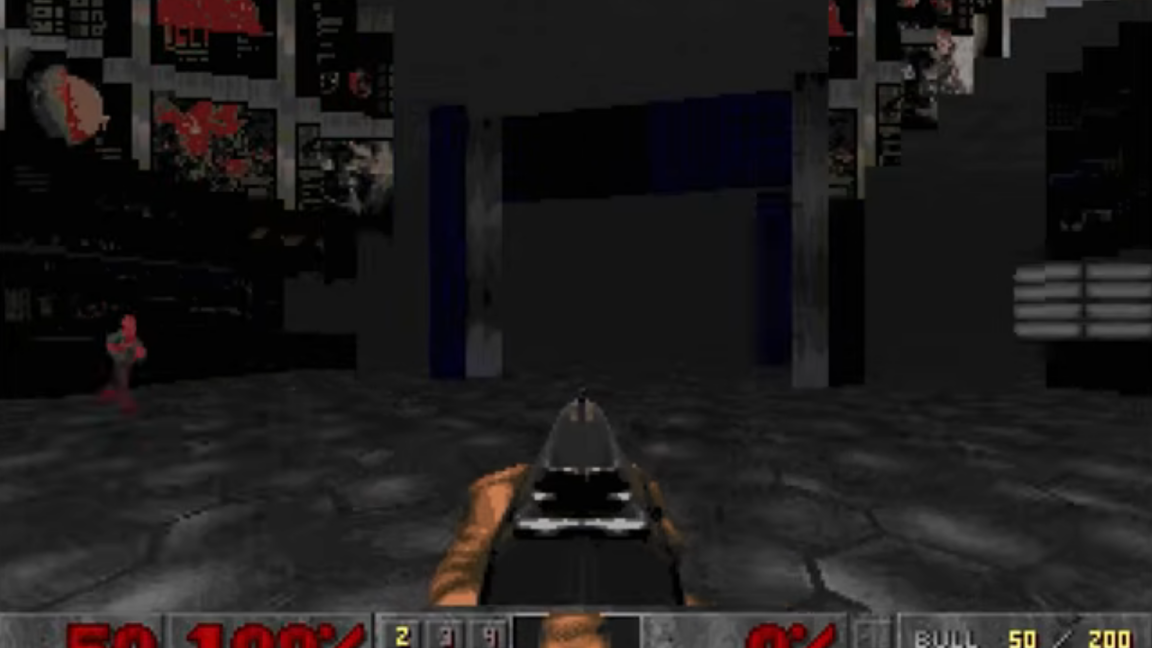
Hackers port Doom to Neo Geo hardware
💡Learn how low-level optimization can overcome hardware constraints—a vital skill for edge AI developers.
⚡ 30-Second TL;DR
What Changed
Successful port of Doom to 16-bit era hardware
Why It Matters
The techniques used for resource-constrained porting are highly relevant to optimizing AI models for edge devices. Understanding how to squeeze performance out of limited hardware is a core skill for efficient AI deployment.
What To Do Next
Study the source code of this port to learn advanced memory management and rendering optimization techniques.
Key Points
- •Successful port of Doom to 16-bit era hardware
- •Demonstrates advanced low-level optimization and memory management
- •Challenges assumptions about hardware limitations for complex software
🧠 Deep Insight
AI-generated analysis for this event — not the original article.
🔑 Enhanced Key Takeaways
- •The port was achieved by developer 'neogeo_doom' (often associated with the Neo Geo development community) utilizing a custom engine rather than a direct port of the original id Tech 1 source code.
- •The Neo Geo's Motorola 68000 CPU, running at approximately 12 MHz, required significant frame-skipping and resolution reduction to maintain a playable framerate.
- •The project leverages the Neo Geo's unique sprite-based hardware architecture to simulate raycasting, a technique traditionally handled by CPUs in PC-based Doom ports.
- •Memory constraints were bypassed by implementing a dynamic asset streaming system that loads textures and map data from the Neo Geo's cartridge ROM in real-time.
- •This port specifically targets the MVS (Multi Video System) arcade hardware, proving that the 1990s arcade platform can handle 3D-style rendering despite lacking a dedicated 3D graphics processor.
🛠️ Technical Deep Dive
- CPU Utilization: The Motorola 68000 is pushed to its limits by offloading raycasting calculations to a custom lookup table system.
- Rendering Technique: Uses a pseudo-3D approach where the Neo Geo's sprite hardware is manipulated to draw vertical columns, mimicking the raycasting engine of the original Doom.
- Memory Management: Employs a bank-switching technique to access the large ROM sizes required for Doom's assets, which exceed the standard Neo Geo memory addressing limits.
- Color Palette: Utilizes the Neo Geo's 15-bit color palette, requiring a custom dithering algorithm to map Doom's original 8-bit VGA color space to the console's hardware limitations.
🔮 Future ImplicationsAI analysis grounded in cited sources
⏳ Timeline
Weekly AI Recap
Read this week's curated digest of top AI events →
👉Related Updates
AI-curated news aggregator. All content rights belong to original publishers.
Original source: Ars Technica ↗
This is a summary, not the original. Read the source, or get the weekly briefing.
The weekly digest
One email a week. Unsubscribe anytime.