New study solves Feynman's reverse sprinkler puzzle
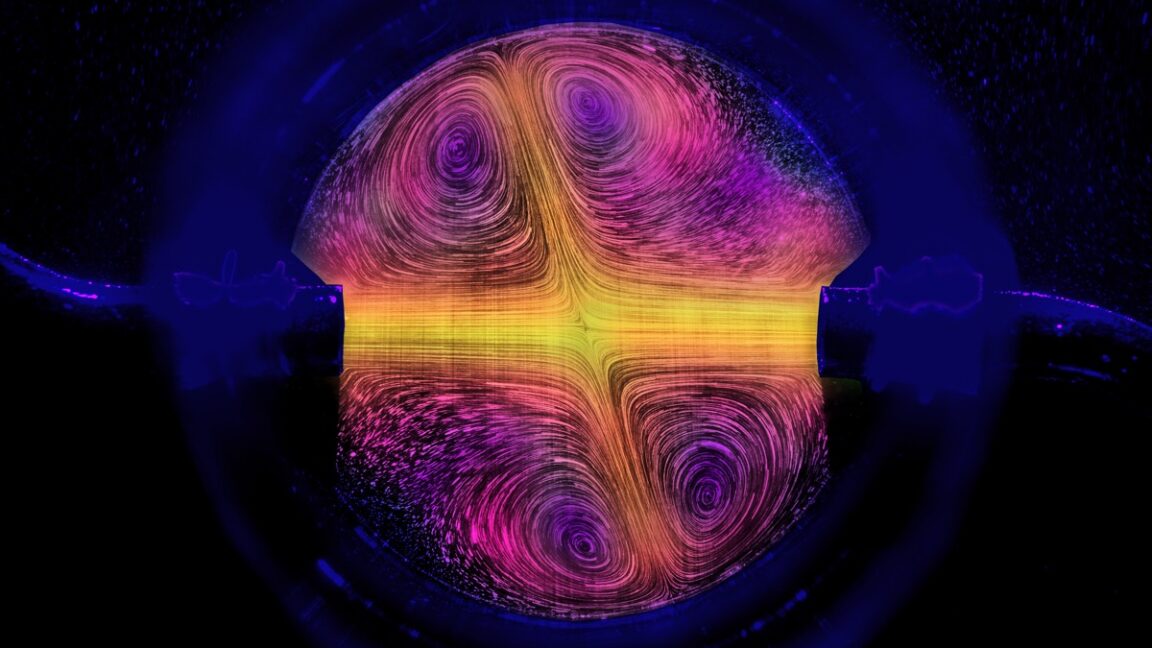
💡Physics breakthroughs in fluid dynamics are essential for improving the accuracy of AI-driven physical simulations.
⚡ 30-Second TL;DR
What Changed
Confirms 2024 momentum flux theory
Why It Matters
This research improves our understanding of fluid dynamics, which is critical for training high-fidelity physics simulation models.
What To Do Next
Update your physics simulation engine's fluid dynamics module to reflect these new findings on angular momentum.
Key Points
- •Confirms 2024 momentum flux theory
- •Explains rotation mechanics for reverse and standard sprinklers
- •Provides mathematical clarity on angular momentum in fluid dynamics
🧠 Deep Insight
AI-generated analysis for this event — not the original article.
🔑 Enhanced Key Takeaways
- •The puzzle, famously posed by Richard Feynman, centers on whether a sprinkler submerged in water and operating in reverse (sucking water in) will rotate, and if so, in which direction.
- •The 2024 study utilized high-speed imaging and particle image velocimetry to observe the internal flow dynamics that were previously only theorized.
- •Researchers identified that the rotation in the reverse sprinkler is driven by the interaction between the internal flow and the nozzle geometry, rather than simple reactive force.
- •The study demonstrates that the reverse sprinkler rotates in the opposite direction of a standard sprinkler due to the specific way water accelerates into the intake.
- •This research resolves a decades-long debate in fluid mechanics that had previously seen conflicting experimental results and theoretical models.
🛠️ Technical Deep Dive
- The mechanism relies on the conservation of angular momentum within the fluid control volume.
- The study employed a custom-built experimental apparatus featuring a low-friction bearing to isolate rotational forces.
- Mathematical modeling utilized the Navier-Stokes equations to predict the torque generated by the fluid intake.
- The 'silly' sprinkler behavior is explained by the pressure differential created at the nozzle exit/intake, which induces a torque-generating vortex.
🔮 Future ImplicationsAI analysis grounded in cited sources
⏳ Timeline
Weekly AI Recap
Read this week's curated digest of top AI events →
👉Related Updates
AI-curated news aggregator. All content rights belong to original publishers.
Original source: Ars Technica ↗
This is a summary, not the original. Read the source, or get the weekly briefing.
The weekly digest
One email a week. Unsubscribe anytime.