GW-Scale Green Power Clusters Emerge in China
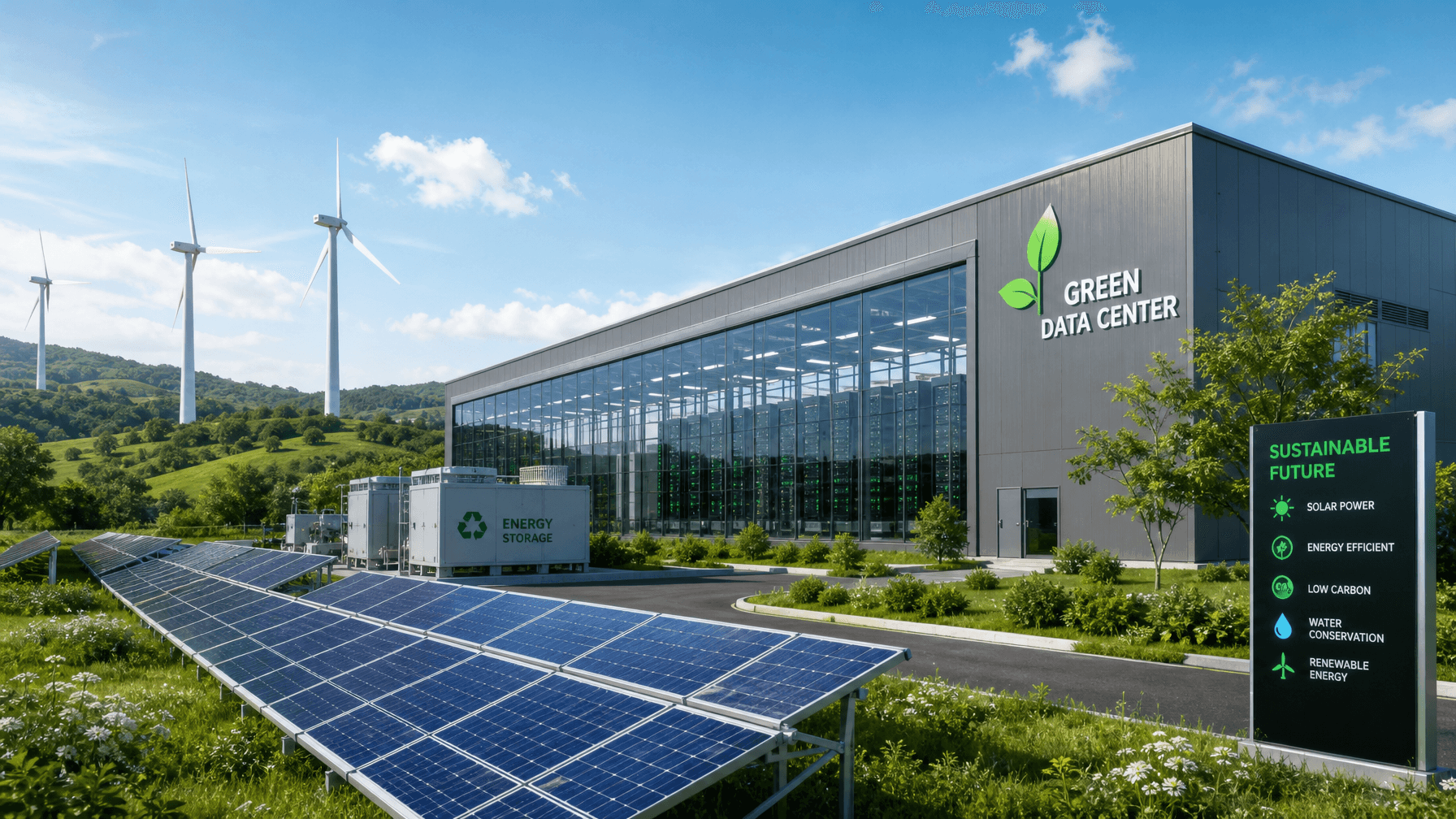
Understand how energy-efficient infrastructure is becoming the bottleneck for large-scale AI training in China.
30-Second TL;DR
What Changed
Emergence of GW-scale green power data center clusters in China.
Why It Matters
The shift toward green power clusters will likely force AI infrastructure providers to prioritize energy efficiency and sustainable site selection to remain competitive.
What To Do Next
Evaluate your infrastructure's energy footprint and explore regions with green power incentives for future large-scale model training deployments.
Key Points
- •Emergence of GW-scale green power data center clusters in China.
- •Market divergence driven by high-density AI infrastructure requirements.
- •Alignment with the trillion-yuan national computing network development cycle.
Deep Insight
AI-generated analysis for this event — not the original article.
Enhanced Key Takeaways
- •The 'East Data, West Computing' (Dongshu Xisuan) project serves as the primary policy framework, mandating that data centers in western regions utilize renewable energy sources like wind and solar to offset the high carbon footprint of AI training.
- •Major Chinese cloud providers, including Alibaba Cloud, Tencent, and Huawei, are increasingly co-locating data centers with dedicated 'source-grid-load-storage' integrated energy systems to ensure 24/7 power stability for high-density GPU clusters.
- •Local governments in provinces like Guizhou, Gansu, and Inner Mongolia are offering preferential land use and electricity pricing incentives specifically for projects exceeding 500MW capacity to attract AI infrastructure investment.
- •The shift toward GW-scale clusters is necessitated by the thermal design power (TDP) requirements of next-generation AI chips, which demand liquid cooling solutions that are more efficiently deployed at massive, centralized scales.
- •China's State Grid is implementing specialized ultra-high voltage (UHV) transmission lines to transport green energy from western generation hubs directly to these massive computing clusters, minimizing transmission losses.
Technical Deep Dive
- Implementation of liquid-to-chip (direct-to-chip) cooling systems to manage rack densities exceeding 50kW-100kW, which are standard for AI training clusters.
- Integration of AI-driven Power Usage Effectiveness (PUE) management systems that dynamically adjust cooling and server loads based on real-time renewable energy availability.
- Utilization of modular, prefabricated data center architectures to reduce construction timelines for GW-scale facilities from years to months.
- Deployment of high-voltage DC (HVDC) power distribution within data centers to reduce conversion losses compared to traditional AC systems.
Future ImplicationsAI analysis grounded in cited sources
Timeline
- 2022-02China officially launches the 'East Data, West Computing' national project.
- 2023-07Ministry of Industry and Information Technology (MIIT) releases guidelines for green data center development.
- 2024-05National Development and Reform Commission (NDRC) accelerates approval for integrated computing and energy projects.
- 2025-11First wave of GW-scale green power clusters begins pilot operations in western provinces.
Weekly AI Recap
Read this week's curated digest of top AI events →
Related Updates



AI-curated news aggregator. All content rights belong to original publishers.
Original source: Pandaily ↗
This is a summary, not the original. Read the source, or get the weekly briefing.
The weekly digest
One email a week. Unsubscribe anytime.