Guangzhou vs Hangzhou: Digital Economy Lessons
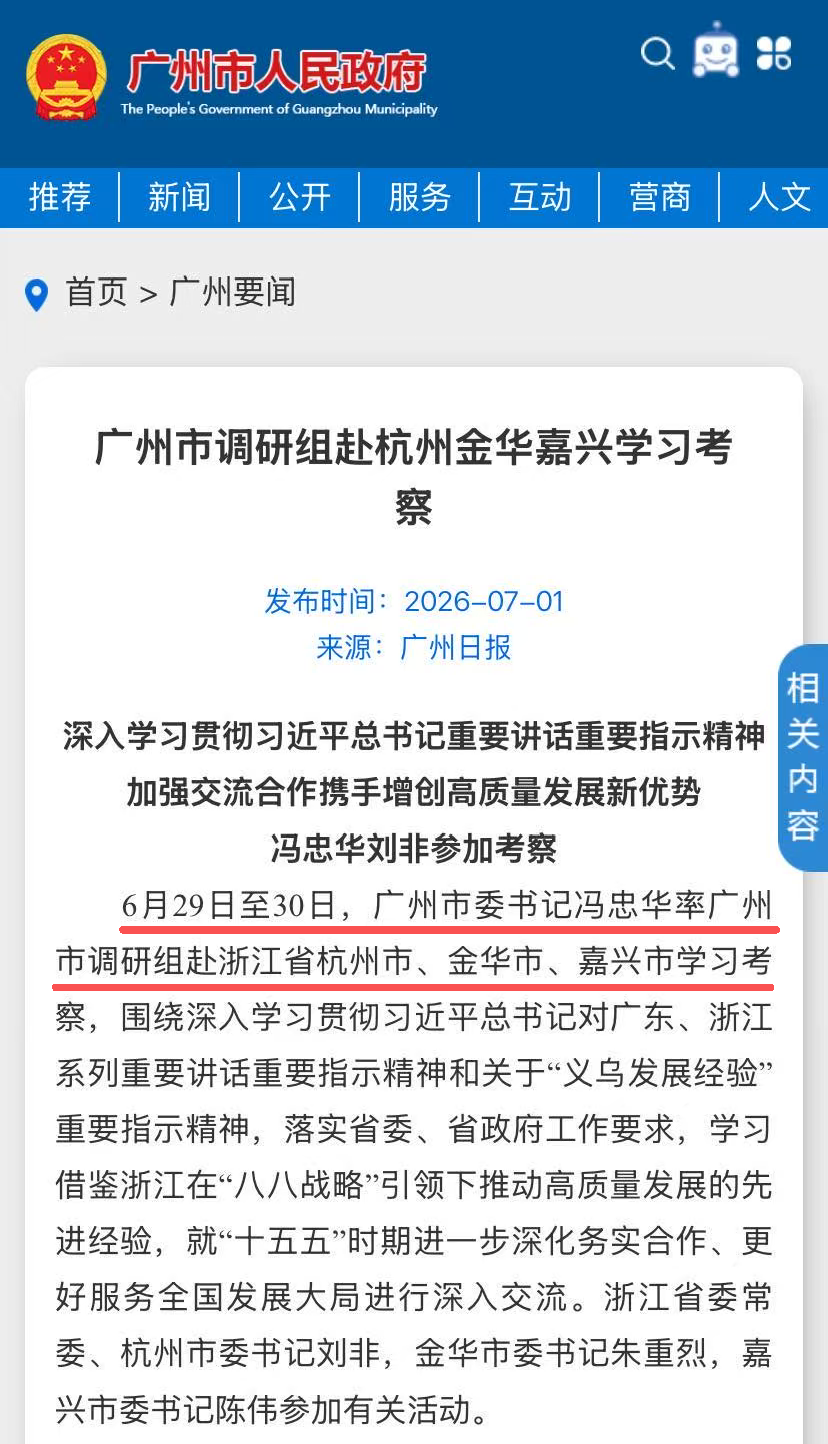
💡See how a major Chinese city is pivoting its industrial strategy toward AI to compete with tech-heavy hubs.
⚡ 30-Second TL;DR
What Changed
Hangzhou's digital economy growth is driven by tech giants like Alibaba.
Why It Matters
Guangzhou's potential policy shift toward AI infrastructure could create new opportunities for AI startups and research institutions in the Greater Bay Area.
What To Do Next
Monitor Guangzhou's upcoming local government tenders for AI infrastructure and research partnerships in the Greater Bay Area.
Key Points
- •Hangzhou's digital economy growth is driven by tech giants like Alibaba.
- •Guangzhou lags in AI enterprise rankings compared to Hangzhou.
- •Guangzhou is studying Hangzhou's 'Cloud Town' and 'Zhijiang Laboratory' models.
- •Shift from traditional trade to digital and AI-driven industries is critical for Guangzhou.
🧠 Deep Insight
AI-generated analysis for this event — not the original article.
🔑 Enhanced Key Takeaways
- •Guangzhou's digital economy strategy is increasingly focused on the 'Industry 4.0' integration, specifically leveraging its massive manufacturing base in automotive and electronics to differentiate from Hangzhou's consumer-internet-centric model.
- •Hangzhou's 'Cloud Town' (Yunqi Town) has evolved into a specialized ecosystem hosting over 1,000 cloud computing and big data enterprises, creating a self-sustaining talent pipeline that Guangzhou currently lacks.
- •Guangzhou has launched the 'Artificial Intelligence +' initiative to bridge the gap, targeting the integration of AI into its traditional pillar industries like port logistics and high-end manufacturing rather than competing solely in software services.
- •The Zhijiang Laboratory in Hangzhou operates as a provincial-level research institution with a unique 'government-led, enterprise-supported' funding model that Guangzhou is attempting to replicate through its Nansha District development zone.
- •Data from 2025 indicates that while Hangzhou leads in digital economy value-added as a percentage of GDP, Guangzhou has seen a faster growth rate in industrial internet platform adoption, signaling a pivot toward B2B digital transformation.
📊 Competitor Analysis▸ Show
| Feature | Hangzhou (Digital Hub) | Guangzhou (Manufacturing Hub) |
|---|---|---|
| Primary Driver | Consumer Internet & Cloud | Advanced Manufacturing & Trade |
| Key Tech Giant | Alibaba Group | WeChat (Tencent) / XPeng |
| AI Focus | Research & Cloud Infrastructure | AI-Integrated Manufacturing |
| Economic Model | Platform Economy | Industrial Internet / B2B |
🛠️ Technical Deep Dive
- Hangzhou's Cloud Town utilizes a distributed cloud architecture optimized for high-concurrency e-commerce transactions and large-scale data processing.
- Zhijiang Laboratory focuses on 'Intelligent Computing' infrastructure, utilizing heterogeneous computing clusters that combine GPU and FPGA architectures for deep learning acceleration.
- Guangzhou's industrial internet strategy emphasizes the deployment of 5G-TSN (Time-Sensitive Networking) in smart factories to reduce latency in robotic control systems.
- Integration of Digital Twin technology is being piloted in Guangzhou's Nansha port to simulate logistics flows and optimize container handling efficiency.
🔮 Future ImplicationsAI analysis grounded in cited sources
⏳ Timeline
Weekly AI Recap
Read this week's curated digest of top AI events →
👉Related Updates


AI-curated news aggregator. All content rights belong to original publishers.
Original source: 虎嗅 ↗
This is a summary, not the original. Read the source, or get the weekly briefing.
The weekly digest
One email a week. Unsubscribe anytime.